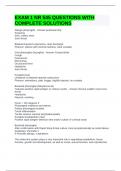
EXAM 1 NR 545 QUESTIONS WITH
COMPLETE SOLUTIONS
Allergic pharyngitis - Answer-postnasal drip
Sneezing
Itchy, watery eyes
Sore throat
Bilateral injected conjunctiva, clear discharge
Pharynx: edema with minimal redness, clear exudate
Viral pharyngitis (laryngitis) - Answer-Conjunctivitis
Cough
hoarseness
Rhinorrhea
Occasional fever
Headache
Sore throat
Possible fever
Unilateral or bilateral injected conjunctiva
Pharynx; edematous, pale, boggy, slightly injected, no exudate
Bacterial pharyngitis (Streptococcal)
*requires positive rapid antigen or culture results. - Answer-Severe sudden onset sore
throat
Headache
Nausea, vomiting
Fever > 101 degrees F
Pharyngeal erythema and edema
Patchy pharyngeal exudate
Tonsil inflammation
Tender anterior cervical lymphadenopathy
Possible Scarlatiniform rash
Positive rapid antigen detection test and/or culture of a throat swab
Bacterial pharyngitis:
After confirmation with Rapid Strep throat culture, treat symptomatically as noted above.
Antibiotics: Penicillin V
If Penicillin allergic: Cephalexin
The endocrine system plays a very important role in regulating metabolism, tissue
function, growth and development, as well as mood, sexual function, and reproductive
, processes. - Answer-The major glands that make up the human endocrine system are
the hypothalamus, pituitary, pineal, thyroid, parathyroid, thymus, mammary glands,
adrenals, pancreas, and the reproductive glands, which include the ovaries and testes.
The hypothalamus gland is located in the lower central part of the brain and it releases
special chemicals that control the hormones produced by the pituitary gland. - Answer-
The pituitary is considered the most powerful gland of the endocrine system. It is
situated at the base of the brain, just beneath the hypothalamus.
The pituitary gland is divided into lobes: the anterior and the posterior lobe. The anterior
pituitary produces the following hormones: growth hormone, which stimulates the
growth of bone and body tissues; adrenocorticotropic, which stimulates the adrenal
gland; thyroid-stimulating hormone, which stimulates the thyroid gland to produce
thyroid hormones; gonadotropic hormones, which stimulate the ovaries and testes to
secrete sex hormones; and prolactin, which stimulates the milk production in
breastfeeding women.
The posterior pituitary produces the following hormones: oxytocin, which stimulates
contractions of the uterus and the ejection of milk; and antidiuretic hormone, which
helps control body-water balance. - Answer-The pineal gland is a tiny gland located in
the middle of the brain. It produces melatonin, which is secreted through the night in the
absence of light and helps to regulate the sleep cycle.
Four tiny parathyroid glands are attached to the thyroid. These glands release
parathyroid hormone, which increases the level of calcium in the blood and stimulates
the breakdown of bone. The thyroid gland is located in the front of the neck. It produces
thyroid hormones, which regulate the body's metabolic rate. The thymus is located right
beneath the sternum. - Answer-Hormones released by the thymus play a critical role in
the development of the immune system. The mammary glands are located in the
breasts of a sexually mature female body. The glands produce and release milk during
pregnancy and breastfeeding. The mammary glands secrete hormones prolactin and
oxytocin. The adrenal glands are situated on top of each kidney.
Each adrenal gland consist of two distinct structures, the inner medulla and outer
cortex, both of which produce different hormones. The medulla synthesizes epinephrine
and norepinephrine, and the cortex synthesizes glucocorticoids, mineralocorticoids, and
sex steroids. The pancreas is located in the abdomen, behind the stomach. The gland
releases glucagon and insulin. - Answer-These hormones work together to regulate
blood-sugar levels in the body. The male ****, or testes, are located in the scrotum.
Testes produce sperm and release the hormone testosterone. The female ****, or
ovaries, are located in the pelvis. Ovaries produce eggs, and release the female
hormones estrogen and progesterone.
Type 1 Diabetes - Answer-The pancreas does not produce insulin.
In genetically predisposed persons, an event (such as a viral infection) can trigger
autoantibody production which target the beta cells of the pancreas. The destruction of
the beta cells leads to no insulin secretion.
COMPLETE SOLUTIONS
Allergic pharyngitis - Answer-postnasal drip
Sneezing
Itchy, watery eyes
Sore throat
Bilateral injected conjunctiva, clear discharge
Pharynx: edema with minimal redness, clear exudate
Viral pharyngitis (laryngitis) - Answer-Conjunctivitis
Cough
hoarseness
Rhinorrhea
Occasional fever
Headache
Sore throat
Possible fever
Unilateral or bilateral injected conjunctiva
Pharynx; edematous, pale, boggy, slightly injected, no exudate
Bacterial pharyngitis (Streptococcal)
*requires positive rapid antigen or culture results. - Answer-Severe sudden onset sore
throat
Headache
Nausea, vomiting
Fever > 101 degrees F
Pharyngeal erythema and edema
Patchy pharyngeal exudate
Tonsil inflammation
Tender anterior cervical lymphadenopathy
Possible Scarlatiniform rash
Positive rapid antigen detection test and/or culture of a throat swab
Bacterial pharyngitis:
After confirmation with Rapid Strep throat culture, treat symptomatically as noted above.
Antibiotics: Penicillin V
If Penicillin allergic: Cephalexin
The endocrine system plays a very important role in regulating metabolism, tissue
function, growth and development, as well as mood, sexual function, and reproductive
, processes. - Answer-The major glands that make up the human endocrine system are
the hypothalamus, pituitary, pineal, thyroid, parathyroid, thymus, mammary glands,
adrenals, pancreas, and the reproductive glands, which include the ovaries and testes.
The hypothalamus gland is located in the lower central part of the brain and it releases
special chemicals that control the hormones produced by the pituitary gland. - Answer-
The pituitary is considered the most powerful gland of the endocrine system. It is
situated at the base of the brain, just beneath the hypothalamus.
The pituitary gland is divided into lobes: the anterior and the posterior lobe. The anterior
pituitary produces the following hormones: growth hormone, which stimulates the
growth of bone and body tissues; adrenocorticotropic, which stimulates the adrenal
gland; thyroid-stimulating hormone, which stimulates the thyroid gland to produce
thyroid hormones; gonadotropic hormones, which stimulate the ovaries and testes to
secrete sex hormones; and prolactin, which stimulates the milk production in
breastfeeding women.
The posterior pituitary produces the following hormones: oxytocin, which stimulates
contractions of the uterus and the ejection of milk; and antidiuretic hormone, which
helps control body-water balance. - Answer-The pineal gland is a tiny gland located in
the middle of the brain. It produces melatonin, which is secreted through the night in the
absence of light and helps to regulate the sleep cycle.
Four tiny parathyroid glands are attached to the thyroid. These glands release
parathyroid hormone, which increases the level of calcium in the blood and stimulates
the breakdown of bone. The thyroid gland is located in the front of the neck. It produces
thyroid hormones, which regulate the body's metabolic rate. The thymus is located right
beneath the sternum. - Answer-Hormones released by the thymus play a critical role in
the development of the immune system. The mammary glands are located in the
breasts of a sexually mature female body. The glands produce and release milk during
pregnancy and breastfeeding. The mammary glands secrete hormones prolactin and
oxytocin. The adrenal glands are situated on top of each kidney.
Each adrenal gland consist of two distinct structures, the inner medulla and outer
cortex, both of which produce different hormones. The medulla synthesizes epinephrine
and norepinephrine, and the cortex synthesizes glucocorticoids, mineralocorticoids, and
sex steroids. The pancreas is located in the abdomen, behind the stomach. The gland
releases glucagon and insulin. - Answer-These hormones work together to regulate
blood-sugar levels in the body. The male ****, or testes, are located in the scrotum.
Testes produce sperm and release the hormone testosterone. The female ****, or
ovaries, are located in the pelvis. Ovaries produce eggs, and release the female
hormones estrogen and progesterone.
Type 1 Diabetes - Answer-The pancreas does not produce insulin.
In genetically predisposed persons, an event (such as a viral infection) can trigger
autoantibody production which target the beta cells of the pancreas. The destruction of
the beta cells leads to no insulin secretion.