kjhgfds
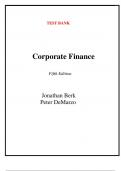
TEST BANK
N
U
Corporate Finance
R
SE
Fifth Edition
D
Jonathan Berk
O
Peter DeMarzo
C
S
, kjhgfds
Corporate Finance: The Core, 5e (Berk/DeMarzo)
Chapter 1 T h e Corporation
1.1 The Four Types of Firms
1) A sole proprietorship is owned by:
A) one person. All Chapters Included
B) two or more persons.
C) shareholders.
D) bankers. All Answers Included
N
Answer: A
Diff: 1
Section: 1.1 The Four Types of Firms
Skill: Definition
U
2) Which of the following organization forms for a business does NOT avoid double taxation?
A) Limited partnership
R
B) "C" corporation
C) "S" corporation
D) Limited liability company
Answer: B
SE
Diff: 1
Section: 1.1 The Four Types of Firms
Skill: Conceptual
3) Which of the following organization forms accounts for the most revenue?
A) "S" corporation
D
B) Limited partnership
C) "C" corporation
D) Limited liability company
Answer: C
O
Diff: 1
Section: 1.1 The Four Types of Firms
Skill: Conceptual
C
4) Which of the following organization forms accounts for the greatest number of firms?
A) "S" corporation
B) Limited partnership
S
C) Sole proprietorship
D) "C" corporation
Answer: C
Diff: 1
Section: 1.1 The Four Types of Firms
Skill: Conceptual
jhgfds
, kjhgfds
5) Which of the following is NOT an advantage of a sole proprietorship?
A) Single taxation
B) Ease of setup
C) Limited liability
D) No separation of ownership and control
Answer: C
Diff: 2
Section: 1.1 The Four Types of Firms
Skill: Conceptual
6) Which of the following statements regarding limited partnerships is TRUE?
N
A) There is no limit on a limited partner's liability.
B) A limited partner's liability is limited by the amount of their investment.
C) A limited partner is not liable until all the assets of the general partners have been exhausted.
D) A general partner's liability is limited by the amount of their investment.
U
Answer: B
Diff: 2
Section: 1.1 The Four Types of Firms
R
Skill: Conceptual
7) Which of the following is/are an advantage of incorporation?
A) Access to capital markets
SE
B) Limited liability
C) Unlimited life
D) All of the above
Answer: D
Diff: 2
Section: 1.1 The Four Types of Firms
D
Skill: Conceptual
8) Which of the following statements is most correct?
A) An advantage to incorporation is that it allows for less regulation of the business.
O
B) An advantage of a corporation is that it is subject to double taxation.
C) Unlike a partnership, a disadvantage of a corporation is that it has limited liability.
D) Corporations face more regulations when compared to partnerships.
Answer: D
C
Diff: 2
Section: 1.1 The Four Types of Firms
Skill: Conceptual
S
9) A limited liability company is essentially:
A) a limited partnership without limited partners.
B) a limited partnership without a general partner.
C) just another name for a limited partnership with a general partner.
D) just another name for a corporation.
Answer: B
Diff: 1
Section: 1.1 The Four Types of Firms
Skill: Conceptual
jhgfds
, kjhgfds
10) The distinguishing feature of a corporation is that:
A) there is no legal difference between the corporation and its owners.
B) it is a legally defined, artificial being, separate from its owners.
C) it spreads liability for its corporate obligations to all shareholders.
D) it provides limited liability only to small shareholders.
Answer: B
Diff: 2
Section: 1.1 The Four Types of Firms
Skill: Conceptual
11) Which of the following are subject to double taxation?
N
A) Corporation
B) Partnership
C) Sole proprietorship
D) A and B
U
Answer: A
Diff: 1
Section: 1.1 The Four Types of Firms
R
Skill: Conceptual
12) You own 100 shares of a "C" corporation. The corporation earns $5.00 per share before taxes. Once the
corporation has paid any corporate taxes that are due, it will distribute the rest of its earnings to its
SE
shareholders in the form of a dividend. If the corporate tax rate is 21% and your personal tax rate on
(both dividend and non-dividend) income is 30%, then how much money is left for you after all taxes
have been paid?
A) $276.50
B) $300.00
C) $350.00
D
D) $500.00
Answer: A
Explanation: EPS × number of shares × (1 - Corporate Tax Rate) × (1 - Individual Tax Rate)
$5.00 per share × 100 shares × (1 - .21) × (1 - .30) = $276.50
O
Diff: 2
Section: 1.1 The Four Types of Firms
Skill: Analytical
C
S
jhgfds
TEST BANK
N
U
Corporate Finance
R
SE
Fifth Edition
D
Jonathan Berk
O
Peter DeMarzo
C
S
, kjhgfds
Corporate Finance: The Core, 5e (Berk/DeMarzo)
Chapter 1 T h e Corporation
1.1 The Four Types of Firms
1) A sole proprietorship is owned by:
A) one person. All Chapters Included
B) two or more persons.
C) shareholders.
D) bankers. All Answers Included
N
Answer: A
Diff: 1
Section: 1.1 The Four Types of Firms
Skill: Definition
U
2) Which of the following organization forms for a business does NOT avoid double taxation?
A) Limited partnership
R
B) "C" corporation
C) "S" corporation
D) Limited liability company
Answer: B
SE
Diff: 1
Section: 1.1 The Four Types of Firms
Skill: Conceptual
3) Which of the following organization forms accounts for the most revenue?
A) "S" corporation
D
B) Limited partnership
C) "C" corporation
D) Limited liability company
Answer: C
O
Diff: 1
Section: 1.1 The Four Types of Firms
Skill: Conceptual
C
4) Which of the following organization forms accounts for the greatest number of firms?
A) "S" corporation
B) Limited partnership
S
C) Sole proprietorship
D) "C" corporation
Answer: C
Diff: 1
Section: 1.1 The Four Types of Firms
Skill: Conceptual
jhgfds
, kjhgfds
5) Which of the following is NOT an advantage of a sole proprietorship?
A) Single taxation
B) Ease of setup
C) Limited liability
D) No separation of ownership and control
Answer: C
Diff: 2
Section: 1.1 The Four Types of Firms
Skill: Conceptual
6) Which of the following statements regarding limited partnerships is TRUE?
N
A) There is no limit on a limited partner's liability.
B) A limited partner's liability is limited by the amount of their investment.
C) A limited partner is not liable until all the assets of the general partners have been exhausted.
D) A general partner's liability is limited by the amount of their investment.
U
Answer: B
Diff: 2
Section: 1.1 The Four Types of Firms
R
Skill: Conceptual
7) Which of the following is/are an advantage of incorporation?
A) Access to capital markets
SE
B) Limited liability
C) Unlimited life
D) All of the above
Answer: D
Diff: 2
Section: 1.1 The Four Types of Firms
D
Skill: Conceptual
8) Which of the following statements is most correct?
A) An advantage to incorporation is that it allows for less regulation of the business.
O
B) An advantage of a corporation is that it is subject to double taxation.
C) Unlike a partnership, a disadvantage of a corporation is that it has limited liability.
D) Corporations face more regulations when compared to partnerships.
Answer: D
C
Diff: 2
Section: 1.1 The Four Types of Firms
Skill: Conceptual
S
9) A limited liability company is essentially:
A) a limited partnership without limited partners.
B) a limited partnership without a general partner.
C) just another name for a limited partnership with a general partner.
D) just another name for a corporation.
Answer: B
Diff: 1
Section: 1.1 The Four Types of Firms
Skill: Conceptual
jhgfds
, kjhgfds
10) The distinguishing feature of a corporation is that:
A) there is no legal difference between the corporation and its owners.
B) it is a legally defined, artificial being, separate from its owners.
C) it spreads liability for its corporate obligations to all shareholders.
D) it provides limited liability only to small shareholders.
Answer: B
Diff: 2
Section: 1.1 The Four Types of Firms
Skill: Conceptual
11) Which of the following are subject to double taxation?
N
A) Corporation
B) Partnership
C) Sole proprietorship
D) A and B
U
Answer: A
Diff: 1
Section: 1.1 The Four Types of Firms
R
Skill: Conceptual
12) You own 100 shares of a "C" corporation. The corporation earns $5.00 per share before taxes. Once the
corporation has paid any corporate taxes that are due, it will distribute the rest of its earnings to its
SE
shareholders in the form of a dividend. If the corporate tax rate is 21% and your personal tax rate on
(both dividend and non-dividend) income is 30%, then how much money is left for you after all taxes
have been paid?
A) $276.50
B) $300.00
C) $350.00
D
D) $500.00
Answer: A
Explanation: EPS × number of shares × (1 - Corporate Tax Rate) × (1 - Individual Tax Rate)
$5.00 per share × 100 shares × (1 - .21) × (1 - .30) = $276.50
O
Diff: 2
Section: 1.1 The Four Types of Firms
Skill: Analytical
C
S
jhgfds