

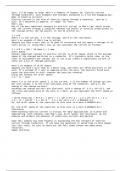
Sure, I'd be happy to help! Here's a summary of Chapter 16: Electric Current
Through Conductors, with examples and concepts explained in a fun and engaging way.
What is Electric Current?
Electric current is the flow of electric charge through a conductor, such as a
wire. It's measured in amperes, or "amps" for short.
Ohm's Law
One of the most important concepts in electric current is Ohm's Law, which states
that the current through a conductor between two points is directly proportional to
the voltage across the two points. It can be written as:
I = V/R
where I is the current, V is the voltage, and R is the resistance.
Here's an example of Ohm's Law in action:
Imagine you have a wire that is 10 ohms of resistance and you apply a voltage of 10
volts across it. Using Ohm's Law, we can calculate the current as follows:
I = V/R I = 10V / 10 ohms I = 1 amp
Drift Speed
Another important concept in electric current is drift speed, which is the average
speed of the charged particles in a conductor. It's typically quite slow, on the
order of millimeters per second, but it can still create a significant current if
there are a lot of charged particles
Here's an example of drift speed:
Imagine you have a wire that is 1 meter long, and there are 10^23 electrons in the
wire. If a voltage of 1 volt is applied across the wire, the electric field will
cause the electrons to drift towards the positive terminal.
Using the formula for drift speed:
v_d = (I / nAq)
where v_d is the drift speed, I is the current, n is the number of charge carriers
per unit volume, A is the cross-sectional area of the conductor, and q is the
charge of the charge carriers.
Assuming the charge carriers are electrons, with a charge of -1.6 x 10^-19 C, and
the cross-sectional area of the wire is 1 mm^2, we can calculate the drift speed as
follows:
= 10^23 electrons / m^3 A = 1 mm^2 = 1 x 10^-6 m^2 q = -1.6 x 10^-19 C I = 1 A
v_d = (1 / (10^23 * 1 x 10^-6 * -1.6 x 10^-19)) v_d = 0.0000625 m/s
So, the drift speed of the electrons in this wire is a mere 0.0000625 m/s!
So, the drift speed of the electrons in this wire is a mere 0.0000625 m/s!
Conclusion
Understanding electric current is crucial for many applications in science and
engineering. With concepts like Ohm's Law, drift speed, and resistance, we can
analyze and predict the behavior of electrical circuits and devices
hope this summary has been helpful in explaining the key concepts of electric
current through conductors. If you have any questions or would like to dive deeper
into this topic, be sure to check out the full video lesson and additional
resources.
Happy learning!
Through Conductors, with examples and concepts explained in a fun and engaging way.
What is Electric Current?
Electric current is the flow of electric charge through a conductor, such as a
wire. It's measured in amperes, or "amps" for short.
Ohm's Law
One of the most important concepts in electric current is Ohm's Law, which states
that the current through a conductor between two points is directly proportional to
the voltage across the two points. It can be written as:
I = V/R
where I is the current, V is the voltage, and R is the resistance.
Here's an example of Ohm's Law in action:
Imagine you have a wire that is 10 ohms of resistance and you apply a voltage of 10
volts across it. Using Ohm's Law, we can calculate the current as follows:
I = V/R I = 10V / 10 ohms I = 1 amp
Drift Speed
Another important concept in electric current is drift speed, which is the average
speed of the charged particles in a conductor. It's typically quite slow, on the
order of millimeters per second, but it can still create a significant current if
there are a lot of charged particles
Here's an example of drift speed:
Imagine you have a wire that is 1 meter long, and there are 10^23 electrons in the
wire. If a voltage of 1 volt is applied across the wire, the electric field will
cause the electrons to drift towards the positive terminal.
Using the formula for drift speed:
v_d = (I / nAq)
where v_d is the drift speed, I is the current, n is the number of charge carriers
per unit volume, A is the cross-sectional area of the conductor, and q is the
charge of the charge carriers.
Assuming the charge carriers are electrons, with a charge of -1.6 x 10^-19 C, and
the cross-sectional area of the wire is 1 mm^2, we can calculate the drift speed as
follows:
= 10^23 electrons / m^3 A = 1 mm^2 = 1 x 10^-6 m^2 q = -1.6 x 10^-19 C I = 1 A
v_d = (1 / (10^23 * 1 x 10^-6 * -1.6 x 10^-19)) v_d = 0.0000625 m/s
So, the drift speed of the electrons in this wire is a mere 0.0000625 m/s!
So, the drift speed of the electrons in this wire is a mere 0.0000625 m/s!
Conclusion
Understanding electric current is crucial for many applications in science and
engineering. With concepts like Ohm's Law, drift speed, and resistance, we can
analyze and predict the behavior of electrical circuits and devices
hope this summary has been helpful in explaining the key concepts of electric
current through conductors. If you have any questions or would like to dive deeper
into this topic, be sure to check out the full video lesson and additional
resources.
Happy learning!

