,
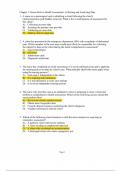
, Chapter`1`–`Philosophy`of`Science:`An`Introduction
1. Why`are`natural`sciences`also`referred`to`as`“pure”`sciences?
A. They`are`considered`stand-alone`bodies`of`unique`knowledge.
B. They`are`the`only`sciences`to`which`the`scientific`method`can`be`applied.
C. They`are`the`original`sciences`upon`which`all`others`are`based.
D. They`are`not`affected`by`subjectivity`in`the`way`other`sciences`are.
Ans:` A
2. Which`is`not`an`example`of`an`applied`science`as`used`in`health`care`today?
A. Social`work
B. Psychotherapy
C. Examination`of`care`disparities
D. Pathology
`Ans:` D
3. Roberta`firmly`believes`that`individual`experiences`are`the`source`of`all`knowledge`in`th
e`world.`As`a`scientist,`she`acknowledges`her`role`as`a`participant`in`the`experiments`she`pe
rforms`and`does`consider`herself`merely`a`disconnected`observer`of`phenomenon.
Roberta’s`views`are`most`closlyreflectiveof`whichschool`of`scientific`thought?
A. Natural`Science
B. Human`Science
C. Applied`Science
D. Soft`Science
`Ans:` B
4. What`is`the`ultimate`goal`of`the`scientific`method?
A. Application`of`scientific`results`to`a`related`body`of`knowledge`in`order`to`meet`some
, type`of`human`need.
B. Examination`of`the`decisions`made`by`a`scientist`to`understand`the`ways`in`
which`subjectivity`was`introduced`to`the`experiment.
C. Reproducible`experimental`results`that`do`not`take`researcher`individuality`into`account.
D. Improving`the`situation`or`process`used`in`the`experiment`to`yield`more`accurate`
results`in`repeat`experiments.
Ans:` C
5. Which`of`the`following`best`describes`the`aim`of`natural`sciences?
A. Affirmation`of`the`importance`of`cultural`understanding`by`uncovering`the`
common`subjective`biases`of`different`disciplines.
B. Improvement`of`the`quality`of`life`by`understanding`what`helps`people`maximize`
their`functional`abilities.
C. Utilization`of`knowledge`by`applying`it`to`a`specific`purpose`in`order`to`better`a`
situation`or`change`viewpoints.
D. Development`of`knowledge`for`the`sake`of`developing`knowledge,`discovering`truth,``
and`controlling`outcomes.
Ans:` D
6. Gretchen`and`Peter`are`graduate`students`in`the`same`Physics`lab.`Their`supervisor`has`
asked`both`of`them`to`perform`the`same`experiment`using`the`same`procedure`and`equipm
ent.` After`they’ve`both`completed`their`task,`the`compare`their`results`and`discover`that`t
hey`are`nearly`identical.` Which`of`the`five`criteria`for`science`does`Gretchen`and
Peter’s`discovery`exemplify?
A. Intersubjective`testability
B. Reliability
, Chapter`1`–`Philosophy`of`Science:`An`Introduction
1. Why`are`natural`sciences`also`referred`to`as`“pure”`sciences?
A. They`are`considered`stand-alone`bodies`of`unique`knowledge.
B. They`are`the`only`sciences`to`which`the`scientific`method`can`be`applied.
C. They`are`the`original`sciences`upon`which`all`others`are`based.
D. They`are`not`affected`by`subjectivity`in`the`way`other`sciences`are.
Ans:` A
2. Which`is`not`an`example`of`an`applied`science`as`used`in`health`care`today?
A. Social`work
B. Psychotherapy
C. Examination`of`care`disparities
D. Pathology
`Ans:` D
3. Roberta`firmly`believes`that`individual`experiences`are`the`source`of`all`knowledge`in`th
e`world.`As`a`scientist,`she`acknowledges`her`role`as`a`participant`in`the`experiments`she`pe
rforms`and`does`consider`herself`merely`a`disconnected`observer`of`phenomenon.
Roberta’s`views`are`most`closlyreflectiveof`whichschool`of`scientific`thought?
A. Natural`Science
B. Human`Science
C. Applied`Science
D. Soft`Science
`Ans:` B
4. What`is`the`ultimate`goal`of`the`scientific`method?
A. Application`of`scientific`results`to`a`related`body`of`knowledge`in`order`to`meet`some
, type`of`human`need.
B. Examination`of`the`decisions`made`by`a`scientist`to`understand`the`ways`in`
which`subjectivity`was`introduced`to`the`experiment.
C. Reproducible`experimental`results`that`do`not`take`researcher`individuality`into`account.
D. Improving`the`situation`or`process`used`in`the`experiment`to`yield`more`accurate`
results`in`repeat`experiments.
Ans:` C
5. Which`of`the`following`best`describes`the`aim`of`natural`sciences?
A. Affirmation`of`the`importance`of`cultural`understanding`by`uncovering`the`
common`subjective`biases`of`different`disciplines.
B. Improvement`of`the`quality`of`life`by`understanding`what`helps`people`maximize`
their`functional`abilities.
C. Utilization`of`knowledge`by`applying`it`to`a`specific`purpose`in`order`to`better`a`
situation`or`change`viewpoints.
D. Development`of`knowledge`for`the`sake`of`developing`knowledge,`discovering`truth,``
and`controlling`outcomes.
Ans:` D
6. Gretchen`and`Peter`are`graduate`students`in`the`same`Physics`lab.`Their`supervisor`has`
asked`both`of`them`to`perform`the`same`experiment`using`the`same`procedure`and`equipm
ent.` After`they’ve`both`completed`their`task,`the`compare`their`results`and`discover`that`t
hey`are`nearly`identical.` Which`of`the`five`criteria`for`science`does`Gretchen`and
Peter’s`discovery`exemplify?
A. Intersubjective`testability
B. Reliability