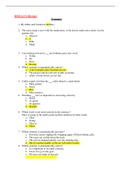
BIOL 1322 Chapter 8 Schiff 6th
Chapter 8
Vitamins
ANSWER QUESTIONS 1-59 AS YOU READ CHAPTER 8 in “Nutrition
for Healthy Living” textbook (Make your own notes too as you
read this Chapter). NOTE: These are not the exam questions. Use
these questions to learn while reading, then use these questions &
your own notes & the textbook to study. Test your knowledge in
concepts from this chapter by answering review questions without
using any help. (no book/no phone/no notes/no internet/etc.)
8.1 Vitamins: Basic Concepts
LO: 2. Define, vitamin, and explain how scientist determine whether a substance is a
vitamin.
3. Classify vitamins according to whether they are fat soluble or water soluble.
4. Discuss ways to conserve the vitamin contents of foods or increase vitamin
bioavailability.
5. Explain the function of an antioxidant.
6. Explain the purpose of vitamin enrichment and fortification.
What is a Vitamin?
1. What is a vitamin?vita= necessary for life amine – a type of nitrogen-containing substance
Complex organic compound that regulates certain metabolic processed in the body
2. List criteria used to determine if a substance is a vitamin:
- Body cannot syntheize the compound or make enough to maintain good health
- Compound naturally occurs in commonly eaten foods
- Signs and symptoms of a health problem (deficiency disorder) when substance is missing from
eventually
- Good health is restored, if the deficiency disorder is treated early by supplying the missing subs
3. True or False?
1
, BIOL 1322 Chapter 8 Schiff 6th
a. The body requires vitamins in gram amounts while it requires macronutrients (proteins,
carbohydrates, and lipids) in milligrams or microgram amounts. B. false
b. Foods generally have much smaller amounts of vitamins than macronutrients.
A. true
c. Vitamins are not a direct source of energy. A. tru
d. Vitamins participate in reactions that release energy from glucose, fats, and amino acids.
A. True? Because figure 8.2?
2
, BIOL 1322 Chapter 8 Schiff 6th
Roles of Vitamins
4. Using Figure 8.1, list several functions for vitamins:
Bone health – Vitamin A, C, D, K
Energy Metabolism – Thiamin, Riboflavin Niacin, Panthothenic acid, Biotin, Vitamin B-6, b-12
Blood Clotting – Vitamin K
Amin Acid Metabolism – Vitamin B-6, B-12, Vitamin C, Folate, Choline
Antioxidant defence – Vitamin E, Vitamin C, Certain carotenoids
Growth and development, Choline, Vitamin A, Vitamin D
Red blood formation – Vitamin B-6, B-12, Folate, Riboflavin (indirect)
Immune function – Vitamin A, C, D , E
What is an Antioxidant?
5. What is an antioxidant?
Protects cells by giving up electrons to radicals.
6. What is a radical?
Substance with an unpaired electon from a oxidation reaction.
7. Describe how a radical can damage cells and molecules in the body:
Radicals are highly reactive (chemically unstable), and they remove electrons from more stable molecules, su
proteins, fatty acids, and DNA. It can damage or destroy these molecules and a chain reaction can occur in w
excessive oxidation takes place and affects many cells.
8. Describe how an antioxidant protects cells and molecules in our body against “free radicals”:
Antioxidants protects cells by giving up electrons to radicals. When the chemically unstable substance accept
electron, it can form a more stable structure that does not pull electrons away from other compounds thus pr
molecules such as polyunsaturated fatty acids in the membrance or DNA from being oxidized.
9. List vitamins that function as antioxidants (See Fig. 8.1):
Vitamin E, Vitamin C (likely), certain carotenoids
Sources of Vitamins
10. List the 2 sources for vitamins: plants, animals, fungi, bacteria
11. True or False?
3
, BIOL 1322 Chapter 8 Schiff 6th
a. Vitamins, whether naturally occurring in foods or synthesized in a laboratory, they generally have
the same chemical structure and work equally well in the body. A. true
b. Some vitamins are more biologically active in the natural form (for example, vitamin E),
and others are more active in the synthetic form (for example, folic acid). A. true
4
Chapter 8
Vitamins
ANSWER QUESTIONS 1-59 AS YOU READ CHAPTER 8 in “Nutrition
for Healthy Living” textbook (Make your own notes too as you
read this Chapter). NOTE: These are not the exam questions. Use
these questions to learn while reading, then use these questions &
your own notes & the textbook to study. Test your knowledge in
concepts from this chapter by answering review questions without
using any help. (no book/no phone/no notes/no internet/etc.)
8.1 Vitamins: Basic Concepts
LO: 2. Define, vitamin, and explain how scientist determine whether a substance is a
vitamin.
3. Classify vitamins according to whether they are fat soluble or water soluble.
4. Discuss ways to conserve the vitamin contents of foods or increase vitamin
bioavailability.
5. Explain the function of an antioxidant.
6. Explain the purpose of vitamin enrichment and fortification.
What is a Vitamin?
1. What is a vitamin?vita= necessary for life amine – a type of nitrogen-containing substance
Complex organic compound that regulates certain metabolic processed in the body
2. List criteria used to determine if a substance is a vitamin:
- Body cannot syntheize the compound or make enough to maintain good health
- Compound naturally occurs in commonly eaten foods
- Signs and symptoms of a health problem (deficiency disorder) when substance is missing from
eventually
- Good health is restored, if the deficiency disorder is treated early by supplying the missing subs
3. True or False?
1
, BIOL 1322 Chapter 8 Schiff 6th
a. The body requires vitamins in gram amounts while it requires macronutrients (proteins,
carbohydrates, and lipids) in milligrams or microgram amounts. B. false
b. Foods generally have much smaller amounts of vitamins than macronutrients.
A. true
c. Vitamins are not a direct source of energy. A. tru
d. Vitamins participate in reactions that release energy from glucose, fats, and amino acids.
A. True? Because figure 8.2?
2
, BIOL 1322 Chapter 8 Schiff 6th
Roles of Vitamins
4. Using Figure 8.1, list several functions for vitamins:
Bone health – Vitamin A, C, D, K
Energy Metabolism – Thiamin, Riboflavin Niacin, Panthothenic acid, Biotin, Vitamin B-6, b-12
Blood Clotting – Vitamin K
Amin Acid Metabolism – Vitamin B-6, B-12, Vitamin C, Folate, Choline
Antioxidant defence – Vitamin E, Vitamin C, Certain carotenoids
Growth and development, Choline, Vitamin A, Vitamin D
Red blood formation – Vitamin B-6, B-12, Folate, Riboflavin (indirect)
Immune function – Vitamin A, C, D , E
What is an Antioxidant?
5. What is an antioxidant?
Protects cells by giving up electrons to radicals.
6. What is a radical?
Substance with an unpaired electon from a oxidation reaction.
7. Describe how a radical can damage cells and molecules in the body:
Radicals are highly reactive (chemically unstable), and they remove electrons from more stable molecules, su
proteins, fatty acids, and DNA. It can damage or destroy these molecules and a chain reaction can occur in w
excessive oxidation takes place and affects many cells.
8. Describe how an antioxidant protects cells and molecules in our body against “free radicals”:
Antioxidants protects cells by giving up electrons to radicals. When the chemically unstable substance accept
electron, it can form a more stable structure that does not pull electrons away from other compounds thus pr
molecules such as polyunsaturated fatty acids in the membrance or DNA from being oxidized.
9. List vitamins that function as antioxidants (See Fig. 8.1):
Vitamin E, Vitamin C (likely), certain carotenoids
Sources of Vitamins
10. List the 2 sources for vitamins: plants, animals, fungi, bacteria
11. True or False?
3
, BIOL 1322 Chapter 8 Schiff 6th
a. Vitamins, whether naturally occurring in foods or synthesized in a laboratory, they generally have
the same chemical structure and work equally well in the body. A. true
b. Some vitamins are more biologically active in the natural form (for example, vitamin E),
and others are more active in the synthetic form (for example, folic acid). A. true
4