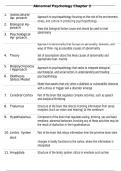
Abnormal Psychology Chapter 2
1. Sociocultural
Ap- proach Approach to psychopathology focusing on the role of the environment,
stress, and culture in producing psychopathology
2. Biological Ap-
proach View that biological factors cause and should be used to treat
abnormality
3. Psychological
Ap- proach
Approach to abnormality that focuses on personality, behavior, and
ways of think- ing as possible causes of abnormality
4. Theory Set of assumptions about the likely causes of abnormality and
appropriate treat- ments
5. Biopsychosocia Approach to psychopathology that seeks to integrate biological,
l Approach
psychological, and social factors in understanding and treating
6. Diathesis- psychopathology
Stress Model
Model that asserts that only when a diathesis or vulnerability interacts
with a stress or trigger will a disorder emerge
7. Cerebral Cortex Part of the brain that regulates complex activities, such as speech
and analytical thinking
8. Thalamus Structure of the brain that directs incoming information from sense
receptors (such as vision and hearing) to the cerebrum
9. Hypothalamus Component of the brain that regulates eating, drinking, sex and basic
emotions; abnormal behaviors involving any of these activities may be
the result of dysfuction in the hypothalamus
10. Limbic System Part of the brain that relays information from the primitive brain stem
about
changes in bodily functions to the cortex, where the information is
interpreted
11. Amygdala Structure of the limbic system critical in emotions such as fear
1/
14
, Abnormal Psychology Chapter 2
12. Hippocampus Structure of the brain involved in memory and in the stress response
2/
14
1. Sociocultural
Ap- proach Approach to psychopathology focusing on the role of the environment,
stress, and culture in producing psychopathology
2. Biological Ap-
proach View that biological factors cause and should be used to treat
abnormality
3. Psychological
Ap- proach
Approach to abnormality that focuses on personality, behavior, and
ways of think- ing as possible causes of abnormality
4. Theory Set of assumptions about the likely causes of abnormality and
appropriate treat- ments
5. Biopsychosocia Approach to psychopathology that seeks to integrate biological,
l Approach
psychological, and social factors in understanding and treating
6. Diathesis- psychopathology
Stress Model
Model that asserts that only when a diathesis or vulnerability interacts
with a stress or trigger will a disorder emerge
7. Cerebral Cortex Part of the brain that regulates complex activities, such as speech
and analytical thinking
8. Thalamus Structure of the brain that directs incoming information from sense
receptors (such as vision and hearing) to the cerebrum
9. Hypothalamus Component of the brain that regulates eating, drinking, sex and basic
emotions; abnormal behaviors involving any of these activities may be
the result of dysfuction in the hypothalamus
10. Limbic System Part of the brain that relays information from the primitive brain stem
about
changes in bodily functions to the cortex, where the information is
interpreted
11. Amygdala Structure of the limbic system critical in emotions such as fear
1/
14
, Abnormal Psychology Chapter 2
12. Hippocampus Structure of the brain involved in memory and in the stress response
2/
14