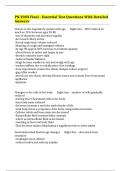
PN 2003 Final - Essential Test Questions With Detailed
Answers
Chanes to the respiratory system with age Right Ans - -PO2 reduced as
much as 15% between ages 20-80
-loss of elasticity and increased rigidity
-decreased ciliary action
-forced expiratory volume reduced
-blunting of cough and laryngeal reflexes
-by age 90 approx 50% increase in residual capacity
-alveoli fewer in nuber and larger in size
-thoracic muscles more rigid
-reduced basilar inflation
-lungs become smaller in size and weigh with age
-trachea stiffens due to calcification of its cartilage
-nose experiences connective tissue changes reduce support
-gag reflex weaker
-alveoli are less elasic, develop fibrosis tissue and contain fewer functional
capillaries
-kyphosis
-
Changes to the cells of the body Right Ans - -number of cells gradually
reduced
-leaving fewer functional cells in the body
-lean body mass reduced
-fat tissue increase s until the sixth decade of life
-total body fat as a porpotion of the body composition increases.
-Cellular solids and bone mass are decreased
-Extracellular fluid remains failry constant
-where as intracellular fluid is decreased
-resulting in less total body fluid
-This decrease makes dehydration a significant risk to older adults
Gastroinstestinal System age changes Right Ans - -decreased taste
sensation
-esophagus more dilated
-reduced saliva and salivary ptyalin
,-liver smaller in size
-reduced instestinal blood flow
-decreased esophageal motility
-atrophy of gastric mucosa
-decreased stomach motility, hunger contractions, and emptying time
-less production of hydrochloric acid, pepsin, lipase, and pancreatic enzymes
- fewer cells on absorbing surface of intestines
-slower peristalisis
-tongue atrophies
-there is thinning of oral mucosa and a weakening of the muscles involved in
mastication
reduced elasticity of stomach
stomach has a higher ph
Urinary System aging Right Ans - -decreased size of renal mass
-decreased tubuler function
-decreased bladder capacity
-decrease in nephrons
-betweenages 20 and 90, renal blood flow decreases 53% and glomerular
filtration rate decreases 50
-weaker bladder muscles
-nocturia
-weak bladder muscles
ageing of the female reproductive system Right Ans - -fallopian tubes
atrophy and shorten
-ovaries become thicker and smaller
-cervix becomes smaller
-drier less elastic vaginal canal
-flattening of labia
-endocervical epithelium atrophies
-uterus becomes smaller in size
-endometrium atrophies
-more alkaline vaginal environment
-loss of vulvar subcutaneous fat and hair
-vulva atrophy
-vaginal epithelium becomes thin
-cervix, uterus, fallopian tubes, ovaries atrophy
-uterus and overies decrease in size
,- breasts sag and less firm
-some retraction of nipples
-fibrosis and calcification of the terminal ducts
Aging of the male reproductive system Right Ans - -fluid-retaining capacity
of seminal vesicles reduces
-possible reduction in sperm count
-venous and arterial sclerosis of penis
-prostate enlarges in most men
-seminal vesicles having a thinner epithelium
-replacement of muscle with connective tissue
-structural changes in the seminiferous tubules include fibrosis, thinning of
epithelium,thickening of the basement membrane
-narrowing of the lumen
-atrophy of the testes
-reduction is testicular mass
-more time required for an erection
aging musculoskeletal system Right Ans - -muscle mass, muscle strength,
muscle movements decreased
-age related loss of muscle mass, strength and function= sarcopenia
- tendons shrink and harden
-reflexes are lessened in the arms and nearly lost in abdomen
-shortening of vertebrae
-between 20 and 70 height decreases approx 2 inches
-bones more brittle
-slight knee flexion
-decrease in bone mass and bone mineral
-slight kyphosis
-slight hip flexion
-slight wrist flexion
- impaired flexion and extension movements.
-grip strength decline
-decrease body strength
-decreased calorie intake
-poor blood flow
aging nervous system Right Ans - -Decrease in brain weight
-blood flow to brain
, -conduction velocity
-response and reaction time
-changes in sleep pattern
-decreased conduction velocity
-slower response and reaction time
-decreased brain weight
-reduced blood flow to brain
-changes in sleep pattern
-atrophy of brain and spinal cord and brain weight decreases
-# of nerve cells decline
-each cell has fewer dendrites
-cerebral blood flow decreases by 20%
aging endocrine system Right Ans - -Decreased acth,glucocorticoids,
estrogen, testosterone
-delayed and insufficienct release of insulin, decreased tissue
-sensitivity to insulin
-reduced ability to metabolize glucose higher blood glucose
-thyroid gland undergoes fibrosis, cellular infiltration and increased
nodularity
-lower metabolic rate
-reduced radioactive iodine uptake
-less thyrotopin secretion and release
-thyroid gland progressively atrophies
what is parkinsons disease Right Ans - progressive degeneratoin of
neurons in basal ganglia resulting in the reduced production of dopamine
what are the symptoms of parkinsons Right Ans - affects the ability of the
CNS to control body movements, tremor in hands and feet that progresses
over time, tremor reduced when the patient attempts purposeful movement,
muscle rigidity, weakness, drooling, difficulty swallowing, slow speech,
monotone, face masklike appearance, skin moist, bradykinesia, poor balance,
appetite increases, emotional instability, postural instability, shuffling gait,
may not be able to stop walking voluntarily. secondary symptoms depression,
anxiety, sleep disturbances dementia, forced eyelid closure, decreased
blinking, dysphagia, constipation, shortness of breath, urinary hesitancy
urgency and reduced interest in sex
Answers
Chanes to the respiratory system with age Right Ans - -PO2 reduced as
much as 15% between ages 20-80
-loss of elasticity and increased rigidity
-decreased ciliary action
-forced expiratory volume reduced
-blunting of cough and laryngeal reflexes
-by age 90 approx 50% increase in residual capacity
-alveoli fewer in nuber and larger in size
-thoracic muscles more rigid
-reduced basilar inflation
-lungs become smaller in size and weigh with age
-trachea stiffens due to calcification of its cartilage
-nose experiences connective tissue changes reduce support
-gag reflex weaker
-alveoli are less elasic, develop fibrosis tissue and contain fewer functional
capillaries
-kyphosis
-
Changes to the cells of the body Right Ans - -number of cells gradually
reduced
-leaving fewer functional cells in the body
-lean body mass reduced
-fat tissue increase s until the sixth decade of life
-total body fat as a porpotion of the body composition increases.
-Cellular solids and bone mass are decreased
-Extracellular fluid remains failry constant
-where as intracellular fluid is decreased
-resulting in less total body fluid
-This decrease makes dehydration a significant risk to older adults
Gastroinstestinal System age changes Right Ans - -decreased taste
sensation
-esophagus more dilated
-reduced saliva and salivary ptyalin
,-liver smaller in size
-reduced instestinal blood flow
-decreased esophageal motility
-atrophy of gastric mucosa
-decreased stomach motility, hunger contractions, and emptying time
-less production of hydrochloric acid, pepsin, lipase, and pancreatic enzymes
- fewer cells on absorbing surface of intestines
-slower peristalisis
-tongue atrophies
-there is thinning of oral mucosa and a weakening of the muscles involved in
mastication
reduced elasticity of stomach
stomach has a higher ph
Urinary System aging Right Ans - -decreased size of renal mass
-decreased tubuler function
-decreased bladder capacity
-decrease in nephrons
-betweenages 20 and 90, renal blood flow decreases 53% and glomerular
filtration rate decreases 50
-weaker bladder muscles
-nocturia
-weak bladder muscles
ageing of the female reproductive system Right Ans - -fallopian tubes
atrophy and shorten
-ovaries become thicker and smaller
-cervix becomes smaller
-drier less elastic vaginal canal
-flattening of labia
-endocervical epithelium atrophies
-uterus becomes smaller in size
-endometrium atrophies
-more alkaline vaginal environment
-loss of vulvar subcutaneous fat and hair
-vulva atrophy
-vaginal epithelium becomes thin
-cervix, uterus, fallopian tubes, ovaries atrophy
-uterus and overies decrease in size
,- breasts sag and less firm
-some retraction of nipples
-fibrosis and calcification of the terminal ducts
Aging of the male reproductive system Right Ans - -fluid-retaining capacity
of seminal vesicles reduces
-possible reduction in sperm count
-venous and arterial sclerosis of penis
-prostate enlarges in most men
-seminal vesicles having a thinner epithelium
-replacement of muscle with connective tissue
-structural changes in the seminiferous tubules include fibrosis, thinning of
epithelium,thickening of the basement membrane
-narrowing of the lumen
-atrophy of the testes
-reduction is testicular mass
-more time required for an erection
aging musculoskeletal system Right Ans - -muscle mass, muscle strength,
muscle movements decreased
-age related loss of muscle mass, strength and function= sarcopenia
- tendons shrink and harden
-reflexes are lessened in the arms and nearly lost in abdomen
-shortening of vertebrae
-between 20 and 70 height decreases approx 2 inches
-bones more brittle
-slight knee flexion
-decrease in bone mass and bone mineral
-slight kyphosis
-slight hip flexion
-slight wrist flexion
- impaired flexion and extension movements.
-grip strength decline
-decrease body strength
-decreased calorie intake
-poor blood flow
aging nervous system Right Ans - -Decrease in brain weight
-blood flow to brain
, -conduction velocity
-response and reaction time
-changes in sleep pattern
-decreased conduction velocity
-slower response and reaction time
-decreased brain weight
-reduced blood flow to brain
-changes in sleep pattern
-atrophy of brain and spinal cord and brain weight decreases
-# of nerve cells decline
-each cell has fewer dendrites
-cerebral blood flow decreases by 20%
aging endocrine system Right Ans - -Decreased acth,glucocorticoids,
estrogen, testosterone
-delayed and insufficienct release of insulin, decreased tissue
-sensitivity to insulin
-reduced ability to metabolize glucose higher blood glucose
-thyroid gland undergoes fibrosis, cellular infiltration and increased
nodularity
-lower metabolic rate
-reduced radioactive iodine uptake
-less thyrotopin secretion and release
-thyroid gland progressively atrophies
what is parkinsons disease Right Ans - progressive degeneratoin of
neurons in basal ganglia resulting in the reduced production of dopamine
what are the symptoms of parkinsons Right Ans - affects the ability of the
CNS to control body movements, tremor in hands and feet that progresses
over time, tremor reduced when the patient attempts purposeful movement,
muscle rigidity, weakness, drooling, difficulty swallowing, slow speech,
monotone, face masklike appearance, skin moist, bradykinesia, poor balance,
appetite increases, emotional instability, postural instability, shuffling gait,
may not be able to stop walking voluntarily. secondary symptoms depression,
anxiety, sleep disturbances dementia, forced eyelid closure, decreased
blinking, dysphagia, constipation, shortness of breath, urinary hesitancy
urgency and reduced interest in sex