

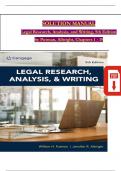
SOLUTION MANUAL
Legal Research, Analysis, and Writing, 5th Edition
by Putman, Albright, Chapters 1 - 19
,TABLE OF CONTENTS Q Q Q
PART I: INTRODUCTION TO RESEARCH, ANALYTICAL PRINCIPLES, AND THE LEG
Q Q Q Q Q Q Q Q Q
L PROCESS.
Q
1. Introduction to Legal Principles and Authorities.
Q Q Q Q Q Q
2. Introduction to Legal Research and Analysis.
Q Q Q Q Q Q
PART II: LEGAL RESEARCH.
Q Q Q
3. Constitutions, Statutes, Administrative Law, and Court Rules—Research and Analysis.
Q Q Q Q Q Q Q Q Q
4. Case Law—Research and Briefing.
Q Q Q Q
5. Secondary Authority and Other Research Sources—
Q Q Q Q Q Q
Encyclopedias, Treatises, American Law Reports, Digests, Shepard's.
Q Q Q Q Q Q
6. Secondary Authority—
Q Q
Periodicals, Restatements, Uniform Laws, Dictionaries, Legislative History, and Other Secondary
Q Q Q Q Q Q Q Q Q Q
uthorities.
7. Computers and Internet Legal Research.
Q Q Q Q Q
8. Commercial Internet Research.
Q Q Q
PART III: THE SPECIFICS OF LEGAL ANALYSIS.
Q Q Q Q Q Q
9. Legal Analysis—Key Facts.
Q Q Q
10. Legal Analysis—Issue Identification (Spotting the Issue).
Q Q Q Q Q Q
11. Legal Analysis—Stating the Issue.
Q Q Q Q
12. Case Law Analysis—Is a Case on Point?
Q Q Q Q Q Q Q
13. Counteranalysis.
Q
,PART IV: LEGAL WRITING.
Q Q Q
14. Fundamentals of Writing.
Q Q Q
15. The Writing Process for Effective Legal Writing.
Q Q Q Q Q Q Q
16. Office Legal Memorandum: Issues and Facts.
Q Q Q Q Q Q
17. Office Legal Memorandum: Analysis to Conclusion.
Q Q Q Q Q Q
18. External Memoranda: Court Briefs.
Q Q Q Q
19. Correspondence.
Q
, Solution and Answer Guide Q Q Q
CHAPTERQ1:Q:QINTRODUCTIONQTOQLEGALQPRINCIPLESQANDQAUTHORITIES.
TABLE OF CONTENTS
Q Q
AssignmentQ1QAnswers .......................................................................................................................... 1
AssignmentQ2QAnswers .......................................................................................................................... 2
AssignmentQ3QAnswers .......................................................................................................................... 2
AssignmentQ4QAnswers .......................................................................................................................... 4
AssignmentQ5QAnswers .......................................................................................................................... 6
ASSIGNMENT 1 ANSWERS Q Q
AnswerQtheQfollowingQquestionsQregardingQtheQcourtsQinQyourQstate:
1. AreQthereQlimitedQjurisdictionQcourtsQinQyourQState?
Answer:QTheQstateQconsideredQhereQis,QTexasQinQtheQUnitedQStates.QFederalQcourtsQareQtheQcourtsQthatQhaveQ
limitedQjurisdictions.QTheyQonlyQhearQtheQcasesQwhichQareQapprovedQbyQtheQUnitedQStatesQconstitution.QDistr
ictQcourtsQareQtheQfirstQlevelQofQfederalQcourtsQwhereQlimitedQjurisdictionQexists,QfollowedQbyQcircuitQcourtsQa
ndQsupremeQcourts.
a. NameQthoseQcourts:
Answer:QThereQareQfourQfederalQdistrictQcourtsQinQtheQStateQofQTexas.QTheyQareQdividedQintoQUnitedQStatesQ
DistrictQCourtsQofQtheQNorthernQDistrict,QEasternQDistrict,QSouthernQDistrict,QandQWesternQDistrictQofQTexa
s.QThereQareQ14QcourtsQofQappealsQinQTexasQwhichQhaveQintermediateQjurisdictionQinQcivilQandQcriminalQcasesQ
whichQareQappealsQfromQtheQcountryQcourts.Q AndQlastlyQtheQSupremeQcourtQofQTexas
b. WhatQtypesQofQcasesQcanQeachQofQthoseQcourtsQpresideQover?
Answer:QTheQcasesQinQtheQdistrictQcourtQofQTexasQconsistQofQcriminalQcases,QdivorceQcases,QelectionQcases,Qci
vilQmatters,QandQanyQotherQmattersQwhichQareQnotQplacedQinQtheQtrialQcourt.QTheQcircuitQcourtQconsistsQofQtheQ
civilQandQcriminalQcaseQwhichQisQappealedQbyQdistrictQcourts.QTheQSupremeQCourtQofQTexasQisQtheQresortQofQc
ivilQmattersQinQtheQUS.QTexasQCourtQisQtheQresortQofQcriminalQmatters.
2. What
is
Q
theQg
eneralQju
risdict
ion
Legal Research, Analysis, and Writing, 5th Edition
by Putman, Albright, Chapters 1 - 19
,TABLE OF CONTENTS Q Q Q
PART I: INTRODUCTION TO RESEARCH, ANALYTICAL PRINCIPLES, AND THE LEG
Q Q Q Q Q Q Q Q Q
L PROCESS.
Q
1. Introduction to Legal Principles and Authorities.
Q Q Q Q Q Q
2. Introduction to Legal Research and Analysis.
Q Q Q Q Q Q
PART II: LEGAL RESEARCH.
Q Q Q
3. Constitutions, Statutes, Administrative Law, and Court Rules—Research and Analysis.
Q Q Q Q Q Q Q Q Q
4. Case Law—Research and Briefing.
Q Q Q Q
5. Secondary Authority and Other Research Sources—
Q Q Q Q Q Q
Encyclopedias, Treatises, American Law Reports, Digests, Shepard's.
Q Q Q Q Q Q
6. Secondary Authority—
Q Q
Periodicals, Restatements, Uniform Laws, Dictionaries, Legislative History, and Other Secondary
Q Q Q Q Q Q Q Q Q Q
uthorities.
7. Computers and Internet Legal Research.
Q Q Q Q Q
8. Commercial Internet Research.
Q Q Q
PART III: THE SPECIFICS OF LEGAL ANALYSIS.
Q Q Q Q Q Q
9. Legal Analysis—Key Facts.
Q Q Q
10. Legal Analysis—Issue Identification (Spotting the Issue).
Q Q Q Q Q Q
11. Legal Analysis—Stating the Issue.
Q Q Q Q
12. Case Law Analysis—Is a Case on Point?
Q Q Q Q Q Q Q
13. Counteranalysis.
Q
,PART IV: LEGAL WRITING.
Q Q Q
14. Fundamentals of Writing.
Q Q Q
15. The Writing Process for Effective Legal Writing.
Q Q Q Q Q Q Q
16. Office Legal Memorandum: Issues and Facts.
Q Q Q Q Q Q
17. Office Legal Memorandum: Analysis to Conclusion.
Q Q Q Q Q Q
18. External Memoranda: Court Briefs.
Q Q Q Q
19. Correspondence.
Q
, Solution and Answer Guide Q Q Q
CHAPTERQ1:Q:QINTRODUCTIONQTOQLEGALQPRINCIPLESQANDQAUTHORITIES.
TABLE OF CONTENTS
Q Q
AssignmentQ1QAnswers .......................................................................................................................... 1
AssignmentQ2QAnswers .......................................................................................................................... 2
AssignmentQ3QAnswers .......................................................................................................................... 2
AssignmentQ4QAnswers .......................................................................................................................... 4
AssignmentQ5QAnswers .......................................................................................................................... 6
ASSIGNMENT 1 ANSWERS Q Q
AnswerQtheQfollowingQquestionsQregardingQtheQcourtsQinQyourQstate:
1. AreQthereQlimitedQjurisdictionQcourtsQinQyourQState?
Answer:QTheQstateQconsideredQhereQis,QTexasQinQtheQUnitedQStates.QFederalQcourtsQareQtheQcourtsQthatQhaveQ
limitedQjurisdictions.QTheyQonlyQhearQtheQcasesQwhichQareQapprovedQbyQtheQUnitedQStatesQconstitution.QDistr
ictQcourtsQareQtheQfirstQlevelQofQfederalQcourtsQwhereQlimitedQjurisdictionQexists,QfollowedQbyQcircuitQcourtsQa
ndQsupremeQcourts.
a. NameQthoseQcourts:
Answer:QThereQareQfourQfederalQdistrictQcourtsQinQtheQStateQofQTexas.QTheyQareQdividedQintoQUnitedQStatesQ
DistrictQCourtsQofQtheQNorthernQDistrict,QEasternQDistrict,QSouthernQDistrict,QandQWesternQDistrictQofQTexa
s.QThereQareQ14QcourtsQofQappealsQinQTexasQwhichQhaveQintermediateQjurisdictionQinQcivilQandQcriminalQcasesQ
whichQareQappealsQfromQtheQcountryQcourts.Q AndQlastlyQtheQSupremeQcourtQofQTexas
b. WhatQtypesQofQcasesQcanQeachQofQthoseQcourtsQpresideQover?
Answer:QTheQcasesQinQtheQdistrictQcourtQofQTexasQconsistQofQcriminalQcases,QdivorceQcases,QelectionQcases,Qci
vilQmatters,QandQanyQotherQmattersQwhichQareQnotQplacedQinQtheQtrialQcourt.QTheQcircuitQcourtQconsistsQofQtheQ
civilQandQcriminalQcaseQwhichQisQappealedQbyQdistrictQcourts.QTheQSupremeQCourtQofQTexasQisQtheQresortQofQc
ivilQmattersQinQtheQUS.QTexasQCourtQisQtheQresortQofQcriminalQmatters.
2. What
is
Q
theQg
eneralQju
risdict
ion

