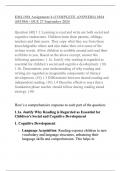
, LEARNING UNIT 1: INTRODUCING COMMUNICATION 1.1
Explain the different components and the relationship
between the components of the intuitive model of
communication. (5) 1.2 Identify and briefly discuss the
seven components of The Shannon-Weaver
communication model. (5) [10]
LEARNING UNIT 1: INTRODUCING
COMMUNICATION
1.1 The Intuitive Model of Communication
The intuitive model of communication consists of
several key components that work together to
facilitate the exchange of messages between
individuals. The main components include:
1. Sender (Source) – The person or entity that
originates the message.
2. Message – The information, ideas, or emotions
being communicated.
3. Encoding – The process by which the sender
converts thoughts or ideas into a format that can
be transmitted (e.g., words, gestures, symbols).
4. Channel (Medium) – The medium used to
transmit the message, such as verbal speech,
written text, or digital platforms.
Explain the different components and the relationship
between the components of the intuitive model of
communication. (5) 1.2 Identify and briefly discuss the
seven components of The Shannon-Weaver
communication model. (5) [10]
LEARNING UNIT 1: INTRODUCING
COMMUNICATION
1.1 The Intuitive Model of Communication
The intuitive model of communication consists of
several key components that work together to
facilitate the exchange of messages between
individuals. The main components include:
1. Sender (Source) – The person or entity that
originates the message.
2. Message – The information, ideas, or emotions
being communicated.
3. Encoding – The process by which the sender
converts thoughts or ideas into a format that can
be transmitted (e.g., words, gestures, symbols).
4. Channel (Medium) – The medium used to
transmit the message, such as verbal speech,
written text, or digital platforms.