Transfers on death
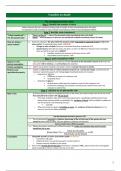
The charging provision steps
Step 1: identify the transfer of value
When someone dies, he is treated as having made a transfer of value immediately before his death:
“X is deemed to make a transfer of value on death of everything to which he was beneficially entitled”.
Step 2: find the value transferred
“Value transferred” = “Value transferred” = value of the deceased estate immediately before his death.
The deceased estate “Estate” = all the property to which he was beneficially entitled immediately before his death.
How are shares / Assets are valued at “the price which the property might reasonably be expected to fetch if sold in the
assets valued? open market” immediately before death: s160 IHTA
o Change in value on death (increase or decrease) should be considered: s171
o Quoted shares: Normally two prices are given, so take ¼ of difference between lower and higher
price and add it to lower price. DEDUCT:
Liabilities owed by the deceased at the time of time: s505
Reasonable funeral expenses: s162
Step 3: apply exemptions/relief
Spouse or civil s18: Any property included in the estate is exempt if it passes to the deceased’s spouse or CP under the
partner exemption deceased’s will or intestacy, or survivorship (joint property).
Charity exemption s23(1): Any property included in deceased’s estate is exempt if it passes to charity.
Business and Applies to reduce the value of ‘relevant business property’ by a certain percentage, provided that the
agricultural property transferor owned the property for the two years immediately before the transfer.
o Reduction of 100% for:
A business or interest in a business; and
Unquoted shares
o Reduction of 50% for:
Quoted shares which gave the transferor control of the company; and
Certain land, buildings and machinery owned by the transferor but used in his
company or partnership
Step 4: calculate tax at appropriate rate
Rate of tax If the deceased has made no chargeable transfers in the seven years before death, the rate of tax on the
first £325,000 of his estate is 0% (nil rate band).
o If the date of death is after 2017 and the deceased owner a qualifying residential interest and
being closely inherited (child or grandchild), the ‘residence nil band’ will be available in addition to
the nil rate band in the following amounts:
£175,000
o Where the estate is valued at £2 million or more, the residence nil band is reduced by £1 for
every £2 over the £2 million threshold.
Has the deceased survived a spouse or CP?
The nil rate band is increased by whatever percentage of the nil rate band of the spouse that was
unused by them (max of 100%). This also applies to residence nil rate band.
Estate transferred to different people?
Where the estate is transferred to different people, the estate rate calculates how much tax each
beneficiary has to pay.
Total Tax Payable
Estate Rate (%)= x 100
Total Value of the Estate
Cumulation Chargeable transfers in seven years before death (see below)
o Cumulation will apply
o Lifetime transfers use up the deceased’s nil rate band first.
o Reduces amount available for the estate
If the estate exceeds the nil rate band, the balance is charged at 40%, unless at least 10% of chargeable
estate is passing to charity, in which case the rate is 36%.
1
The charging provision steps
Step 1: identify the transfer of value
When someone dies, he is treated as having made a transfer of value immediately before his death:
“X is deemed to make a transfer of value on death of everything to which he was beneficially entitled”.
Step 2: find the value transferred
“Value transferred” = “Value transferred” = value of the deceased estate immediately before his death.
The deceased estate “Estate” = all the property to which he was beneficially entitled immediately before his death.
How are shares / Assets are valued at “the price which the property might reasonably be expected to fetch if sold in the
assets valued? open market” immediately before death: s160 IHTA
o Change in value on death (increase or decrease) should be considered: s171
o Quoted shares: Normally two prices are given, so take ¼ of difference between lower and higher
price and add it to lower price. DEDUCT:
Liabilities owed by the deceased at the time of time: s505
Reasonable funeral expenses: s162
Step 3: apply exemptions/relief
Spouse or civil s18: Any property included in the estate is exempt if it passes to the deceased’s spouse or CP under the
partner exemption deceased’s will or intestacy, or survivorship (joint property).
Charity exemption s23(1): Any property included in deceased’s estate is exempt if it passes to charity.
Business and Applies to reduce the value of ‘relevant business property’ by a certain percentage, provided that the
agricultural property transferor owned the property for the two years immediately before the transfer.
o Reduction of 100% for:
A business or interest in a business; and
Unquoted shares
o Reduction of 50% for:
Quoted shares which gave the transferor control of the company; and
Certain land, buildings and machinery owned by the transferor but used in his
company or partnership
Step 4: calculate tax at appropriate rate
Rate of tax If the deceased has made no chargeable transfers in the seven years before death, the rate of tax on the
first £325,000 of his estate is 0% (nil rate band).
o If the date of death is after 2017 and the deceased owner a qualifying residential interest and
being closely inherited (child or grandchild), the ‘residence nil band’ will be available in addition to
the nil rate band in the following amounts:
£175,000
o Where the estate is valued at £2 million or more, the residence nil band is reduced by £1 for
every £2 over the £2 million threshold.
Has the deceased survived a spouse or CP?
The nil rate band is increased by whatever percentage of the nil rate band of the spouse that was
unused by them (max of 100%). This also applies to residence nil rate band.
Estate transferred to different people?
Where the estate is transferred to different people, the estate rate calculates how much tax each
beneficiary has to pay.
Total Tax Payable
Estate Rate (%)= x 100
Total Value of the Estate
Cumulation Chargeable transfers in seven years before death (see below)
o Cumulation will apply
o Lifetime transfers use up the deceased’s nil rate band first.
o Reduces amount available for the estate
If the estate exceeds the nil rate band, the balance is charged at 40%, unless at least 10% of chargeable
estate is passing to charity, in which case the rate is 36%.
1