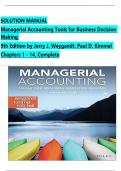
SOLUTION MANUAL
Managerial Accounting Tools for Business Decision
Making
9th Edition by Jerry J. Weygandt, Paul D. Kimmel
Chapters 1 - 14, Complete
,TABLE OF CONTENTS BH BH
Chapter 1: Managerial Accounting
BH BH BH
Chapter 2: Job Order Costing
BH BH BH BH
Chapter 2A: Job Order Costing: Non-Debit and Credit Approach
BH BH BH BH BH BH BH BH
Chapter 3: Process Costing
BH BH BH
Chapter 3A: Process Costing: Non-Debit and Credit Approach
BH BH BH BH BH BH BH
Chapter 4: Activity-Based Costing
BH BH BH
Chapter 5: Cost-Volume-Profit
BH BH
Chapter 6: Cost-Volume-Profit Analysis: Additional Issues
BH BH BH BH BH
Chapter 7: Incremental Analysis
BH BH BH
Chapter 8: Pricing
BH BH
Chapter 9: Budgetary Planning
BH BH BH
Chapter 10: Budgetary Control and Responsibility Accounting
BH BH BH BH BH BH
Chapter 11: Standard Costs and Balanced Scorecard
BH BH BH BH BH BH
Chapter 12: Planning for Capital Investments
BH BH BH BH BH
Chapter 13: Statement of Cash Flows
BH BH BH BH BH
,Chapter 14: Financial Analysis
BH BH BH
CHAPTER 1 BH
Managerial Accounting BH
Learning Objectives BH
1. Identify the features of managerial accounting and the functions of management.
BH BH BH BH BH BH BH BH BH BH
2. Describe the classes of manufacturing costs and the differences between product and
BH BH BH BH BH BH BH BH BH BH BH BH
periodcosts. H
B
3. Demonstrate how to compute cost of goods manufactured and prepare financial stateme
BH BH BH BH BH BH BH BH BH BH BH
nts for amanufacturer.
BH BH H
B
4. Discuss trends in managerial accounting.
BH BH BH BH
ANSWERS TO QUESTIONS BH BH
1. (a) Not true. Managerial accounting is a field of accounting that provides economic and fin
BH BH BH BH BH BH BH BH BH BH BH BH BH BH
ancial information for managers and other internal users.
BH BH BH BH BH BH BH
(b) Joe is incorrect. Managerial accounting applies to all types of businesses—
BH BH BH BH BH BH BH BH BH BH
service, merchandising, and manufacturing. BH BH BH
LO1 BT: C Difficulty: Easy TOT: 3 min. AACSB: None AICPA FC: Measurement, Analysis and Interpretation IMA: Cost Manage
B H BH B H BH B H BH BH BHBH BH B H BH BH BH BH BH BH BH BH
ment
2. (a) Financial accounting is concerned primarily with external users such as stockholders, cre
BH BH BH BH BH BH BH BH BH BH BH BH
ditors, and regulators. In contrast, managerial accounting is concerned primarily with i
BH BH BH BH BH BH BH BH BH BH BH
nternal users such as officers and managers.
BH BH BH BH BH BH
(b) Financial statements are the end product of financial accounting. These statements are
BH BH BH BH BH BH BH BH BH BH BH
prepared quarterly and annually. In managerial accounting, internal reports may be
BH BH BH BH BH BH BH BH BH B H B H BH
prepared as frequently as needed. BH BH BH BH
(c) The purpose of financial accounting is to provide general-
BH BH BH BH BH BH BH BH
purpose information for external users. The purpose of managerial accounting is to pr
BH BH BH BH BH BH BH BH BH BH BH BH
, ovide special-purpose information for specific internal decisions.
BH BH BH BH BH BH
LO1 BT: C Difficulty: Easy TOT: 5 min. AACSB: None AICPA FC: Measurement, Analysis and Interpretation IMA: Cost Manage
B H BH B H BH B H BH BH BHBH BH B H BH BH BH BH BH BH BH BH
ment
3. Differences in the content of the reports are as follows:
BH BH BH BH BH BH BH BH BH
BH Financial BH Managerial
• Pertains to business as a whole and is
B H B H B H B H B H B H B H H
B • Pertains to subunits of the business a
BH BH BH BH BH BH
highly aggregated.BH ndmay be very detailed.
H
B BH BH BH
• Limited to accrual accounting and cost data.
BH BH BH BH BH BH • Extends beyond accrual
• Generally accepted accounting principles.
BH BH BH accounting
system to any relevant data.
BH BH BH BH
Copyright © 2021 John Wiley & Sons, Inc. BH BH BH BH BH BH BH
Weygandt, Managerial Accounting, 9e, Solutions Manual
BH BH BH BH BH (For Instructor Use Only)
BH BH BH
1-1
Managerial Accounting Tools for Business Decision
Making
9th Edition by Jerry J. Weygandt, Paul D. Kimmel
Chapters 1 - 14, Complete
,TABLE OF CONTENTS BH BH
Chapter 1: Managerial Accounting
BH BH BH
Chapter 2: Job Order Costing
BH BH BH BH
Chapter 2A: Job Order Costing: Non-Debit and Credit Approach
BH BH BH BH BH BH BH BH
Chapter 3: Process Costing
BH BH BH
Chapter 3A: Process Costing: Non-Debit and Credit Approach
BH BH BH BH BH BH BH
Chapter 4: Activity-Based Costing
BH BH BH
Chapter 5: Cost-Volume-Profit
BH BH
Chapter 6: Cost-Volume-Profit Analysis: Additional Issues
BH BH BH BH BH
Chapter 7: Incremental Analysis
BH BH BH
Chapter 8: Pricing
BH BH
Chapter 9: Budgetary Planning
BH BH BH
Chapter 10: Budgetary Control and Responsibility Accounting
BH BH BH BH BH BH
Chapter 11: Standard Costs and Balanced Scorecard
BH BH BH BH BH BH
Chapter 12: Planning for Capital Investments
BH BH BH BH BH
Chapter 13: Statement of Cash Flows
BH BH BH BH BH
,Chapter 14: Financial Analysis
BH BH BH
CHAPTER 1 BH
Managerial Accounting BH
Learning Objectives BH
1. Identify the features of managerial accounting and the functions of management.
BH BH BH BH BH BH BH BH BH BH
2. Describe the classes of manufacturing costs and the differences between product and
BH BH BH BH BH BH BH BH BH BH BH BH
periodcosts. H
B
3. Demonstrate how to compute cost of goods manufactured and prepare financial stateme
BH BH BH BH BH BH BH BH BH BH BH
nts for amanufacturer.
BH BH H
B
4. Discuss trends in managerial accounting.
BH BH BH BH
ANSWERS TO QUESTIONS BH BH
1. (a) Not true. Managerial accounting is a field of accounting that provides economic and fin
BH BH BH BH BH BH BH BH BH BH BH BH BH BH
ancial information for managers and other internal users.
BH BH BH BH BH BH BH
(b) Joe is incorrect. Managerial accounting applies to all types of businesses—
BH BH BH BH BH BH BH BH BH BH
service, merchandising, and manufacturing. BH BH BH
LO1 BT: C Difficulty: Easy TOT: 3 min. AACSB: None AICPA FC: Measurement, Analysis and Interpretation IMA: Cost Manage
B H BH B H BH B H BH BH BHBH BH B H BH BH BH BH BH BH BH BH
ment
2. (a) Financial accounting is concerned primarily with external users such as stockholders, cre
BH BH BH BH BH BH BH BH BH BH BH BH
ditors, and regulators. In contrast, managerial accounting is concerned primarily with i
BH BH BH BH BH BH BH BH BH BH BH
nternal users such as officers and managers.
BH BH BH BH BH BH
(b) Financial statements are the end product of financial accounting. These statements are
BH BH BH BH BH BH BH BH BH BH BH
prepared quarterly and annually. In managerial accounting, internal reports may be
BH BH BH BH BH BH BH BH BH B H B H BH
prepared as frequently as needed. BH BH BH BH
(c) The purpose of financial accounting is to provide general-
BH BH BH BH BH BH BH BH
purpose information for external users. The purpose of managerial accounting is to pr
BH BH BH BH BH BH BH BH BH BH BH BH
, ovide special-purpose information for specific internal decisions.
BH BH BH BH BH BH
LO1 BT: C Difficulty: Easy TOT: 5 min. AACSB: None AICPA FC: Measurement, Analysis and Interpretation IMA: Cost Manage
B H BH B H BH B H BH BH BHBH BH B H BH BH BH BH BH BH BH BH
ment
3. Differences in the content of the reports are as follows:
BH BH BH BH BH BH BH BH BH
BH Financial BH Managerial
• Pertains to business as a whole and is
B H B H B H B H B H B H B H H
B • Pertains to subunits of the business a
BH BH BH BH BH BH
highly aggregated.BH ndmay be very detailed.
H
B BH BH BH
• Limited to accrual accounting and cost data.
BH BH BH BH BH BH • Extends beyond accrual
• Generally accepted accounting principles.
BH BH BH accounting
system to any relevant data.
BH BH BH BH
Copyright © 2021 John Wiley & Sons, Inc. BH BH BH BH BH BH BH
Weygandt, Managerial Accounting, 9e, Solutions Manual
BH BH BH BH BH (For Instructor Use Only)
BH BH BH
1-1