TESTBANK .
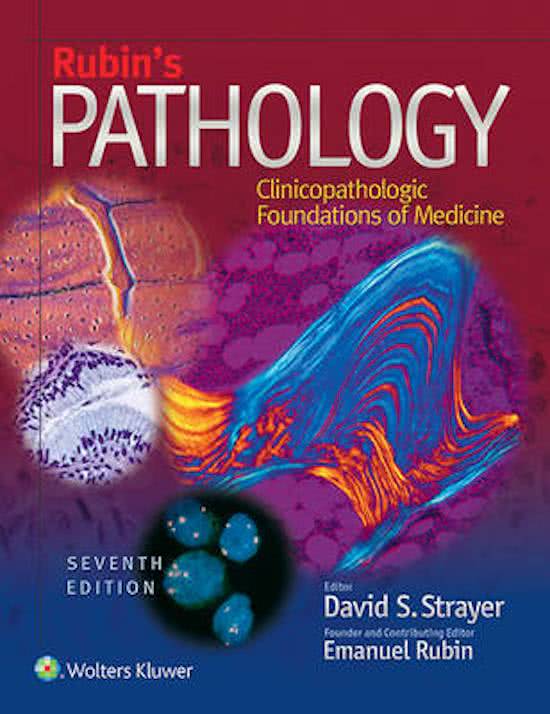
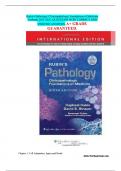
RUBIN'S PATHOLOGY:.
CLINICOPATHOLOGIC
.
FOUNDATIONS OF MEDICINE
. . .
7th Edition By David S. Strayer, Emanuel Rubin
. . . . . . .
TESTBANK .
,Test .Bank .Rubin's .Pathology: .Clinicopathologic .Foundations .of .Medicine .7th . Edition
Table .of .Contents:
Chapter .1: .Cell .Adaptation, .Injury .and .Death
Chapter .2: .Inflammation
Chapter .3: .Repair, .Regeneration .and .Fibrosis
Chapter .4: .Immunopathology
Chapter .5: .Neoplasia
Chapter .6: .Developmental .and .Genetic .Diseases
Chapter .7: .Hemodynamic .Disorders
Chapter .8: .Environmental .and .Nutritional .Pathology
Chapter .9: .Infectious .and .Parasitic .Diseases
Section .II: .Pathogenesis .of .Systemic .Conditions .Expandable .section
Chapter .10: .Aging
Chapter .11: .Systemic .Autoimmune .Diseases
Chapter .12: .Sepsis
Chapter .13: .Obesity .and .Diabetes .Mellitus
Chapter .14: .The .Pathology .of .Pregnancy
Chapter .15: .The .Amyloidoses
Section .III: .Diseases .of .Individual .Organ .SystemsExpandable .section
Chapter .16: .Blood .Vessels
Chapter .17: .The .Heart
Chapter .18: .The .Respiratory .System
Chapter .19: .The .Gastrointestinal .Tract
Chapter .20: .The .Liver .and .Biliary .System
Chapter .21: .The .Pancreas
Chapter .22: .The .Kidney
Chapter .23: .The .Lower .Urinary .Tract .and .Male .Reproductive .System
Chapter .24: .The .Female .Reproductive .System .and .Peritoneum
Chapter .25: .The .Breast
Chapter .26: .Hematopathology
Chapter .27: .The .Endocrine .System
Chapter .28: .The .Skin
Chapter .29: .The .Head .and .Neck
Chapter .30: .Bones, .Joints .and .Soft .Tissue
Chapter .31: .Skeletal .Muscle .and .Peripheral .Nervous .System
Chapter .32: .The .Central .Nervous .System
Chapter .33: .The .Eye
Chapter .34: .Forensic .Pathology
,Rubin's .Pathology: .Clinicopathologic .Foundations .of .Medicine
.Chapter .1: .Cell .Adaptation, .Injury .and .Death
Ischemia .and .other .toxic .injuries .increase .the .accumulation .of .intracellular .calcium .as .a .result
1. .of:
A) release .of .stored .calcium .from .the .mitochondria.
B) improved .intracellular .volume .regulation.
C) decreased .influx .across .the .cell .membrane.
D) attraction .of .calcium .to .fatty .infiltrates.
The .patient .is .found .to .have .liver .disease, .resulting .in .the .removal .of .a .lobe .of .his .liver.
2. .Adaptation .to .the .reduced .size .of .the .liver .leads .to ._ of .the .remaining .liver .cells.
A) metaplasia
B) organ .atrophy
C) compensatory .hyperplasia
D) physiologic .hypertrophy
A .person .eating .peanuts .starts .choking .and .collapses. .His .airway .obstruction .is
.partially .cleared, .but .he .remains .hypoxic .until .he .reaches .the .hospital. .The .prolonged
3. .cell .hypoxia .caused .a .cerebral .infarction .and .resulting _ .in .the .brain.
A) caspase .activation
B) coagulation .necrosis
C) rapid .phagocytosis
D) protein .p53 .deficiency
Bacteria .and .viruses .cause .cell .damage .by , .which .is .unique .from .the
4. .intracellular .damage .caused .by .other .injurious .agents.
A) disrupting .the .sodium/potassium .ATPase .pump
B) interrupting .oxidative .metabolism .processes
C) replicating .and .producing .continued .injury
D) decreasing .protein .synthesis .and .function
The .patient .has .a .prolonged .interruption .in .arterial .blood .flow .to .his .left .kidney, .causing
5. .hypoxic .cell .injury .and .the .release .of .free .radicals. .Free .radicals .damage .cells .by:
A) destroying .phospholipids .in .the .cell .membrane.
B) altering .the .immune .response .of .the .cell.
C) disrupting .calcium .storage .in .the .cell.
D) inactivation .of .enzymes .and .mitochondria.
, 6. Injured .cells .have .impaired .flow .of .substances .through .the .cell .membrane .as .a .result .of:
A) increased .fat .load.
B) altered .permeability.
C) altered .glucose .utilization.
D) increased .surface .receptors.
7. Reversible .adaptive .intracellular .responses .are .initiated .by:
A) stimulus .overload.
B) genetic .mutations.
C) chemical .messengers.
D) mitochondrial .DNA.
8. Injured .cells .become .very .swollen .as .a .result .of:
A) increased .cell .protein .synthesis.
B) altered .cell .volume .regulation.
C) passive .entry .of .potassium .into .the .cell.
D) bleb .formation .in .the .plasma .membrane.
A .diabetic .patient .has .impaired .sensation, .circulation, .and .oxygenation .of .his .feet. .He .steps
.on .a .piece .of .glass, .the .wound .does .not .heal, .and .the .area .tissue .becomes .necrotic. .The
9. .necrotic .cell .death .is .characterized .by:
A) rapid .apoptosis.
B) cellular .rupture.
C) shrinkage .and .collapse.
D) chronic .inflammation.
A .99-year-old .woman .has .experienced .the .decline .of .cell .function .associated .with .age. .A
10. .group .of .theories .of .cellular .aging .focus .on .programmed:
A) changes .with .genetic .influences.
B) elimination .of .cell .receptor .sites.
C) insufficient .telomerase .enzyme.
D) DNA .mutation .or .faulty .repair.
An .89-year-old .female .patient .has .experienced .significant .decreases .in .her .mobility .and
.stamina .during .a .3-week .hospital .stay .for .the .treatment .of .a .femoral .head .fracture. .Which
.of .the .following .phenomena .most .likely .accounts .for .the .patients .decrease .in .muscle
11. .function .that .underlies .her .reduced .mobility?
A) Impaired .muscle .cell .metabolism .resulting .from .metaplasia
B) Dysplasia .as .a .consequence .of .inflammation .during .bone .remodeling
C) Disuse .atrophy .of .muscle .cells .during .a .prolonged .period .of .immobility
RUBIN'S PATHOLOGY:.
CLINICOPATHOLOGIC
.
FOUNDATIONS OF MEDICINE
. . .
7th Edition By David S. Strayer, Emanuel Rubin
. . . . . . .
TESTBANK .
,Test .Bank .Rubin's .Pathology: .Clinicopathologic .Foundations .of .Medicine .7th . Edition
Table .of .Contents:
Chapter .1: .Cell .Adaptation, .Injury .and .Death
Chapter .2: .Inflammation
Chapter .3: .Repair, .Regeneration .and .Fibrosis
Chapter .4: .Immunopathology
Chapter .5: .Neoplasia
Chapter .6: .Developmental .and .Genetic .Diseases
Chapter .7: .Hemodynamic .Disorders
Chapter .8: .Environmental .and .Nutritional .Pathology
Chapter .9: .Infectious .and .Parasitic .Diseases
Section .II: .Pathogenesis .of .Systemic .Conditions .Expandable .section
Chapter .10: .Aging
Chapter .11: .Systemic .Autoimmune .Diseases
Chapter .12: .Sepsis
Chapter .13: .Obesity .and .Diabetes .Mellitus
Chapter .14: .The .Pathology .of .Pregnancy
Chapter .15: .The .Amyloidoses
Section .III: .Diseases .of .Individual .Organ .SystemsExpandable .section
Chapter .16: .Blood .Vessels
Chapter .17: .The .Heart
Chapter .18: .The .Respiratory .System
Chapter .19: .The .Gastrointestinal .Tract
Chapter .20: .The .Liver .and .Biliary .System
Chapter .21: .The .Pancreas
Chapter .22: .The .Kidney
Chapter .23: .The .Lower .Urinary .Tract .and .Male .Reproductive .System
Chapter .24: .The .Female .Reproductive .System .and .Peritoneum
Chapter .25: .The .Breast
Chapter .26: .Hematopathology
Chapter .27: .The .Endocrine .System
Chapter .28: .The .Skin
Chapter .29: .The .Head .and .Neck
Chapter .30: .Bones, .Joints .and .Soft .Tissue
Chapter .31: .Skeletal .Muscle .and .Peripheral .Nervous .System
Chapter .32: .The .Central .Nervous .System
Chapter .33: .The .Eye
Chapter .34: .Forensic .Pathology
,Rubin's .Pathology: .Clinicopathologic .Foundations .of .Medicine
.Chapter .1: .Cell .Adaptation, .Injury .and .Death
Ischemia .and .other .toxic .injuries .increase .the .accumulation .of .intracellular .calcium .as .a .result
1. .of:
A) release .of .stored .calcium .from .the .mitochondria.
B) improved .intracellular .volume .regulation.
C) decreased .influx .across .the .cell .membrane.
D) attraction .of .calcium .to .fatty .infiltrates.
The .patient .is .found .to .have .liver .disease, .resulting .in .the .removal .of .a .lobe .of .his .liver.
2. .Adaptation .to .the .reduced .size .of .the .liver .leads .to ._ of .the .remaining .liver .cells.
A) metaplasia
B) organ .atrophy
C) compensatory .hyperplasia
D) physiologic .hypertrophy
A .person .eating .peanuts .starts .choking .and .collapses. .His .airway .obstruction .is
.partially .cleared, .but .he .remains .hypoxic .until .he .reaches .the .hospital. .The .prolonged
3. .cell .hypoxia .caused .a .cerebral .infarction .and .resulting _ .in .the .brain.
A) caspase .activation
B) coagulation .necrosis
C) rapid .phagocytosis
D) protein .p53 .deficiency
Bacteria .and .viruses .cause .cell .damage .by , .which .is .unique .from .the
4. .intracellular .damage .caused .by .other .injurious .agents.
A) disrupting .the .sodium/potassium .ATPase .pump
B) interrupting .oxidative .metabolism .processes
C) replicating .and .producing .continued .injury
D) decreasing .protein .synthesis .and .function
The .patient .has .a .prolonged .interruption .in .arterial .blood .flow .to .his .left .kidney, .causing
5. .hypoxic .cell .injury .and .the .release .of .free .radicals. .Free .radicals .damage .cells .by:
A) destroying .phospholipids .in .the .cell .membrane.
B) altering .the .immune .response .of .the .cell.
C) disrupting .calcium .storage .in .the .cell.
D) inactivation .of .enzymes .and .mitochondria.
, 6. Injured .cells .have .impaired .flow .of .substances .through .the .cell .membrane .as .a .result .of:
A) increased .fat .load.
B) altered .permeability.
C) altered .glucose .utilization.
D) increased .surface .receptors.
7. Reversible .adaptive .intracellular .responses .are .initiated .by:
A) stimulus .overload.
B) genetic .mutations.
C) chemical .messengers.
D) mitochondrial .DNA.
8. Injured .cells .become .very .swollen .as .a .result .of:
A) increased .cell .protein .synthesis.
B) altered .cell .volume .regulation.
C) passive .entry .of .potassium .into .the .cell.
D) bleb .formation .in .the .plasma .membrane.
A .diabetic .patient .has .impaired .sensation, .circulation, .and .oxygenation .of .his .feet. .He .steps
.on .a .piece .of .glass, .the .wound .does .not .heal, .and .the .area .tissue .becomes .necrotic. .The
9. .necrotic .cell .death .is .characterized .by:
A) rapid .apoptosis.
B) cellular .rupture.
C) shrinkage .and .collapse.
D) chronic .inflammation.
A .99-year-old .woman .has .experienced .the .decline .of .cell .function .associated .with .age. .A
10. .group .of .theories .of .cellular .aging .focus .on .programmed:
A) changes .with .genetic .influences.
B) elimination .of .cell .receptor .sites.
C) insufficient .telomerase .enzyme.
D) DNA .mutation .or .faulty .repair.
An .89-year-old .female .patient .has .experienced .significant .decreases .in .her .mobility .and
.stamina .during .a .3-week .hospital .stay .for .the .treatment .of .a .femoral .head .fracture. .Which
.of .the .following .phenomena .most .likely .accounts .for .the .patients .decrease .in .muscle
11. .function .that .underlies .her .reduced .mobility?
A) Impaired .muscle .cell .metabolism .resulting .from .metaplasia
B) Dysplasia .as .a .consequence .of .inflammation .during .bone .remodeling
C) Disuse .atrophy .of .muscle .cells .during .a .prolonged .period .of .immobility