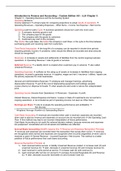
Introduction to Finance and Accounting – Custom Edition UU – LLH Chapter 3:
Chapter 3 – Operating Decisions and the Accounting System
Operating decisions
Income statement primary basis for comparing projections to actual results of operations
Operating Revenues – Operating Expenses – Other Items – Income Tax Expense = Net Income.
Operating (cash-to-cash) Cycle business operations should turn cash into more cash:
1) A company receives goods to sell
2) The company pays for the goods
3) The company sells the goods to customers
4) Customers pay cash to the company
The shorter the cycle takes, the better the company’s cash flows the cycle is the time between
purchasing goods and receiving cash from customers.
Time-Period Assumption the long life of a company can be reported in shorter time periods
(reporting periodic income) problems: when should the effects be recorded and what amounts
should be recognised?
Revenues increases in assets and settlements of liabilities from the central ongoing business
operations Operating Revenue = sale of goods or services.
Deferred Revenue a liability which is created when customers pay in advance also called
Unearned Revenue.
Operating Expenses outflows (or the using up of assets or increases in liabilities) from ongoing
operations, incurred to generate revenue supplies, wages and rent / insurance / utilities / repairs are
the primary expenses for most businesses.
General and Administrative Expenses employee and manager trainings, advertising.
Depreciation Expense part of the cost of depreciating equipment and buildings (assets).
Losses (Gains) on Disposal of Assets when assets are sold under or above the undepreciated
price.
Operating Income (Income from Operations) Revenues – Expenses profit.
Interest Revenue, Interest Expense and Gains / Losses on Sale of Investments are not central to
ongoing operations not included as part of operating income, but seen as Other Items.
Earnings per Share ratio to evaluate the operating performance and profitability
Net Income
=
Weighted Average Number of Outstanding Shares
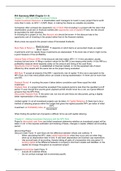
Cash Basis Accounting revenues are recorded when cash is received, expenses are recorded
when cash is paid (so revenue and expenses on account are not recorded yet) Net Operating Cash
Flow this method may lead to an incorrect interpretation of future performance.
Cash Basis Accounting is not useful for external decision makers, because revenues and expenses
are postponed / accelerated and not all assets and liabilities are reflected.
Accrual Basis Accounting (GAAPs requires this Revenue and Expenses Recognition Principle)
revenues and expenses are recorded when the transaction that causes them occurs revenues
are recognised when earned and expenses are recognised when incurred (regardless of when cash is
received or paid) Earned Revenue – Incurred Expenses = Net Income. This method is a better
predictor of future performance than cash basis accounting.
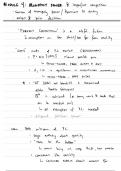
Revenue Recognition Principle
1) Cash received before service liability Unearned Revenue created increase cash (D) and
unearned revenue (C) later, decrease in unearned revenue (D) and increase revenue (C).
2) Cash received in same period as service increase cash (D) and revenue (C).
3) Cash received after service (on account) increase Accounts Receivable (D) and Revenue
(C) later, decrease accounts receivable (C) and increase Cash (D).
Chapter 3 – Operating Decisions and the Accounting System
Operating decisions
Income statement primary basis for comparing projections to actual results of operations
Operating Revenues – Operating Expenses – Other Items – Income Tax Expense = Net Income.
Operating (cash-to-cash) Cycle business operations should turn cash into more cash:
1) A company receives goods to sell
2) The company pays for the goods
3) The company sells the goods to customers
4) Customers pay cash to the company
The shorter the cycle takes, the better the company’s cash flows the cycle is the time between
purchasing goods and receiving cash from customers.
Time-Period Assumption the long life of a company can be reported in shorter time periods
(reporting periodic income) problems: when should the effects be recorded and what amounts
should be recognised?
Revenues increases in assets and settlements of liabilities from the central ongoing business
operations Operating Revenue = sale of goods or services.
Deferred Revenue a liability which is created when customers pay in advance also called
Unearned Revenue.
Operating Expenses outflows (or the using up of assets or increases in liabilities) from ongoing
operations, incurred to generate revenue supplies, wages and rent / insurance / utilities / repairs are
the primary expenses for most businesses.
General and Administrative Expenses employee and manager trainings, advertising.
Depreciation Expense part of the cost of depreciating equipment and buildings (assets).
Losses (Gains) on Disposal of Assets when assets are sold under or above the undepreciated
price.
Operating Income (Income from Operations) Revenues – Expenses profit.
Interest Revenue, Interest Expense and Gains / Losses on Sale of Investments are not central to
ongoing operations not included as part of operating income, but seen as Other Items.
Earnings per Share ratio to evaluate the operating performance and profitability
Net Income
=
Weighted Average Number of Outstanding Shares
Cash Basis Accounting revenues are recorded when cash is received, expenses are recorded
when cash is paid (so revenue and expenses on account are not recorded yet) Net Operating Cash
Flow this method may lead to an incorrect interpretation of future performance.
Cash Basis Accounting is not useful for external decision makers, because revenues and expenses
are postponed / accelerated and not all assets and liabilities are reflected.
Accrual Basis Accounting (GAAPs requires this Revenue and Expenses Recognition Principle)
revenues and expenses are recorded when the transaction that causes them occurs revenues
are recognised when earned and expenses are recognised when incurred (regardless of when cash is
received or paid) Earned Revenue – Incurred Expenses = Net Income. This method is a better
predictor of future performance than cash basis accounting.
Revenue Recognition Principle
1) Cash received before service liability Unearned Revenue created increase cash (D) and
unearned revenue (C) later, decrease in unearned revenue (D) and increase revenue (C).
2) Cash received in same period as service increase cash (D) and revenue (C).
3) Cash received after service (on account) increase Accounts Receivable (D) and Revenue
(C) later, decrease accounts receivable (C) and increase Cash (D).