RS homework:
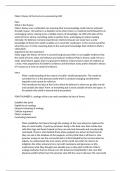
Q: Critically discuss Plato’s understanding of the nature of reality.
Throughout Plato’s texts a common theme of strong rationalism alongside his belief of the dualistic
nature of reality is evident. Plato’s philosophy is based around two worlds; the material world we
currently live in, flawed by its ever-changing nature and thus ceasing to be a reliable source of knowledge
of reality, and he instead goes on to introduce an unchanging eternal world of Forms where all beings go
after death. The world of forms was significant to Plato because it solved the problem of evil, as it meant
that this world was simply a poor and imperfect, changing imitation of their particulars in the perfect and
unchanging world of forms and thus his theory can be seen as an optimistic take on what reality truly is.
Whilst Plato argues this to be the true nature of reality, other empiricists may argue there is a
fundamental lack of evidence for his beliefs, making them cynical of this fantastical world and therefore
argue that Plato’s idea of reality is unimportant and unrealistic.
As Plato was aware that his philosophy was difficult to understand and it was further complicated
because he believed the world of forms existed outside of time and space making it transcendent, he
knew it would be difficult to explain using everyday language. He therefore presented us with the analogy
of the allegory of the cave to simplify understanding his theory, which many of his followers accepted
because it was able to explain something that exists outside of the world we know. On the other hand,
however, many of his critics would argue that the use of an analogy to explain the entire reality of the
universe and its nature was oversimplified and therefore unrealistic and a result do not take his analogy
as sufficient evidence as it is simply just a story. In his analogy, he explores the nature of a dual reality
and its effect on dividing ordinary laymen from philosophers who he believed to be superior. This analogy
portrays prisoners who have been living in a dark cave- representing the world of appearances- their
whole lives, chained to a wall allowing them only to look forward, deeming them physically restrained.
This is representative of the ordinary people who have been living blindly due to their ignorance of the
world of forms and are solely focused on the world around them. Plato then criticised them because- like
the prisoners who believed the shadows to be reality- normal people believed the imperfect and
changing objects in the physical world to be true reality. Plato stated that just as the prisoners saw mere
shadows- a conjuring of their senses, which Plato does not believe we can rely on-and believed that was
all there was, humans in this world rely too much on empirical evidence. However, in the analogy one
prisoner escapes to see outside the cave into the real world and is initially blinded by the sun but upon
adjusting understands this is the true nature of the world. In relation to the world of appearances, the
analogy here represents a philosopher who goes out on a physical journey to seek the true nature of
reality and is initially confused because the world is unfamiliar to what they have been exposed to their
entire lives, however they come to gain knowledge of the world of forms and understand the superficial
nature of the world of appearances. His critics would then argue: is it not ironic that the only way that the
philosopher gained knowledge of the ‘real world’ was through empirical investigation and physical
experience of reality? It is clear here that Plato carried an elitist nature within his philosophy as he
believed that only those who seek out knowledge were superior as they were unlike normal humans who
were ignorant. For example, the importance Plato placed on the form of ‘Good’ being an intellectual
light, which was the only way to access the other forms, makes his theory inaccessible for all humans and
restricts true knowledge to certain groups of people. When the enlightened prisoner in the analogy
returns to fulfil his duty of enlightening the other prisoners he is greeted with resistance and ignorance as
this entirely undermines they believed to be true, so they plot to kill him. Moreover, such as in the
escaped prisoner who pursued Plato’s philosophical path, some philosophers may be ridiculed in a similar
way when trying to explain to ordinary people We can see Plato’s analogy was heavily influenced by
Socrates, of whom he was a student, who was killed for sharing his radical philosophy with those who
were ignorant.
Furthermore, Plato represents the belief that the physical world is deceiving as it is constantly changing
and that it is highly significant to accept deceptions in this world to achieve understanding of reality
beyond empiricism. He then elaborates by suggesting a hierarchy of forms lead by the form of good. This
form allows us to understand the world of forms as good can be found in everything. However, he also
Q: Critically discuss Plato’s understanding of the nature of reality.
Throughout Plato’s texts a common theme of strong rationalism alongside his belief of the dualistic
nature of reality is evident. Plato’s philosophy is based around two worlds; the material world we
currently live in, flawed by its ever-changing nature and thus ceasing to be a reliable source of knowledge
of reality, and he instead goes on to introduce an unchanging eternal world of Forms where all beings go
after death. The world of forms was significant to Plato because it solved the problem of evil, as it meant
that this world was simply a poor and imperfect, changing imitation of their particulars in the perfect and
unchanging world of forms and thus his theory can be seen as an optimistic take on what reality truly is.
Whilst Plato argues this to be the true nature of reality, other empiricists may argue there is a
fundamental lack of evidence for his beliefs, making them cynical of this fantastical world and therefore
argue that Plato’s idea of reality is unimportant and unrealistic.
As Plato was aware that his philosophy was difficult to understand and it was further complicated
because he believed the world of forms existed outside of time and space making it transcendent, he
knew it would be difficult to explain using everyday language. He therefore presented us with the analogy
of the allegory of the cave to simplify understanding his theory, which many of his followers accepted
because it was able to explain something that exists outside of the world we know. On the other hand,
however, many of his critics would argue that the use of an analogy to explain the entire reality of the
universe and its nature was oversimplified and therefore unrealistic and a result do not take his analogy
as sufficient evidence as it is simply just a story. In his analogy, he explores the nature of a dual reality
and its effect on dividing ordinary laymen from philosophers who he believed to be superior. This analogy
portrays prisoners who have been living in a dark cave- representing the world of appearances- their
whole lives, chained to a wall allowing them only to look forward, deeming them physically restrained.
This is representative of the ordinary people who have been living blindly due to their ignorance of the
world of forms and are solely focused on the world around them. Plato then criticised them because- like
the prisoners who believed the shadows to be reality- normal people believed the imperfect and
changing objects in the physical world to be true reality. Plato stated that just as the prisoners saw mere
shadows- a conjuring of their senses, which Plato does not believe we can rely on-and believed that was
all there was, humans in this world rely too much on empirical evidence. However, in the analogy one
prisoner escapes to see outside the cave into the real world and is initially blinded by the sun but upon
adjusting understands this is the true nature of the world. In relation to the world of appearances, the
analogy here represents a philosopher who goes out on a physical journey to seek the true nature of
reality and is initially confused because the world is unfamiliar to what they have been exposed to their
entire lives, however they come to gain knowledge of the world of forms and understand the superficial
nature of the world of appearances. His critics would then argue: is it not ironic that the only way that the
philosopher gained knowledge of the ‘real world’ was through empirical investigation and physical
experience of reality? It is clear here that Plato carried an elitist nature within his philosophy as he
believed that only those who seek out knowledge were superior as they were unlike normal humans who
were ignorant. For example, the importance Plato placed on the form of ‘Good’ being an intellectual
light, which was the only way to access the other forms, makes his theory inaccessible for all humans and
restricts true knowledge to certain groups of people. When the enlightened prisoner in the analogy
returns to fulfil his duty of enlightening the other prisoners he is greeted with resistance and ignorance as
this entirely undermines they believed to be true, so they plot to kill him. Moreover, such as in the
escaped prisoner who pursued Plato’s philosophical path, some philosophers may be ridiculed in a similar
way when trying to explain to ordinary people We can see Plato’s analogy was heavily influenced by
Socrates, of whom he was a student, who was killed for sharing his radical philosophy with those who
were ignorant.
Furthermore, Plato represents the belief that the physical world is deceiving as it is constantly changing
and that it is highly significant to accept deceptions in this world to achieve understanding of reality
beyond empiricism. He then elaborates by suggesting a hierarchy of forms lead by the form of good. This
form allows us to understand the world of forms as good can be found in everything. However, he also