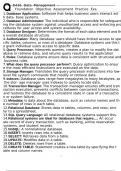
D426 Data Management - g i g i g i
Foundation Objective Assessment Practice Exa
g i g i g i g i g i
1.Database Application: Software that helps business users interact wit
gi gi gi gi gi gi gi gi
h data- base systems.
gi gi gi
2.Database Administrator: The individual who is responsible for safeguard
gi gi gi gi gi gi gi gi
ing the database system against unauthorized access and enforcing pro
gi gi gi gi gi gi gi gi gi
cedures for user access and system availability.
gi gi gi gi gi gi
3.Database Designer: Determines the format of each data element and th
gi gi gi gi gi gi gi gi gi gi
e overall database structure.
gi gi gi
4.Authorization: Many database users should have limited access to spe gi gi gi gi gi gi gi gi gi
cific tables, columns, or rows of a database. Database systems use this t
gi gi gi gi gi gi gi gi gi gi gi gi
o grant individual users access to specific data.
gi gi gi gi gi gi gi
5.Query Processor: Interprets queries, creates a plan to modify the dat
gi gi gi gi gi gi gi gi gi gi
abase or retrieve data, and returns query results to the application
gi gi gi gi gi gi gi gi gi gi
6.Rules: Database systems ensure data is consistent with structural and
gi gi gi gi gi gi gi gi gi
business rules.
gi gi
7.What does the query processor perform?: Query optimization to ensur
gi gi gi gi gi gi gi gi gi
e the most efficient instructions are executed on the data.
gi gi gi gi gi gi gi gi gi
8.Storage Manager: Translates the query processor instructions into low-
gi gi gi gi gi gi gi gi
level file system commands that modify or retrieve data.
gi gi gi gi gi gi gi gi
9.Indexes: Database sizes range from megabytes to many terabytes, so
gi gi gi gi gi gi gi gi gi
the stor- age manager uses indexes to quickly locate data.
gi gi gi gi gi gi gi gi gi gi
10.Transaction Manager: The transaction manager ensures efficient tran gi gi gi gi gi gi gi
saction execution, prevents conflicts between concurrent transactions,
gi gi gi gi gi gi g
and restores the database to a consistent state in case of a transactio
i gi gi gi gi gi gi gi gi gi gi gi gi
n or system failure.
gi gi gi
11.Metadata: Is data about the database, such as column names and thgi gi gi gi gi gi gi gi gi gi gi
e number of rows in each table.
gi gi gi gi gi gi
12.Relational Database: Stores data in tables, columns, and rows, simi
gi gi gi gi gi gi gi gi gi
lar to a spreadsheet.
gi gi gi
13.SQL Query Language: All relational database systems support this.
gi gi gi gi gi gi gi gi
14.Relational systems are ideal for databases that require....: An accur
gi gi gi gi gi gi gi gi gi
ate record of every transaction, such as banking, airline reservation
gi gi gi gi gi gi gi gi gi g
systems, and student records.
i gi gi gi
15.NoSQL: A nonrelational database. gi gi gi
16.INSERT: Inserts rows into a table. gi gi gi gi gi
17.SELECT: Retrieves data from a table. gi gi gi gi gi
18.UPDATE: Modifies data in a table. gi gi gi gi gi
19.DELETE: Deletes rows from a table. gi gi gi gi gi
20.CREATE TABLE: Statement creates a new table by specifying the t
gi gi gi gi gi gi gi gi gi gi
able and column names.
gi gi gi
1gi/
gi18
, D426 Data Management - g i g i g i
Foundation Objective Assessment Practice Exa
g i g i g i g i g i
21.Data Type: Indicates the format column names. These can be numeric
gi gi gi gi gi gi gi gi gi gi
al, textual or complex.
gi gi gi
22.INT: Stores integer values. gi gi gi
23.DECIMAL: Stores fractional numeric values. gi gi gi gi
24.VARCHAR: Stores textual values. gi gi gi
25.DATE: Stores year, month, and day. gi gi gi gi gi
26.The Analysis Phase: Specifies database requirements without regard
gi gi gi gi gi gi gi g
to a specific database system. Requirements are represented as entitie
gi gi gi gi gi gi gi gi gi
s, relationships, and attributes.
gi gi gi
27.Analysis: Has many alternative names, conceptual design, entity-
gi gi gi gi gi gi gi
relationship modeling, and requirements definition. gi gi gi gi
28.What shape represents an Entitiy?: Rectangle
gi gi gi gi gi
29.Logical Design Phase: Implements database requirements in a speci
gi gi gi gi gi gi gi gi
fic data- gi
base system. For relational database systems, it converts entities, relati
gi gi gi gi gi gi gi gi gi gi
onships, and attributes into tables, keys, and columns.
gi gi gi gi gi gi gi
30.Physical Design Phase: Adds indexes and specifies how tables are org
gi gi gi gi gi gi gi gi gi gi
anized on storage media with SQL statements such as CREATE INDEX a
gi gi gi gi gi gi gi gi gi gi gi
nd is specific to a database system.
gi gi gi gi gi gi
31.Data Independence: The principle that physical design never affect
gi gi gi gi gi gi gi gi
s query results
gi gi
32.MySQL Command- gi
Line Client: A text interface that is included in the MySQL Server downl
gi gi gi gi gi gi gi gi gi gi gi gi
oad.
33.Error Code: Generated when a SQL statement is syntactically incorre
gi gi gi gi gi gi gi gi gi
ct or the database cannot execute the statement.
gi gi gi gi gi gi gi
34.Data Structures: Prescribes how data is organized.
gi gi gi gi gi gi
35.Table, Column, Row, & Data Type: Data structures that organizes data in
gi gi gi gi gi gi gi gi gi gi gi
table.
36.Tuple: An ordered collection of elements is enclosed in parentheses s
gi gi gi gi gi gi gi gi gi gi
uch as (a, b, c) and (a, b, c).
gi gi gi gi gi gi gi gi
37.Rules: Governs valid data. gi gi gi
38.Table: Has a name, a fixed tuple of columns, and a varying set of row
gi gi gi gi gi gi gi gi gi gi gi gi gi gi
.
39.Column: Has a name and a data type. gi gi gi gi gi gi gi
40.Row: An unnamed tuple of values. Each value corresponds to a col
gi gi gi gi gi gi gi gi gi gi gi
umn and belongs to the column's data type.
gi gi gi gi gi gi gi
41.Data Type: A named set of values, from which column values are draw
gi gi gi gi gi gi gi gi gi gi gi gi
n.
2gi/
gi18
, D426 Data Management -
g i g i g i
Foundation Objective Assessment Practice Exa
g i g i g i g i g i
42.Select: Selects a subset of rows of a table.
gi gi gi gi gi gi gi gi
43.Join: Combines two tables by comparing related columns.
gi gi gi gi gi gi gi
44.Union: Selects all rows of two tables.
gi gi gi gi gi gi
3gi/
gi18
Foundation Objective Assessment Practice Exa
g i g i g i g i g i
1.Database Application: Software that helps business users interact wit
gi gi gi gi gi gi gi gi
h data- base systems.
gi gi gi
2.Database Administrator: The individual who is responsible for safeguard
gi gi gi gi gi gi gi gi
ing the database system against unauthorized access and enforcing pro
gi gi gi gi gi gi gi gi gi
cedures for user access and system availability.
gi gi gi gi gi gi
3.Database Designer: Determines the format of each data element and th
gi gi gi gi gi gi gi gi gi gi
e overall database structure.
gi gi gi
4.Authorization: Many database users should have limited access to spe gi gi gi gi gi gi gi gi gi
cific tables, columns, or rows of a database. Database systems use this t
gi gi gi gi gi gi gi gi gi gi gi gi
o grant individual users access to specific data.
gi gi gi gi gi gi gi
5.Query Processor: Interprets queries, creates a plan to modify the dat
gi gi gi gi gi gi gi gi gi gi
abase or retrieve data, and returns query results to the application
gi gi gi gi gi gi gi gi gi gi
6.Rules: Database systems ensure data is consistent with structural and
gi gi gi gi gi gi gi gi gi
business rules.
gi gi
7.What does the query processor perform?: Query optimization to ensur
gi gi gi gi gi gi gi gi gi
e the most efficient instructions are executed on the data.
gi gi gi gi gi gi gi gi gi
8.Storage Manager: Translates the query processor instructions into low-
gi gi gi gi gi gi gi gi
level file system commands that modify or retrieve data.
gi gi gi gi gi gi gi gi
9.Indexes: Database sizes range from megabytes to many terabytes, so
gi gi gi gi gi gi gi gi gi
the stor- age manager uses indexes to quickly locate data.
gi gi gi gi gi gi gi gi gi gi
10.Transaction Manager: The transaction manager ensures efficient tran gi gi gi gi gi gi gi
saction execution, prevents conflicts between concurrent transactions,
gi gi gi gi gi gi g
and restores the database to a consistent state in case of a transactio
i gi gi gi gi gi gi gi gi gi gi gi gi
n or system failure.
gi gi gi
11.Metadata: Is data about the database, such as column names and thgi gi gi gi gi gi gi gi gi gi gi
e number of rows in each table.
gi gi gi gi gi gi
12.Relational Database: Stores data in tables, columns, and rows, simi
gi gi gi gi gi gi gi gi gi
lar to a spreadsheet.
gi gi gi
13.SQL Query Language: All relational database systems support this.
gi gi gi gi gi gi gi gi
14.Relational systems are ideal for databases that require....: An accur
gi gi gi gi gi gi gi gi gi
ate record of every transaction, such as banking, airline reservation
gi gi gi gi gi gi gi gi gi g
systems, and student records.
i gi gi gi
15.NoSQL: A nonrelational database. gi gi gi
16.INSERT: Inserts rows into a table. gi gi gi gi gi
17.SELECT: Retrieves data from a table. gi gi gi gi gi
18.UPDATE: Modifies data in a table. gi gi gi gi gi
19.DELETE: Deletes rows from a table. gi gi gi gi gi
20.CREATE TABLE: Statement creates a new table by specifying the t
gi gi gi gi gi gi gi gi gi gi
able and column names.
gi gi gi
1gi/
gi18
, D426 Data Management - g i g i g i
Foundation Objective Assessment Practice Exa
g i g i g i g i g i
21.Data Type: Indicates the format column names. These can be numeric
gi gi gi gi gi gi gi gi gi gi
al, textual or complex.
gi gi gi
22.INT: Stores integer values. gi gi gi
23.DECIMAL: Stores fractional numeric values. gi gi gi gi
24.VARCHAR: Stores textual values. gi gi gi
25.DATE: Stores year, month, and day. gi gi gi gi gi
26.The Analysis Phase: Specifies database requirements without regard
gi gi gi gi gi gi gi g
to a specific database system. Requirements are represented as entitie
gi gi gi gi gi gi gi gi gi
s, relationships, and attributes.
gi gi gi
27.Analysis: Has many alternative names, conceptual design, entity-
gi gi gi gi gi gi gi
relationship modeling, and requirements definition. gi gi gi gi
28.What shape represents an Entitiy?: Rectangle
gi gi gi gi gi
29.Logical Design Phase: Implements database requirements in a speci
gi gi gi gi gi gi gi gi
fic data- gi
base system. For relational database systems, it converts entities, relati
gi gi gi gi gi gi gi gi gi gi
onships, and attributes into tables, keys, and columns.
gi gi gi gi gi gi gi
30.Physical Design Phase: Adds indexes and specifies how tables are org
gi gi gi gi gi gi gi gi gi gi
anized on storage media with SQL statements such as CREATE INDEX a
gi gi gi gi gi gi gi gi gi gi gi
nd is specific to a database system.
gi gi gi gi gi gi
31.Data Independence: The principle that physical design never affect
gi gi gi gi gi gi gi gi
s query results
gi gi
32.MySQL Command- gi
Line Client: A text interface that is included in the MySQL Server downl
gi gi gi gi gi gi gi gi gi gi gi gi
oad.
33.Error Code: Generated when a SQL statement is syntactically incorre
gi gi gi gi gi gi gi gi gi
ct or the database cannot execute the statement.
gi gi gi gi gi gi gi
34.Data Structures: Prescribes how data is organized.
gi gi gi gi gi gi
35.Table, Column, Row, & Data Type: Data structures that organizes data in
gi gi gi gi gi gi gi gi gi gi gi
table.
36.Tuple: An ordered collection of elements is enclosed in parentheses s
gi gi gi gi gi gi gi gi gi gi
uch as (a, b, c) and (a, b, c).
gi gi gi gi gi gi gi gi
37.Rules: Governs valid data. gi gi gi
38.Table: Has a name, a fixed tuple of columns, and a varying set of row
gi gi gi gi gi gi gi gi gi gi gi gi gi gi
.
39.Column: Has a name and a data type. gi gi gi gi gi gi gi
40.Row: An unnamed tuple of values. Each value corresponds to a col
gi gi gi gi gi gi gi gi gi gi gi
umn and belongs to the column's data type.
gi gi gi gi gi gi gi
41.Data Type: A named set of values, from which column values are draw
gi gi gi gi gi gi gi gi gi gi gi gi
n.
2gi/
gi18
, D426 Data Management -
g i g i g i
Foundation Objective Assessment Practice Exa
g i g i g i g i g i
42.Select: Selects a subset of rows of a table.
gi gi gi gi gi gi gi gi
43.Join: Combines two tables by comparing related columns.
gi gi gi gi gi gi gi
44.Union: Selects all rows of two tables.
gi gi gi gi gi gi
3gi/
gi18