Discuss the validity of the traditional economic assumption that the main objective of firms is to
maximise profits
The objectives of firms are the different aims and goals of a company, depending on several factors such as the divorce of
ownership and control, level of competition in the market etc.
It could be argued that it is valid to assume the main objective of the firm is to maximise profits due to the level of
competition in the market and the fact it leads to other objectives being not
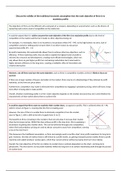
For example, in a monopoly, there is no incentive to not produce where MC = MR, as the high barriers to entry, lack of
competition and price setting power ensures there is no other reason to not pursue
supernormal profits (P1 – C1)
By profit-maximising, this automatically allows firms to achieve other key objectives, such as Figure 1
efficiency. If firms maximise profit, they are able to exploit the highest levels of profit to
reinvest into research and development, creating more efficient technologies, which not
only allows them to gain higher profit from restraining marketshare but it also leads to
higher dymanic efficiency in the long term, creating a multiplier effect of innovation and
creative destruction
However, not all firms may have the same objective, such as firms in competitive markets as they’re likely to focus on
survival
If there are a larger number of buyers and sellers in the market, firms may be at a disadvantage if they attempt to profit
maximise, as the firms are price takers
Furthermore, competitors may want to eliminate their competition by engaging in predatory pricing, which will have a long-
term effect in being able to make profits
Overall, whether maximising profits is a firm’s main objective depends on the market structure they are in and whether the
characteristics of that market allows them to achieve this
It could be argued that firms want to maximise their market share, as oppose to profits. This is achieved when AC = AR,
which is shown in Figure 1, meaning that the firm is breaking even
However, the aim of this is to enable them to eliminate competitors from the market,
seen in Figure 2, with a shift to the left of supply from S1 to S2
The benefits to firms remaining in the market is that not only does it increase their market
share but increases prices. Whilst this does achieve profit in the long term, this is supplying a
by-product of gaining extra market share. This can be furthered through price competition,
where limit and predatory pricing are used to attract consumers away from competitors, earning
a loss in the short term
This denounces the traditional assumption, as firms increasingly seek to sacrifice short term profit maximisers for long term
gain. However, this idea of market share is still driven by a profit motive, as gaining monopoly power enables firms to profit
maximise and exploit producer surplus gains, which they cannot achieve without pursuing short term loss making
Overall, the main objective of the firm in relation to market share is entirely dependent on the short- and long-term
perspective. The short term is to not profit maximise whilst the long term is to achieve maximised profit through the pursuit
of market share
maximise profits
The objectives of firms are the different aims and goals of a company, depending on several factors such as the divorce of
ownership and control, level of competition in the market etc.
It could be argued that it is valid to assume the main objective of the firm is to maximise profits due to the level of
competition in the market and the fact it leads to other objectives being not
For example, in a monopoly, there is no incentive to not produce where MC = MR, as the high barriers to entry, lack of
competition and price setting power ensures there is no other reason to not pursue
supernormal profits (P1 – C1)
By profit-maximising, this automatically allows firms to achieve other key objectives, such as Figure 1
efficiency. If firms maximise profit, they are able to exploit the highest levels of profit to
reinvest into research and development, creating more efficient technologies, which not
only allows them to gain higher profit from restraining marketshare but it also leads to
higher dymanic efficiency in the long term, creating a multiplier effect of innovation and
creative destruction
However, not all firms may have the same objective, such as firms in competitive markets as they’re likely to focus on
survival
If there are a larger number of buyers and sellers in the market, firms may be at a disadvantage if they attempt to profit
maximise, as the firms are price takers
Furthermore, competitors may want to eliminate their competition by engaging in predatory pricing, which will have a long-
term effect in being able to make profits
Overall, whether maximising profits is a firm’s main objective depends on the market structure they are in and whether the
characteristics of that market allows them to achieve this
It could be argued that firms want to maximise their market share, as oppose to profits. This is achieved when AC = AR,
which is shown in Figure 1, meaning that the firm is breaking even
However, the aim of this is to enable them to eliminate competitors from the market,
seen in Figure 2, with a shift to the left of supply from S1 to S2
The benefits to firms remaining in the market is that not only does it increase their market
share but increases prices. Whilst this does achieve profit in the long term, this is supplying a
by-product of gaining extra market share. This can be furthered through price competition,
where limit and predatory pricing are used to attract consumers away from competitors, earning
a loss in the short term
This denounces the traditional assumption, as firms increasingly seek to sacrifice short term profit maximisers for long term
gain. However, this idea of market share is still driven by a profit motive, as gaining monopoly power enables firms to profit
maximise and exploit producer surplus gains, which they cannot achieve without pursuing short term loss making
Overall, the main objective of the firm in relation to market share is entirely dependent on the short- and long-term
perspective. The short term is to not profit maximise whilst the long term is to achieve maximised profit through the pursuit
of market share