0-1 Test Bank for Intermediate Accounting, Eighteenth Edition
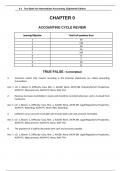
CHAPTER 0
ACCOUNTING CYCLE REVIEW
Learning Objective Total # of questions from
1 34
2 133
3 30
4 16
5 185
6 8
7 5
8 20
9 12
TRUE-FALSE—Conceptual
1. Economic events that require recording in the financial statements are called accounting
transactions.
Ans: T, LO: 1, Bloom: K, Difficulty: Easy, Min: 1, AACSB: None, AICPA BB: Industry/Sector Perspective,
AICPA FC: Measurement, AICPA PC: None, IMA: FSA
2. Revenue increases stockholders’ equity and should be recorded whenever cash is received from
customers.
Ans: F, LO: 1, Bloom: C, Difficulty: Easy, Min: 1, AACSB: None, AICPA BB: Legal/Regulatory Perspective,
AICPA FC: Reporting, AICPA PC: None, IMA: Reporting
3. Collection on an account receivable will increase both cash and accounts receivable.
Ans: F, LO: 1, Bloom: C, Difficulty: Easy, Min: 1, AACSB: None, AICPA BB: Legal/Regulatory Perspective,
AICPA FC: Measurement, AICPA PC: None, IMA: FSA
4. The payment of a liability decreases both cash and accounts payable.
Ans: T, LO: 1, Bloom: C, Difficulty: Easy, Min: 1, AACSB: None, AICPA BB: Legal/Regulatory Perspective,
AICPA FC: Measurement, AICPA PC: None, IMA: FSA
, 0-2 Test Bank for Intermediate Accounting, Eighteenth Edition
5. If total assets are increased, there must be a corresponding increase in liabilities or a decrease
in stockholders’ equity.
Ans: F, LO: 1, Bloom: C, Difficulty: Easy, Min: 1, AACSB: None, AICPA BB: Legal/Regulatory Perspective,
AICPA FC: Reporting, AICPA PC: None, IMA: Reporting
6. A new account is opened for each transaction entered into by a business firm.
Ans: F, LO: 2, Bloom: K, Difficulty: Easy, Min: 1, AACSB: None, AICPA BB: Legal/Regulatory Perspective,
AICPA FC: Measurement, AICPA PC: None, IMA: FSA
7. The recording process becomes more efficient and informative if all transactions are recorded
in one account.
Ans: F, LO: 2, Bloom: K, Difficulty: Easy, Min: 1, AACSB: None, AICPA BB: Legal/Regulatory Perspective,
AICPA FC: Measurement, AICPA PC: None, IMA: FSA
8. An account consists of two parts: (1) a left or debit side and (2) a right or credit side.
Ans: F, LO: 2, Bloom: K, Difficulty: Easy, Min: 1, AACSB: None, AICPA BB: Legal/Regulatory Perspective,
AICPA FC: Measurement, AICPA PC: None, IMA: FSA
9. For a T account, an account balance is the difference in total dollars between total debit
amounts and total credit amounts.
Ans: T, LO: 2, Bloom: K, Difficulty: Easy, Min: 1, AACSB: None, AICPA BB: Legal/Regulatory Perspective,
AICPA FC: Measurement, AICPA PC: None, IMA: FSA
10. An account is often referred to as a T-account because of the way it is constructed.
Ans: T, LO: 2, Bloom: K, Difficulty: Easy, Min: 1, AACSB: None, AICPA BB: Legal/Regulatory Perspective,
AICPA FC: Measurement, AICPA PC: None, IMA: FSA
11. A debit to an account always indicates an increase in that account.
Ans: F, LO: 2, Bloom: K, Difficulty: Easy, Min: 1, AACSB: None, AICPA BB: Legal/Regulatory Perspective,
AICPA FC: Measurement, AICPA PC: None, IMA: FSA
12. If a revenue account is credited, the revenue account is increased.
Ans: T, LO: 2, Bloom: K, Difficulty: Easy, Min: 1, AACSB: None, AICPA BB: Legal/Regulatory Perspective,
AICPA FC: Measurement, AICPA PC: None, IMA: FSA
13. The normal balance of all accounts is a debit.
, 0-3 Test Bank for Intermediate Accounting, Eighteenth Edition
Ans: F, LO: 2, Bloom: K, Difficulty: Easy, Min: 1, AACSB: None, AICPA BB: Legal/Regulatory Perspective,
AICPA FC: Measurement, AICPA PC: None, IMA: FSA
14. Debit and credit can be interpreted to mean “bad” and “good”, respectively.
Ans: F, LO: 2, Bloom: K, Difficulty: Easy, Min: 1, AACSB: None, AICPA BB: Legal/Regulatory Perspective,
AICPA FC: Measurement, AICPA PC: None, IMA: FSA
15. A credit means that an account has been increased.
Ans: F, LO: 2, Bloom: K, Difficulty: Easy, Min: 1, AACSB: None, AICPA BB: Legal/Regulatory Perspective,
AICPA FC: Measurement, AICPA PC: None, IMA: FSA
16. A decrease in a liability account is recorded by a debit.
Ans: T, LO: 2, Bloom: K, Difficulty: Easy, Min: 1, AACSB: None, AICPA BB: Legal/Regulatory Perspective,
AICPA FC: Measurement, AICPA PC: None, IMA: FSA
17. An increase in an asset is recorded by a debit.
Ans: T, LO: 2, Bloom: K, Difficulty: Easy, Min: 1, AACSB: None, AICPA BB: Legal/Regulatory Perspective,
AICPA FC: Measurement, AICPA PC: None, IMA: FSA
18. The double-entry system of accounting refers to the placement of a double line at the end of a
column of figures.
Ans: F, LO: 2, Bloom: K, Difficulty: Easy, Min: 1, AACSB: None, AICPA BB: Legal/Regulatory Perspective,
AICPA FC: Measurement, AICPA PC: None,IMA: FSA
19. A credit balance in a liability account indicates that an error in recording has occurred.
Ans: F, LO: 2, Bloom: K, Difficulty: Easy, Min: 1, AACSB: None, AICPA BB: Legal/Regulatory Perspective,
AICPA FC: Measurement, AICPA PC: None, IMA: FSA
20. The normal balance of an asset is a credit.
Ans: F, LO: 2, Bloom: K, Difficulty: Easy, Min: 1, AACSB: None, AICPA BB: Legal/Regulatory Perspective,
AICPA FC: Reporting, AICPA PC: None, IMA: Reporting
21. The normal balance of the dividend account is a credit.
Ans: F, LO: 2, Bloom: K, Difficulty: Easy, Min: 1, AACSB: None, AICPA BB: Legal/Regulatory Perspective,
AICPA FC: Reporting, AICPA PC: None, IMA: Reporting
, 0-4 Test Bank for Intermediate Accounting, Eighteenth Edition
22. Assets are decreased with a credit.
Ans: T, LO: 2, Bloom: K, Difficulty: Easy, Min: 1, AACSB: None, AICPA BB: Legal/Regulatory Perspective,
AICPA FC: Measurement, AICPA PC: None, IMA: FSA
23. A debit means that an account has been decreased.
Ans: F, LO: 2, Bloom: K, Difficulty: Easy, Min: 1, AACSB: None, AICPA BB: Legal/Regulatory Perspective,
AICPA FC: Measurement, AICPA PC: None, IMA: FSA
24. A decrease in a liability is recorded by a debit.
Ans: T, LO: 2, Bloom: K, Difficulty: Easy, Min: 1, AACSB: None, AICPA BB: Legal/Regulatory Perspective,
AICPA FC: Measurement, AICPA PC: None, IMA: FSA
25. An increase in an asset is recorded by a debit.
Ans: T, LO: 2, Bloom: K, Difficulty: Easy, Min: 1, AACSB: None, AICPA BB: Legal/Regulatory Perspective,
AICPA FC: Measurement, AICPA PC: None, IMA: FSA
26. Liabilities are increased with debits and decreased with credits.
Ans: F, LO: 2, Bloom: K, Difficulty: Easy, Min: 1, AACSB: None, AICPA BB: Legal/Regulatory Perspective,
AICPA FC: Measurement, AICPA PC: None, IMA: FSA
27. The dividends account is a subdivision of the retained earnings account and appears as an
expense on the income statement.
Ans: F, LO: 2, Bloom: K, Difficulty: Easy, Min: 1, AACSB: None, AICPA BB: Legal/Regulatory Perspective,
AICPA FC: Reporting, AICPA PC: None, IMA: Reporting
28. Revenues are a subdivision of stockholders’ equity.
Ans: T, LO: 2, Bloom: K, Difficulty: Easy, Min: 1, AACSB: None, AICPA BB: Legal/Regulatory Perspective,
AICPA FC: Reporting, AICPA PC: None, IMA: Reporting
29. Under the double-entry system, revenues must always equal expenses.
Ans: F, LO: 2, Bloom: K, Difficulty: Easy, Min: 1, AACSB: None, AICPA BB: Legal/Regulatory Perspective,
AICPA FC: Reporting, AICPA PC: None, IMA: Reporting
30. Transactions are entered in the ledger first and then they are analyzed in terms of their effect
on the accounts.
CHAPTER 0
ACCOUNTING CYCLE REVIEW
Learning Objective Total # of questions from
1 34
2 133
3 30
4 16
5 185
6 8
7 5
8 20
9 12
TRUE-FALSE—Conceptual
1. Economic events that require recording in the financial statements are called accounting
transactions.
Ans: T, LO: 1, Bloom: K, Difficulty: Easy, Min: 1, AACSB: None, AICPA BB: Industry/Sector Perspective,
AICPA FC: Measurement, AICPA PC: None, IMA: FSA
2. Revenue increases stockholders’ equity and should be recorded whenever cash is received from
customers.
Ans: F, LO: 1, Bloom: C, Difficulty: Easy, Min: 1, AACSB: None, AICPA BB: Legal/Regulatory Perspective,
AICPA FC: Reporting, AICPA PC: None, IMA: Reporting
3. Collection on an account receivable will increase both cash and accounts receivable.
Ans: F, LO: 1, Bloom: C, Difficulty: Easy, Min: 1, AACSB: None, AICPA BB: Legal/Regulatory Perspective,
AICPA FC: Measurement, AICPA PC: None, IMA: FSA
4. The payment of a liability decreases both cash and accounts payable.
Ans: T, LO: 1, Bloom: C, Difficulty: Easy, Min: 1, AACSB: None, AICPA BB: Legal/Regulatory Perspective,
AICPA FC: Measurement, AICPA PC: None, IMA: FSA
, 0-2 Test Bank for Intermediate Accounting, Eighteenth Edition
5. If total assets are increased, there must be a corresponding increase in liabilities or a decrease
in stockholders’ equity.
Ans: F, LO: 1, Bloom: C, Difficulty: Easy, Min: 1, AACSB: None, AICPA BB: Legal/Regulatory Perspective,
AICPA FC: Reporting, AICPA PC: None, IMA: Reporting
6. A new account is opened for each transaction entered into by a business firm.
Ans: F, LO: 2, Bloom: K, Difficulty: Easy, Min: 1, AACSB: None, AICPA BB: Legal/Regulatory Perspective,
AICPA FC: Measurement, AICPA PC: None, IMA: FSA
7. The recording process becomes more efficient and informative if all transactions are recorded
in one account.
Ans: F, LO: 2, Bloom: K, Difficulty: Easy, Min: 1, AACSB: None, AICPA BB: Legal/Regulatory Perspective,
AICPA FC: Measurement, AICPA PC: None, IMA: FSA
8. An account consists of two parts: (1) a left or debit side and (2) a right or credit side.
Ans: F, LO: 2, Bloom: K, Difficulty: Easy, Min: 1, AACSB: None, AICPA BB: Legal/Regulatory Perspective,
AICPA FC: Measurement, AICPA PC: None, IMA: FSA
9. For a T account, an account balance is the difference in total dollars between total debit
amounts and total credit amounts.
Ans: T, LO: 2, Bloom: K, Difficulty: Easy, Min: 1, AACSB: None, AICPA BB: Legal/Regulatory Perspective,
AICPA FC: Measurement, AICPA PC: None, IMA: FSA
10. An account is often referred to as a T-account because of the way it is constructed.
Ans: T, LO: 2, Bloom: K, Difficulty: Easy, Min: 1, AACSB: None, AICPA BB: Legal/Regulatory Perspective,
AICPA FC: Measurement, AICPA PC: None, IMA: FSA
11. A debit to an account always indicates an increase in that account.
Ans: F, LO: 2, Bloom: K, Difficulty: Easy, Min: 1, AACSB: None, AICPA BB: Legal/Regulatory Perspective,
AICPA FC: Measurement, AICPA PC: None, IMA: FSA
12. If a revenue account is credited, the revenue account is increased.
Ans: T, LO: 2, Bloom: K, Difficulty: Easy, Min: 1, AACSB: None, AICPA BB: Legal/Regulatory Perspective,
AICPA FC: Measurement, AICPA PC: None, IMA: FSA
13. The normal balance of all accounts is a debit.
, 0-3 Test Bank for Intermediate Accounting, Eighteenth Edition
Ans: F, LO: 2, Bloom: K, Difficulty: Easy, Min: 1, AACSB: None, AICPA BB: Legal/Regulatory Perspective,
AICPA FC: Measurement, AICPA PC: None, IMA: FSA
14. Debit and credit can be interpreted to mean “bad” and “good”, respectively.
Ans: F, LO: 2, Bloom: K, Difficulty: Easy, Min: 1, AACSB: None, AICPA BB: Legal/Regulatory Perspective,
AICPA FC: Measurement, AICPA PC: None, IMA: FSA
15. A credit means that an account has been increased.
Ans: F, LO: 2, Bloom: K, Difficulty: Easy, Min: 1, AACSB: None, AICPA BB: Legal/Regulatory Perspective,
AICPA FC: Measurement, AICPA PC: None, IMA: FSA
16. A decrease in a liability account is recorded by a debit.
Ans: T, LO: 2, Bloom: K, Difficulty: Easy, Min: 1, AACSB: None, AICPA BB: Legal/Regulatory Perspective,
AICPA FC: Measurement, AICPA PC: None, IMA: FSA
17. An increase in an asset is recorded by a debit.
Ans: T, LO: 2, Bloom: K, Difficulty: Easy, Min: 1, AACSB: None, AICPA BB: Legal/Regulatory Perspective,
AICPA FC: Measurement, AICPA PC: None, IMA: FSA
18. The double-entry system of accounting refers to the placement of a double line at the end of a
column of figures.
Ans: F, LO: 2, Bloom: K, Difficulty: Easy, Min: 1, AACSB: None, AICPA BB: Legal/Regulatory Perspective,
AICPA FC: Measurement, AICPA PC: None,IMA: FSA
19. A credit balance in a liability account indicates that an error in recording has occurred.
Ans: F, LO: 2, Bloom: K, Difficulty: Easy, Min: 1, AACSB: None, AICPA BB: Legal/Regulatory Perspective,
AICPA FC: Measurement, AICPA PC: None, IMA: FSA
20. The normal balance of an asset is a credit.
Ans: F, LO: 2, Bloom: K, Difficulty: Easy, Min: 1, AACSB: None, AICPA BB: Legal/Regulatory Perspective,
AICPA FC: Reporting, AICPA PC: None, IMA: Reporting
21. The normal balance of the dividend account is a credit.
Ans: F, LO: 2, Bloom: K, Difficulty: Easy, Min: 1, AACSB: None, AICPA BB: Legal/Regulatory Perspective,
AICPA FC: Reporting, AICPA PC: None, IMA: Reporting
, 0-4 Test Bank for Intermediate Accounting, Eighteenth Edition
22. Assets are decreased with a credit.
Ans: T, LO: 2, Bloom: K, Difficulty: Easy, Min: 1, AACSB: None, AICPA BB: Legal/Regulatory Perspective,
AICPA FC: Measurement, AICPA PC: None, IMA: FSA
23. A debit means that an account has been decreased.
Ans: F, LO: 2, Bloom: K, Difficulty: Easy, Min: 1, AACSB: None, AICPA BB: Legal/Regulatory Perspective,
AICPA FC: Measurement, AICPA PC: None, IMA: FSA
24. A decrease in a liability is recorded by a debit.
Ans: T, LO: 2, Bloom: K, Difficulty: Easy, Min: 1, AACSB: None, AICPA BB: Legal/Regulatory Perspective,
AICPA FC: Measurement, AICPA PC: None, IMA: FSA
25. An increase in an asset is recorded by a debit.
Ans: T, LO: 2, Bloom: K, Difficulty: Easy, Min: 1, AACSB: None, AICPA BB: Legal/Regulatory Perspective,
AICPA FC: Measurement, AICPA PC: None, IMA: FSA
26. Liabilities are increased with debits and decreased with credits.
Ans: F, LO: 2, Bloom: K, Difficulty: Easy, Min: 1, AACSB: None, AICPA BB: Legal/Regulatory Perspective,
AICPA FC: Measurement, AICPA PC: None, IMA: FSA
27. The dividends account is a subdivision of the retained earnings account and appears as an
expense on the income statement.
Ans: F, LO: 2, Bloom: K, Difficulty: Easy, Min: 1, AACSB: None, AICPA BB: Legal/Regulatory Perspective,
AICPA FC: Reporting, AICPA PC: None, IMA: Reporting
28. Revenues are a subdivision of stockholders’ equity.
Ans: T, LO: 2, Bloom: K, Difficulty: Easy, Min: 1, AACSB: None, AICPA BB: Legal/Regulatory Perspective,
AICPA FC: Reporting, AICPA PC: None, IMA: Reporting
29. Under the double-entry system, revenues must always equal expenses.
Ans: F, LO: 2, Bloom: K, Difficulty: Easy, Min: 1, AACSB: None, AICPA BB: Legal/Regulatory Perspective,
AICPA FC: Reporting, AICPA PC: None, IMA: Reporting
30. Transactions are entered in the ledger first and then they are analyzed in terms of their effect
on the accounts.