Lifespan Development Unit 2
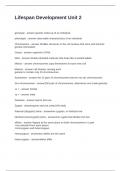
genotype - answer genetic make-up of an individual
phenotype - answer observable characteristics of an individual
Chromosome - answer Rodlike structures in the cell nucleus that store and transmit
genetic information
Genes - answer segment of DNA
DNA - answer double-stranded molecule that looks like a twisted ladder
Mitosis - answer chromosomes copy themselves for each new cell
Meiosis - answer cell division causing each
gamete to contain only 23 chromosomes.
Autosomes - answer the 22 pairs of chromosomes that are not sex chromosomes
Sex chromosomes - answer23rd pair of chromosomes, determines sex (male gamete)
xx = - answer female
xy = - answer male
Gametes - answer sperm and ova
Zygote - answersperm and ova united (46 total)
fraternal (dizygotic) twins - answertwo zygotes, or fertilized ova
identical (monozygotic) twins - answerone zygote that divides into two
alleles - answer-Appear at the same place on both chromosomes in a pair
-one inherited from each parent
-homozygous and heterozygous
Homozygous - answertwo alleles are the same
heterozygous - answeralleles differ
, Dominant-recessive genes principle (Mendelian Inheritance) - answerif one gene is
dominant and the other recessive, the dominant gene exerts its effect
carriers - answerHeterozygous individuals who can pass a recessive trait to their
offspring
sickle cell anemia - answer-occurs in full form when a child inherits two recessive genes
-cause the usually round red blood cells to become sickle (crescent-moon) shaped,
especially under low-oxygen conditions
-block the flow of blood, causing intense pain, swelling, and tissue damage
-present in many black Africans
phenylketonuria or PKU - answer-recessive disorder
-affects the way the body breaks down proteins contained in many foods
-damage the central nervous system, causing permanent intellectual disability
Incomplete Dominance - answercombined trait
Genomic Imprinting - answer-temporary
-A pattern of inheritance in which alleles are imprinted, or chemically marked, in such a
way that one pair member is activated, regardless of its makeup
mutation - answera sudden but permanent change in a segment of DNA
germline mutation - answer-takes place in the cells that give rise to gametes
-affected individual mates, the defective DNA is passed on to the next generation
somatic mutation - answer-normal body cells mutate, an event that can occur at any
time of life
Polygenic Inheritance - answer-A pattern of inheritance in which many genes influence
a characteristic.
Down syndrome - answer-twenty-first chromosome doesn't separate during meiosis -
has 3 (95% of time)
-intellectual disability, memory and speech problems, limited vocabulary, and slow
motor development
x-linked inheritance - answerA pattern of inheritance in which a harmful allele is carried
on the X chromosome, so that males are more likely than females to be affected
hemophilia - answer-blood fails to clot normally
XYY Syndrome - answer-Extra Y
-above-average height, large teeth, severe acne
-intelligence, male sexual development, and fertility are normal
genotype - answer genetic make-up of an individual
phenotype - answer observable characteristics of an individual
Chromosome - answer Rodlike structures in the cell nucleus that store and transmit
genetic information
Genes - answer segment of DNA
DNA - answer double-stranded molecule that looks like a twisted ladder
Mitosis - answer chromosomes copy themselves for each new cell
Meiosis - answer cell division causing each
gamete to contain only 23 chromosomes.
Autosomes - answer the 22 pairs of chromosomes that are not sex chromosomes
Sex chromosomes - answer23rd pair of chromosomes, determines sex (male gamete)
xx = - answer female
xy = - answer male
Gametes - answer sperm and ova
Zygote - answersperm and ova united (46 total)
fraternal (dizygotic) twins - answertwo zygotes, or fertilized ova
identical (monozygotic) twins - answerone zygote that divides into two
alleles - answer-Appear at the same place on both chromosomes in a pair
-one inherited from each parent
-homozygous and heterozygous
Homozygous - answertwo alleles are the same
heterozygous - answeralleles differ
, Dominant-recessive genes principle (Mendelian Inheritance) - answerif one gene is
dominant and the other recessive, the dominant gene exerts its effect
carriers - answerHeterozygous individuals who can pass a recessive trait to their
offspring
sickle cell anemia - answer-occurs in full form when a child inherits two recessive genes
-cause the usually round red blood cells to become sickle (crescent-moon) shaped,
especially under low-oxygen conditions
-block the flow of blood, causing intense pain, swelling, and tissue damage
-present in many black Africans
phenylketonuria or PKU - answer-recessive disorder
-affects the way the body breaks down proteins contained in many foods
-damage the central nervous system, causing permanent intellectual disability
Incomplete Dominance - answercombined trait
Genomic Imprinting - answer-temporary
-A pattern of inheritance in which alleles are imprinted, or chemically marked, in such a
way that one pair member is activated, regardless of its makeup
mutation - answera sudden but permanent change in a segment of DNA
germline mutation - answer-takes place in the cells that give rise to gametes
-affected individual mates, the defective DNA is passed on to the next generation
somatic mutation - answer-normal body cells mutate, an event that can occur at any
time of life
Polygenic Inheritance - answer-A pattern of inheritance in which many genes influence
a characteristic.
Down syndrome - answer-twenty-first chromosome doesn't separate during meiosis -
has 3 (95% of time)
-intellectual disability, memory and speech problems, limited vocabulary, and slow
motor development
x-linked inheritance - answerA pattern of inheritance in which a harmful allele is carried
on the X chromosome, so that males are more likely than females to be affected
hemophilia - answer-blood fails to clot normally
XYY Syndrome - answer-Extra Y
-above-average height, large teeth, severe acne
-intelligence, male sexual development, and fertility are normal