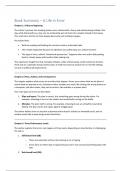
Book Summary – A Life in Error
Chapter 1: A Bizarre Beginning
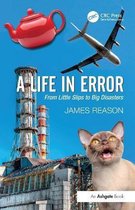
The author’s journey into studying human error started with a funny and embarrassing mistake. One
day, while distracted by a noisy cat, he accidentally put cat food into a teapot instead of tea leaves.
This small error led him to think deeply about why such mistakes happen.
He realized that:
• Both tea-making and feeding the cat were routine, automatic tasks.
• The mistake happened because his attention was pulled away at a critical moment.
• This type of error, called a "behavioral spoonerism," happens when one action (like putting
food in a bowl) swaps with another (like making tea).
This experience taught him that everyday mistakes, while embarrassing, could reveal how humans
think and act, especially during routine tasks. It made him want to study errors in real-life settings,
not just in artificial lab experiments.
Chapter 2: Plans, Actions, and Consequences
The chapter explains what errors are and why they happen. Errors occur when what we do doesn’t
match what we planned to do. Sometimes these mistakes are small, like clicking the wrong button on
a computer, and other times, they can be serious, like mistakes in a power plant.
Two main types of errors are described:
1. Slips and lapses: The plan is correct, but something goes wrong during the action. For
example, intending to turn on the toaster but accidentally turning on the kettle.
2. Mistakes: The plan itself is wrong. For example, choosing to eat an unhealthy meal while
dieting. The plan works, but it goes against a bigger goal.
The author defines error as any time a planned action doesn’t achieve its intended result, and no
random event (like a wasp sting) caused the failure.
Chapter 3: Three Performance Levels
The author explains that errors can happen at three levels, depending on how familiar or challenging
the task is:
1. Skill-based level (SB):
o These are automatic actions, like steering a car or typing.
o Errors here are often slips or lapses because we’re not consciously thinking about the
task.
2. Rule-based level (RB):
, o Actions guided by rules, like following driving laws.
o Mistakes happen when we apply the wrong rule or don’t recognize that the situation
has changed.
3. Knowledge-based level (KB):
o Used when we face new or unfamiliar problems, like navigating a detour.
o This level involves trial and error and is slower, requiring more thought. Mistakes
here can be due to incomplete knowledge or reasoning.
The author gives examples like nuclear plant accidents, where workers made mistakes by following
the wrong rules or misinterpreting information. He emphasizes that even experts can make errors
when the situation changes unexpectedly.
• Both SB slips and RB mistakes share feed-forward control. This emanates from stored
knowledge structures (motor programs, schemas, rules). Rasmussen summarized this feature
of the SB level as follows: ‘Performance is based on feed-forward control and depends upon a
very flexible and efficient dynamic internal world model.’
Chapter 4: Absent-Minded Slips and Lapses
This chapter focuses on common absent-minded errors, which happen when we lose focus during
routine activities. Examples include:
• Forgetting what you walked into a room for.
• Saying "thank you" to a machine.
• Pouring milk into a coffee jar instead of your cup.
Key points:
• These errors happen during familiar, automatic actions when our attention is elsewhere.
• They’re more likely when we’re distracted or when something unexpected interrupts a
routine.
• Experts are more prone to these errors because they perform routine tasks without much
conscious thought.
There are at least four further situations in which strong habit intrusions are likely to occur:
• When a change of goal demands a departure from some well-established action sequence.
For example, you decide to lose weight and so wish to eliminate putting sugar on your cereal.
But when you come to sit down for breakfast, you automatically sprinkle sugar on your
cereal.
• When changed local conditions require the modification of some oft-performed action
sequence. As an experiment, my wife and I decided to reverse the positions of two adjacent
drawers in our kitchen. One of them held our cutlery, the other didn’t. It took more than four
months before we stopped trying to get our knives and forks out of the wrong drawer.
• When a familiar environment associated with particular routines is entered in a state of
reduced intentionality. For example, we could be waiting for a phone call or a visitor, then we
Chapter 1: A Bizarre Beginning
The author’s journey into studying human error started with a funny and embarrassing mistake. One
day, while distracted by a noisy cat, he accidentally put cat food into a teapot instead of tea leaves.
This small error led him to think deeply about why such mistakes happen.
He realized that:
• Both tea-making and feeding the cat were routine, automatic tasks.
• The mistake happened because his attention was pulled away at a critical moment.
• This type of error, called a "behavioral spoonerism," happens when one action (like putting
food in a bowl) swaps with another (like making tea).
This experience taught him that everyday mistakes, while embarrassing, could reveal how humans
think and act, especially during routine tasks. It made him want to study errors in real-life settings,
not just in artificial lab experiments.
Chapter 2: Plans, Actions, and Consequences
The chapter explains what errors are and why they happen. Errors occur when what we do doesn’t
match what we planned to do. Sometimes these mistakes are small, like clicking the wrong button on
a computer, and other times, they can be serious, like mistakes in a power plant.
Two main types of errors are described:
1. Slips and lapses: The plan is correct, but something goes wrong during the action. For
example, intending to turn on the toaster but accidentally turning on the kettle.
2. Mistakes: The plan itself is wrong. For example, choosing to eat an unhealthy meal while
dieting. The plan works, but it goes against a bigger goal.
The author defines error as any time a planned action doesn’t achieve its intended result, and no
random event (like a wasp sting) caused the failure.
Chapter 3: Three Performance Levels
The author explains that errors can happen at three levels, depending on how familiar or challenging
the task is:
1. Skill-based level (SB):
o These are automatic actions, like steering a car or typing.
o Errors here are often slips or lapses because we’re not consciously thinking about the
task.
2. Rule-based level (RB):
, o Actions guided by rules, like following driving laws.
o Mistakes happen when we apply the wrong rule or don’t recognize that the situation
has changed.
3. Knowledge-based level (KB):
o Used when we face new or unfamiliar problems, like navigating a detour.
o This level involves trial and error and is slower, requiring more thought. Mistakes
here can be due to incomplete knowledge or reasoning.
The author gives examples like nuclear plant accidents, where workers made mistakes by following
the wrong rules or misinterpreting information. He emphasizes that even experts can make errors
when the situation changes unexpectedly.
• Both SB slips and RB mistakes share feed-forward control. This emanates from stored
knowledge structures (motor programs, schemas, rules). Rasmussen summarized this feature
of the SB level as follows: ‘Performance is based on feed-forward control and depends upon a
very flexible and efficient dynamic internal world model.’
Chapter 4: Absent-Minded Slips and Lapses
This chapter focuses on common absent-minded errors, which happen when we lose focus during
routine activities. Examples include:
• Forgetting what you walked into a room for.
• Saying "thank you" to a machine.
• Pouring milk into a coffee jar instead of your cup.
Key points:
• These errors happen during familiar, automatic actions when our attention is elsewhere.
• They’re more likely when we’re distracted or when something unexpected interrupts a
routine.
• Experts are more prone to these errors because they perform routine tasks without much
conscious thought.
There are at least four further situations in which strong habit intrusions are likely to occur:
• When a change of goal demands a departure from some well-established action sequence.
For example, you decide to lose weight and so wish to eliminate putting sugar on your cereal.
But when you come to sit down for breakfast, you automatically sprinkle sugar on your
cereal.
• When changed local conditions require the modification of some oft-performed action
sequence. As an experiment, my wife and I decided to reverse the positions of two adjacent
drawers in our kitchen. One of them held our cutlery, the other didn’t. It took more than four
months before we stopped trying to get our knives and forks out of the wrong drawer.
• When a familiar environment associated with particular routines is entered in a state of
reduced intentionality. For example, we could be waiting for a phone call or a visitor, then we