Iowa Dental Assisting Infection Control
UPDATED Exam Questions and CORRECT
Answers
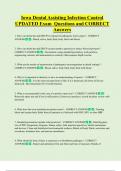
1. How can dental pts and DHCP be exposed to pathogenic micro-orgos? - CORRECT
ANSWER - Blood, saliva, body fluid, body fluid with blood
2. How can dental pts and DHCP use preventative practices to reduce blood exposures? -
CORRECT ANSWER - Vaccination; using standard precaution, work practice,
engineering controls, and administrative controls; Osha requires HepB vaccine
3. What are the modes of transmission of pathogenic microorganisms in dental settings? -
CORRECT ANSWER - Blood, saliva, body fluid, body fluid with blood
4. Why is it important in dentistry to have an understanding of spores? - CORRECT
ANSWER - It is the most resistant form of life; if it is destroyed, all forms of life are
destroyed ; Mycobacterium Tb is bacilli bacteria
5. What is recommended in the case of a positive spore test? - CORRECT ANSWER -
Retest the spore test and if test is still positive, Disservice autoclave; record incident; review with
personnel
6. What does the term standard precautions mean? - CORRECT ANSWER - Treating
blood and certain body fluids from all patients as if infected with HBV, HIV, or other BBP
7. Standard precautions include what practices? - CORRECT ANSWER - Hand hygiene;
Use of PPE; Respiratory Hygiene; Sharps safety; Safe injection practiCes; Sterile instruments
and devices; Clean and disinfected environmental surfaces; Blood, all body fluids, secretions and
excretions, nonintact skin, and mucous membranes
8. What should be done if there is exposure to a bloodborne pathogen? - CORRECT
ANSWER - Report and administer first aid; Date and time of exposure; Details of
, exposure/ amount of fluid contacted; Details regarding whether the source material was known
to contain BBP; Details regarding exposed person; Details regarding post exposure and
counseling
9. How often should dental health care personnel immunization records be updated? -
CORRECT ANSWER - @ time of immunization & monitor after
10. What is the major source of microorganisms in the dental office? - CORRECT
ANSWER - Saliva, respiratory secretions, and blood
11. What destroys or inhibits some pathogenic microorganisms? - CORRECT ANSWER -
disinfection
12. How can microorganisms enter a persons body? - CORRECT ANSWER - Inhalation,
ingestion, mucous membranes, breaks in the skin
13. How often should a pts medical history be updated? - CORRECT ANSWER - At each
appointment
14. What is the difference btw disinfection and sterilization? - CORRECT ANSWER -
Disinfection does not kill spores; only part of microbial life is killed or inhibited as opposed to
sterilization
15. Is a TB test required for dental health care personnel? - CORRECT ANSWER - Not
recommended to receive routinely
- CORRECT ANSWER -
16. 3 classifications of microorganisms? - CORRECT ANSWER - bacteria, viruses, fungi
UPDATED Exam Questions and CORRECT
Answers
1. How can dental pts and DHCP be exposed to pathogenic micro-orgos? - CORRECT
ANSWER - Blood, saliva, body fluid, body fluid with blood
2. How can dental pts and DHCP use preventative practices to reduce blood exposures? -
CORRECT ANSWER - Vaccination; using standard precaution, work practice,
engineering controls, and administrative controls; Osha requires HepB vaccine
3. What are the modes of transmission of pathogenic microorganisms in dental settings? -
CORRECT ANSWER - Blood, saliva, body fluid, body fluid with blood
4. Why is it important in dentistry to have an understanding of spores? - CORRECT
ANSWER - It is the most resistant form of life; if it is destroyed, all forms of life are
destroyed ; Mycobacterium Tb is bacilli bacteria
5. What is recommended in the case of a positive spore test? - CORRECT ANSWER -
Retest the spore test and if test is still positive, Disservice autoclave; record incident; review with
personnel
6. What does the term standard precautions mean? - CORRECT ANSWER - Treating
blood and certain body fluids from all patients as if infected with HBV, HIV, or other BBP
7. Standard precautions include what practices? - CORRECT ANSWER - Hand hygiene;
Use of PPE; Respiratory Hygiene; Sharps safety; Safe injection practiCes; Sterile instruments
and devices; Clean and disinfected environmental surfaces; Blood, all body fluids, secretions and
excretions, nonintact skin, and mucous membranes
8. What should be done if there is exposure to a bloodborne pathogen? - CORRECT
ANSWER - Report and administer first aid; Date and time of exposure; Details of
, exposure/ amount of fluid contacted; Details regarding whether the source material was known
to contain BBP; Details regarding exposed person; Details regarding post exposure and
counseling
9. How often should dental health care personnel immunization records be updated? -
CORRECT ANSWER - @ time of immunization & monitor after
10. What is the major source of microorganisms in the dental office? - CORRECT
ANSWER - Saliva, respiratory secretions, and blood
11. What destroys or inhibits some pathogenic microorganisms? - CORRECT ANSWER -
disinfection
12. How can microorganisms enter a persons body? - CORRECT ANSWER - Inhalation,
ingestion, mucous membranes, breaks in the skin
13. How often should a pts medical history be updated? - CORRECT ANSWER - At each
appointment
14. What is the difference btw disinfection and sterilization? - CORRECT ANSWER -
Disinfection does not kill spores; only part of microbial life is killed or inhibited as opposed to
sterilization
15. Is a TB test required for dental health care personnel? - CORRECT ANSWER - Not
recommended to receive routinely
- CORRECT ANSWER -
16. 3 classifications of microorganisms? - CORRECT ANSWER - bacteria, viruses, fungi