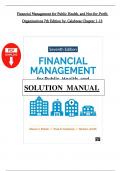
Instructor’s qManual qfor qFinancial q Management q for qPublic, qHealth, qand qNot-for-Profit
q Organizations1
,
SOLUTIONS MANUAL for Financial Management for Public Health
q q q q q q q
and Not-for-Profit Organizations 7th Edition by Steven Finkler,
q q q q q q q q
Thad Calabrese, (Complete 15 Chapters)
q q q q q
,Chapter q3: q Additional q Budgeting 3-2
q Concepts
INTRODUCTION
Chapter 1 q
TO
FINANCIAL
MANAGEMENT
q
Questions qfor qDiscussion
1-1. qFinancial qmanagement qis qthe qsubset qof qmanagement qthat qfocuses qon qgenerating qfinancial qinformation
that qcan qimprove qdecisions. qThe qdecisions qare qoriented qtoward qachieving qthe qvarious qgoals qof qthe
q
qorganization qwhile qmaintaining qa qsatisfactory qfinancial qsituation. qFinancial qmanagement qencompasses q
the
qbroad qareas qof qaccounting qand q finance.
1-2. qIn qproprietary, qor qfor-profit, qorganizations, qan qunderlying qgoal qis qto qmaximize qthe qwealth qof qthe qowners
qof qthe qorganization.
1-3. qIn qpublic qservice qorganizations, qdecisions qare qoriented qtoward qachieving qthe qvarious qgoals qof qthe
qorganization qwhile qmaintaining qa qsatisfactory qfinancial qsituation.
1-4. qAccounting qis qa qsystem qfor qkeeping qtrack qof qthe qfinancial qstatus qof qan qorganization qand qthe qfinancial
qresults qof qits qactivities. qIt qhas qoften qbeen qreferred qto qas qthe qlanguage qof qbusiness. qThe qvocabulary qused
qby qaccounting q is qthe q language qof qnonbusiness qorganizations qas qwell.
1-5. qAccounting qis qsubdivided qinto qtwo qmajor qareas: qmanagerial qaccounting qand qfinancial qaccounting.
qManagerial qaccounting qrelates qto qgenerating qany qfinancial qinformation qthat qmanagers qcan quse qto
qimprove qthe qfuture qresults qof qthe qorganization. qThis qincludes qtechniques qdesigned qto qgenerate qany
qfinancial qdata qthat qmight qhelp qmanagers qmake qmore qeffective qdecisions. qMajor qaspects qof qmanagerial
accounting qrelate qto qmaking qfinancial qplans qfor qthe qorganization, qimplementing qthose qplans, qand qthen
q
working qto qensure qthat qthe qplans qare qachieved. qSome qexamples qof qmanagerial qaccounting qinclude
q
qpreparing qannual qoperating qbudgets, qgenerating qinformation qfor quse qin qmaking qmajor qinvestment
qdecisions, qand qproviding qthe qdata qneeded qto qdecide qwhether qto qbuy qor qlease qa qmajor qpiece qof
qequipment. qFinancial qaccounting qprovides qretrospective qinformation. qAs qevents qthat qhave qfinancial
qimplications qoccur qthey qare qrecorded qby qthe q financial qaccounting qsystem. qFrom qtime qto qtime q(usually
monthly, qquarterly, qor qannually), qthe qrecorded qdata qare qsummarized qand qreported qto qinterested qusers.
q
The qusers qinclude qboth qinternal qmanagers qand qpeople qoutside qthe qorganization. qThose qoutsiders qinclude
q
qthose qwho qhave qlent qor qmight qlend qmoney qto qthe qorganization q(creditors), qthose qwho qmight qsell qthings
qto qthe qorganization q(called qsuppliers qor qvendors), qand qother qinterested qparties. qThese qinterested qparties
qmay qinclude qthose qwith qa qparticular qinterest qin qpublic qservice qorganizations, qsuch qas q regulators,
qlegislators, qand qcitizens. qFinancial qreports qprovide qinformation qon qthe qfinancial qstatus qof qthe
qorganization qat qa qspecific qpoint qin qtime, qas qwell qas qreporting qthe qpast qresults qof qthe qorganization‘s
qoperations q(i.e., q how qwell qit q has qdone qfrom qa q financial qviewpoint).
, Instructor’s qManual qfor qFinancial q Management q for qPublic, qHealth, qand qNot-for-Profit
q Organizations1
,
1-6. qFinance qfocuses qon qthe qalternative qsources qand quses qof qthe qorganization‘s qfinancial qresources. qObtaining
qfunds qwhen qneeded qfrom qappropriate qsources qand qthe qdeployment qof qresources qwithin qtheq organization
qfall qunder qthis qheading. qIn qaddition, qfinance qinvolves qthe qfinancial qmarkets q(such qas qstock qand qbond
q markets) qthat q provide qa qmeans qto q generating q funds qfor qorganizations.
1-7. qYes. qAchieving qthe qgoals qof qthe qorganization qrequires qfinancial qplanning. qFinancial qmanagement qprovides
qinformation qfor qmanagers qto quse qin qmaking qtheir qdecisions. qIt qhelps qmanagers qby qproviding
qinformation qon qthe qlikely qfinancial qimpact qof qeach qproposed qalternative. qIt qalso qprovides qinformation
qabout q financial qstability, q efficiency, qand qeffectiveness.
1-8. qClearly, qwe qmight qexpect qsome qpublic qservice qorganizations qthat qare qproprietary, qsuch qas qsome qhospitals,
qto qearn qprofits. qBut qwhat qabout qother qpublic qservice qorganizations qsuch qas qcharities? qThey q
should qmake
qa qprofit qas qwell. qProfits qprovide qa qsafety qmargin qagainst qunexpected qcosts, qprovide qresources qto q replace
qbuildings qand qequipment, qand qto qexpand qand q improve qservices.
1-9. q Federalqgovernment q(see qtext q Figure q1-1)
◼ Individualqincome qtaxes
◼ Socialqinsurance qtaxes
◼ Corporate qincome qtax
State qand qlocal qgovernment q (see qtext q Figure q1-4)
◼ Sales qand qgross qreceipts qtax
◼ Federalqgovernment
◼ Property qtaxes
◼ Individualqincome qtaxes
Health qsector q(see qtext q Figure q1-6)
◼ Private qinsurance
◼ Medicare
◼ Medicaid
◼ Other qgovernment qprograms
Not-for-profit q sector q(see qtext)
◼ Private qpayments qfor qgoods qand qservices
◼ Government qpayments qfor qgoods qand qservices
◼ Donations
1-10. qFederal qgovernment qspending qexceeded q$6 qtrillion qin q2020 qand qstate qand qlocal qgovernment q spendingqwas
qmore qthan q$3 qtrillion qin q2018. qIn qcontrast, qthe qGDP qwas q$21 qtrillion qin q2020. qFor qmore qup qto qdate
qinformation, qexamine qthe qstatistical qtables qof qthe qmost qrecent qEconomic qReport qof qthe qPresident,
q which qis qavailable qonline.
1-11. qThe qreported qsurplus qincludes qboth qon qand qoff qbudget qitems. qSocial qsecurity qtaxes qrepresent qan qoff
qbudget q item q that q until q recently q raised q more q revenue q than q was q spent q on q social q security
q payments.
, Chapter q3: q Additional q Budgeting 3-4
q Concepts
The qsurplus qin qthis qarea qoffset qother qgovernment qlosses, qand qeven qresulted qin qan qoverall qsurplus qfor
qthe qfederal qgovernment. qThis qis qno qlonger qthe qcase, qand, qover qtime, qtrust qfund qresources qwill qbe qused
up qto qprovide qbenefits. qAs qthe qfederal qgovernment qwill qnot qhave qaccess qto qthe qexcess qresources qfrom
q
social qsecurity, q it q will qhave qto q borrow qand qincrease qthe qtotal qlevel qof qfederal qdebt, qunless qrevenues qor
q
spending qare qchanged.
q
1-12. qSometimes qgifts qcome qwith qstrings qattached. qIf qthe qconditions qof qthe qgift qcreate qa qburden qthat qthe
qorganization qdoes qnot qwant qto qaccept, qor qsomehow qrequires qthe qorganization qto qwork qin qopposition qto
q its q mission, q it q might q turn qdown qthe qgift.
1-13. qThe qWorld qBank qhas qdefined qNGOs qas q"private qorganizations qthat qpursue qactivities qto qrelieve qsuffering,
qpromote qthe qinterests qof qthe qpoor, qprotect qthe qenvironment, qprovide qbasic qsocial qservices, qor
qundertake qcommunity qdevelopment" q(World qBank qOperational qDirective q14.70). qNGOs qare qquite q similar
qto qthe qnot-for-profit qorganizations. qThey qare qprimarily qmission-focused qrather qthan qprofit- qfocused.
q NGOs qfall qinto qthree qmain qcategories: qcommunity-based, qnational, qand qinternational.
PLANNING
Chapter 2 q
FOR
SUCCESS:
BUDGETING
q
Questions qfor qDiscussion
2-1. qPlanning qhelps qthe qorganization qby qcausing qits qemployees qto qthink qahead qand qanticipate qchange. qThis qis
qdone qby qestablishing qspecific qgoals qand qobjectives, qcommunicating qthose qobjectives qto qthe qindividuals
qwho qmust qachieve qthem, qforecasting qfuture qevents, qdeveloping qalternatives, qselecting qfrom qamong
qalternatives, qand qcoordinating qactivities. qThe qactivities qare qsummarized qin qa qdocument qcalled qa qbudget.
qThe qbudget qdescribes qwhat qwe qhope qto qachieve qand qthe qresources qthat qwill qbe qused q to qcarry qout q the
qorganization‘s qactivities.
2-2. qThe qorganization‘s qmission qrepresents qits qreason qfor qexistence. qFor qpublic, qhealth, qand qnot-for- qprofit
qorganizations, qfinances qoften qbecome qa qmeans qto qan qend, qrather qthan qthe qend qitself. qThis qmission
qcannot qsolely qbe qmaking qprofits. qFinancial qmanagement qmust qhelp qbalance qthe qfocus qon qprofit q with
qthe qpublic qservice qelements qof qthe qorganization‘s qmission.
2-3. qStrategic qplans qtranslate qthe qmission qof qthe qorganization qinto qan qapproach qor qset qof qapproaches qthat
qwill qbe qused qto qaccomplish qthe qmission, qand qa qbroad qset qof qgoals qthat qneed qto qbe qattained qto
qachieve qthe q mission. q Strategic qplans qset q the qorganization‘s qlong-term qdirection. q They qoften qdo q not
q Organizations1
,
SOLUTIONS MANUAL for Financial Management for Public Health
q q q q q q q
and Not-for-Profit Organizations 7th Edition by Steven Finkler,
q q q q q q q q
Thad Calabrese, (Complete 15 Chapters)
q q q q q
,Chapter q3: q Additional q Budgeting 3-2
q Concepts
INTRODUCTION
Chapter 1 q
TO
FINANCIAL
MANAGEMENT
q
Questions qfor qDiscussion
1-1. qFinancial qmanagement qis qthe qsubset qof qmanagement qthat qfocuses qon qgenerating qfinancial qinformation
that qcan qimprove qdecisions. qThe qdecisions qare qoriented qtoward qachieving qthe qvarious qgoals qof qthe
q
qorganization qwhile qmaintaining qa qsatisfactory qfinancial qsituation. qFinancial qmanagement qencompasses q
the
qbroad qareas qof qaccounting qand q finance.
1-2. qIn qproprietary, qor qfor-profit, qorganizations, qan qunderlying qgoal qis qto qmaximize qthe qwealth qof qthe qowners
qof qthe qorganization.
1-3. qIn qpublic qservice qorganizations, qdecisions qare qoriented qtoward qachieving qthe qvarious qgoals qof qthe
qorganization qwhile qmaintaining qa qsatisfactory qfinancial qsituation.
1-4. qAccounting qis qa qsystem qfor qkeeping qtrack qof qthe qfinancial qstatus qof qan qorganization qand qthe qfinancial
qresults qof qits qactivities. qIt qhas qoften qbeen qreferred qto qas qthe qlanguage qof qbusiness. qThe qvocabulary qused
qby qaccounting q is qthe q language qof qnonbusiness qorganizations qas qwell.
1-5. qAccounting qis qsubdivided qinto qtwo qmajor qareas: qmanagerial qaccounting qand qfinancial qaccounting.
qManagerial qaccounting qrelates qto qgenerating qany qfinancial qinformation qthat qmanagers qcan quse qto
qimprove qthe qfuture qresults qof qthe qorganization. qThis qincludes qtechniques qdesigned qto qgenerate qany
qfinancial qdata qthat qmight qhelp qmanagers qmake qmore qeffective qdecisions. qMajor qaspects qof qmanagerial
accounting qrelate qto qmaking qfinancial qplans qfor qthe qorganization, qimplementing qthose qplans, qand qthen
q
working qto qensure qthat qthe qplans qare qachieved. qSome qexamples qof qmanagerial qaccounting qinclude
q
qpreparing qannual qoperating qbudgets, qgenerating qinformation qfor quse qin qmaking qmajor qinvestment
qdecisions, qand qproviding qthe qdata qneeded qto qdecide qwhether qto qbuy qor qlease qa qmajor qpiece qof
qequipment. qFinancial qaccounting qprovides qretrospective qinformation. qAs qevents qthat qhave qfinancial
qimplications qoccur qthey qare qrecorded qby qthe q financial qaccounting qsystem. qFrom qtime qto qtime q(usually
monthly, qquarterly, qor qannually), qthe qrecorded qdata qare qsummarized qand qreported qto qinterested qusers.
q
The qusers qinclude qboth qinternal qmanagers qand qpeople qoutside qthe qorganization. qThose qoutsiders qinclude
q
qthose qwho qhave qlent qor qmight qlend qmoney qto qthe qorganization q(creditors), qthose qwho qmight qsell qthings
qto qthe qorganization q(called qsuppliers qor qvendors), qand qother qinterested qparties. qThese qinterested qparties
qmay qinclude qthose qwith qa qparticular qinterest qin qpublic qservice qorganizations, qsuch qas q regulators,
qlegislators, qand qcitizens. qFinancial qreports qprovide qinformation qon qthe qfinancial qstatus qof qthe
qorganization qat qa qspecific qpoint qin qtime, qas qwell qas qreporting qthe qpast qresults qof qthe qorganization‘s
qoperations q(i.e., q how qwell qit q has qdone qfrom qa q financial qviewpoint).
, Instructor’s qManual qfor qFinancial q Management q for qPublic, qHealth, qand qNot-for-Profit
q Organizations1
,
1-6. qFinance qfocuses qon qthe qalternative qsources qand quses qof qthe qorganization‘s qfinancial qresources. qObtaining
qfunds qwhen qneeded qfrom qappropriate qsources qand qthe qdeployment qof qresources qwithin qtheq organization
qfall qunder qthis qheading. qIn qaddition, qfinance qinvolves qthe qfinancial qmarkets q(such qas qstock qand qbond
q markets) qthat q provide qa qmeans qto q generating q funds qfor qorganizations.
1-7. qYes. qAchieving qthe qgoals qof qthe qorganization qrequires qfinancial qplanning. qFinancial qmanagement qprovides
qinformation qfor qmanagers qto quse qin qmaking qtheir qdecisions. qIt qhelps qmanagers qby qproviding
qinformation qon qthe qlikely qfinancial qimpact qof qeach qproposed qalternative. qIt qalso qprovides qinformation
qabout q financial qstability, q efficiency, qand qeffectiveness.
1-8. qClearly, qwe qmight qexpect qsome qpublic qservice qorganizations qthat qare qproprietary, qsuch qas qsome qhospitals,
qto qearn qprofits. qBut qwhat qabout qother qpublic qservice qorganizations qsuch qas qcharities? qThey q
should qmake
qa qprofit qas qwell. qProfits qprovide qa qsafety qmargin qagainst qunexpected qcosts, qprovide qresources qto q replace
qbuildings qand qequipment, qand qto qexpand qand q improve qservices.
1-9. q Federalqgovernment q(see qtext q Figure q1-1)
◼ Individualqincome qtaxes
◼ Socialqinsurance qtaxes
◼ Corporate qincome qtax
State qand qlocal qgovernment q (see qtext q Figure q1-4)
◼ Sales qand qgross qreceipts qtax
◼ Federalqgovernment
◼ Property qtaxes
◼ Individualqincome qtaxes
Health qsector q(see qtext q Figure q1-6)
◼ Private qinsurance
◼ Medicare
◼ Medicaid
◼ Other qgovernment qprograms
Not-for-profit q sector q(see qtext)
◼ Private qpayments qfor qgoods qand qservices
◼ Government qpayments qfor qgoods qand qservices
◼ Donations
1-10. qFederal qgovernment qspending qexceeded q$6 qtrillion qin q2020 qand qstate qand qlocal qgovernment q spendingqwas
qmore qthan q$3 qtrillion qin q2018. qIn qcontrast, qthe qGDP qwas q$21 qtrillion qin q2020. qFor qmore qup qto qdate
qinformation, qexamine qthe qstatistical qtables qof qthe qmost qrecent qEconomic qReport qof qthe qPresident,
q which qis qavailable qonline.
1-11. qThe qreported qsurplus qincludes qboth qon qand qoff qbudget qitems. qSocial qsecurity qtaxes qrepresent qan qoff
qbudget q item q that q until q recently q raised q more q revenue q than q was q spent q on q social q security
q payments.
, Chapter q3: q Additional q Budgeting 3-4
q Concepts
The qsurplus qin qthis qarea qoffset qother qgovernment qlosses, qand qeven qresulted qin qan qoverall qsurplus qfor
qthe qfederal qgovernment. qThis qis qno qlonger qthe qcase, qand, qover qtime, qtrust qfund qresources qwill qbe qused
up qto qprovide qbenefits. qAs qthe qfederal qgovernment qwill qnot qhave qaccess qto qthe qexcess qresources qfrom
q
social qsecurity, q it q will qhave qto q borrow qand qincrease qthe qtotal qlevel qof qfederal qdebt, qunless qrevenues qor
q
spending qare qchanged.
q
1-12. qSometimes qgifts qcome qwith qstrings qattached. qIf qthe qconditions qof qthe qgift qcreate qa qburden qthat qthe
qorganization qdoes qnot qwant qto qaccept, qor qsomehow qrequires qthe qorganization qto qwork qin qopposition qto
q its q mission, q it q might q turn qdown qthe qgift.
1-13. qThe qWorld qBank qhas qdefined qNGOs qas q"private qorganizations qthat qpursue qactivities qto qrelieve qsuffering,
qpromote qthe qinterests qof qthe qpoor, qprotect qthe qenvironment, qprovide qbasic qsocial qservices, qor
qundertake qcommunity qdevelopment" q(World qBank qOperational qDirective q14.70). qNGOs qare qquite q similar
qto qthe qnot-for-profit qorganizations. qThey qare qprimarily qmission-focused qrather qthan qprofit- qfocused.
q NGOs qfall qinto qthree qmain qcategories: qcommunity-based, qnational, qand qinternational.
PLANNING
Chapter 2 q
FOR
SUCCESS:
BUDGETING
q
Questions qfor qDiscussion
2-1. qPlanning qhelps qthe qorganization qby qcausing qits qemployees qto qthink qahead qand qanticipate qchange. qThis qis
qdone qby qestablishing qspecific qgoals qand qobjectives, qcommunicating qthose qobjectives qto qthe qindividuals
qwho qmust qachieve qthem, qforecasting qfuture qevents, qdeveloping qalternatives, qselecting qfrom qamong
qalternatives, qand qcoordinating qactivities. qThe qactivities qare qsummarized qin qa qdocument qcalled qa qbudget.
qThe qbudget qdescribes qwhat qwe qhope qto qachieve qand qthe qresources qthat qwill qbe qused q to qcarry qout q the
qorganization‘s qactivities.
2-2. qThe qorganization‘s qmission qrepresents qits qreason qfor qexistence. qFor qpublic, qhealth, qand qnot-for- qprofit
qorganizations, qfinances qoften qbecome qa qmeans qto qan qend, qrather qthan qthe qend qitself. qThis qmission
qcannot qsolely qbe qmaking qprofits. qFinancial qmanagement qmust qhelp qbalance qthe qfocus qon qprofit q with
qthe qpublic qservice qelements qof qthe qorganization‘s qmission.
2-3. qStrategic qplans qtranslate qthe qmission qof qthe qorganization qinto qan qapproach qor qset qof qapproaches qthat
qwill qbe qused qto qaccomplish qthe qmission, qand qa qbroad qset qof qgoals qthat qneed qto qbe qattained qto
qachieve qthe q mission. q Strategic qplans qset q the qorganization‘s qlong-term qdirection. q They qoften qdo q not