Task 5: Wake problems
What is obstructive sleep apnea?
OSA = a common, chronic disorder that disrupts breathing during sleep.
Affects persons of all ages, but especially those middle-aged
Patients temporarily stop/decrease their breathing (apnea/hypopnea) repeatedly during sleep.
o Is the result of repetitive partial or complete obstruction of the airway caused by
narrowing of the respiratory passages
o Can awaken a person or prevent deep, restful sleep -> daytime fatigue and sleepiness
Exact prevalence is unknown, but estimates range from 2-14% in community-screened
populations to a much higher prevalence in certain subgroups (20-90%)
o Men are 3x more likely than women to have OSA
Particularly uncommon in nonobese, premenopausal women
o Prevalence increases with age, especially in 60+ and more common in obese persons
Aging population and growing rate of obesity -> increasing rate of OSA
Associated conditions
Patients with untreated OSA have higher rates of health care
use, including more frequent and longer hospitalizations and
higher health care costs.
Furthermore, OSA has been associated with higher rates of
unintentional injury, including motor vehicle collisions and
work-related injuries.
OSA has been associated with increased morbidity and
mortality rates, and decreased quality-of-life scores as well
as numerous health problems.
o However, no causal relationship established via RCTs
or large meta-analyses
Diagnosis
In addition to risk factors, numerous signs and symptoms can suggest OSA, but PSG is the diagnostic
standard.
1. Clinical history: predictive clinical features: observed gasping
during sleep, morning headache, excessive daytime sleepiness,
loud snoring, neck circumference of > 16 inches/40.6 cm.
o Risk factors: men are 3x more likely to have OSA, but 9x
more likely to be referred for PSG -> OSA diagnosis may
be overlooked in women
o Screening questionnaires (however, limited accuracy for
most of them)
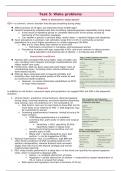
STOP-Bang questionnaire is a validated
screening tool, particularly in obese and surgical
patients.
Sensitivity > 85%, specificity 25-85%
(specificity higher in obese men)
Nocturia and snoring are sensitive, but not
specific signs of OSA.
Elbow sign = being elbowed by one’s bed
partner -> can be suggestive of OSA
2. Physical examination: neck circumference, high BMI and
other factors predictive of OSA including posterior chin
position (retrognathia), reduced distance and increased
angles from the chin to the thyroid cartilage and narrow
oropharyngeal opening.
3. PSG: sleep studies performed in a sleep lab or in the home can quantify the apnea-hypopnea
index, which is required to diagnose OSA.
Apnea = a complete obstruction of airlow
Hypopnea = partial obstruction of airblow -> measured by oxygen desaturaton of
3% or more or arousal from sleep
o Both apnea and hypopnea must last a minimum of 10 sec
, o The apnea-hypopnea index is calculated by adding all apneas and hypopneas an then
dividing by total sleep time -> 15 or more events per hour, or 5 or more events per hour
in the presence of symptoms of cardiovascular comorbidities is diagnostic for OSA
o 4 types of sleep studies depending on the number of physiologic parameters, or
channels, being monitored:
Overnight PSG performed in a sleep laboratory in the presence of an attendant =
the first-line diagnostic study and is classified as a type-I study
A fullnight study is generally indicated for diagnosis, with a follow-up study used
for positive airway pressure titration
A split-night study = diagnosis and positive airway pressure titration occur in the
same night -> most useful in patients who have an apnea-hypopnea index of >20
events per hour discovered within the first 2 hours of the study.
Home sleep apnea tests are less accurate than type-I studies, because of data
loss from detached or malfunctioning monitoring equipment.
Home monitors with fewer channels -> cannot discern between sleep and
wakefulness -> can only estimate an apnea-hypopnea index
Can be alternative to patients who are unable to present to a sleep lab
Are more accurate in identifying patients with a higher pretest probability
of OSA and can rule out OSA in low-risk patients.
Not recommended in patients with comorbidities
Treatment
Lifestyle changes and weight reduction
Obesity -> fatty deposits around neck -> pharyngeal collapse
o However, inconsistent findings on association between weight reduction and overall
improvement in sleep and breathing patterns.
Sleeping in supine position compared to lateral position may double the apnea-hypopnea index
o Strategies to avoid supine position: placing tennis balls in a sock or pocket and pinning or
sewing them onto the back of shirt, wearing vests with posterior bumpers, using
positional alarms, verbal instruction and pillows.
o Because of poor long-term compliance, positional therapy is not routinely recommended
over standard positive airway pressure therapy
Positive airway pressure therapy
Include continuous positive airway pressure (CPAP), bilevel positive airway pressure, and auto-titrating
positive airway pressure.
CPAP is effective and remains the first-line treatment for OSA
o Works via pneumatic splitting of the upper airway.
o Airway pressure may be applied through oral, oronasal, and nasal devices -> nasal
masks are preferred by patients, but further studies needed of asses comparative
benefits of each delivery system
o Adherence ranges: 17-85% with improved adherence in patients who receive early and
continued education and support on the use of CPAP
o Improves quality-of-life and sleep indices, lowers blood pressure and rates of arrhythmia
and stroke, improves left ventricular ejection fraction in patients with heart failure and
improves rates of fatal and nonfatal cardiovascular events.
Bilevel positive airway pressure may be considered in patients who need high pressure, who
hypoventilate during sleep, and who have difficulty exhaling against a fixed pressure.
Autotitrating positive airway pressure automatically adjusts pressure as needed to maintain
airway patency and can be used in lieu of a formal CPAP titration study.
o Should be used only in patients without significant comorbidities
Oral appliance therapy
Oral appliances are a reasonable alternative if patients cannot tolerate CPAP. Two main therapies:
1. Mandibular advancement devices: keep the patient’s jaw forward to maintain an open airway
2. Tongue-retaining devices: splint the tongue in place to keep the airway open.
Mandibular advancement devices are preffered, since there is insufficient evidence on the
effectiveness of tongue-retaining devices.
Newer devices such as oral pressure therapy, which uses a mouthpiece and a vacuum pump to
stabilize upper airway tissue, are being studied
What is obstructive sleep apnea?
OSA = a common, chronic disorder that disrupts breathing during sleep.
Affects persons of all ages, but especially those middle-aged
Patients temporarily stop/decrease their breathing (apnea/hypopnea) repeatedly during sleep.
o Is the result of repetitive partial or complete obstruction of the airway caused by
narrowing of the respiratory passages
o Can awaken a person or prevent deep, restful sleep -> daytime fatigue and sleepiness
Exact prevalence is unknown, but estimates range from 2-14% in community-screened
populations to a much higher prevalence in certain subgroups (20-90%)
o Men are 3x more likely than women to have OSA
Particularly uncommon in nonobese, premenopausal women
o Prevalence increases with age, especially in 60+ and more common in obese persons
Aging population and growing rate of obesity -> increasing rate of OSA
Associated conditions
Patients with untreated OSA have higher rates of health care
use, including more frequent and longer hospitalizations and
higher health care costs.
Furthermore, OSA has been associated with higher rates of
unintentional injury, including motor vehicle collisions and
work-related injuries.
OSA has been associated with increased morbidity and
mortality rates, and decreased quality-of-life scores as well
as numerous health problems.
o However, no causal relationship established via RCTs
or large meta-analyses
Diagnosis
In addition to risk factors, numerous signs and symptoms can suggest OSA, but PSG is the diagnostic
standard.
1. Clinical history: predictive clinical features: observed gasping
during sleep, morning headache, excessive daytime sleepiness,
loud snoring, neck circumference of > 16 inches/40.6 cm.
o Risk factors: men are 3x more likely to have OSA, but 9x
more likely to be referred for PSG -> OSA diagnosis may
be overlooked in women
o Screening questionnaires (however, limited accuracy for
most of them)
STOP-Bang questionnaire is a validated
screening tool, particularly in obese and surgical
patients.
Sensitivity > 85%, specificity 25-85%
(specificity higher in obese men)
Nocturia and snoring are sensitive, but not
specific signs of OSA.
Elbow sign = being elbowed by one’s bed
partner -> can be suggestive of OSA
2. Physical examination: neck circumference, high BMI and
other factors predictive of OSA including posterior chin
position (retrognathia), reduced distance and increased
angles from the chin to the thyroid cartilage and narrow
oropharyngeal opening.
3. PSG: sleep studies performed in a sleep lab or in the home can quantify the apnea-hypopnea
index, which is required to diagnose OSA.
Apnea = a complete obstruction of airlow
Hypopnea = partial obstruction of airblow -> measured by oxygen desaturaton of
3% or more or arousal from sleep
o Both apnea and hypopnea must last a minimum of 10 sec
, o The apnea-hypopnea index is calculated by adding all apneas and hypopneas an then
dividing by total sleep time -> 15 or more events per hour, or 5 or more events per hour
in the presence of symptoms of cardiovascular comorbidities is diagnostic for OSA
o 4 types of sleep studies depending on the number of physiologic parameters, or
channels, being monitored:
Overnight PSG performed in a sleep laboratory in the presence of an attendant =
the first-line diagnostic study and is classified as a type-I study
A fullnight study is generally indicated for diagnosis, with a follow-up study used
for positive airway pressure titration
A split-night study = diagnosis and positive airway pressure titration occur in the
same night -> most useful in patients who have an apnea-hypopnea index of >20
events per hour discovered within the first 2 hours of the study.
Home sleep apnea tests are less accurate than type-I studies, because of data
loss from detached or malfunctioning monitoring equipment.
Home monitors with fewer channels -> cannot discern between sleep and
wakefulness -> can only estimate an apnea-hypopnea index
Can be alternative to patients who are unable to present to a sleep lab
Are more accurate in identifying patients with a higher pretest probability
of OSA and can rule out OSA in low-risk patients.
Not recommended in patients with comorbidities
Treatment
Lifestyle changes and weight reduction
Obesity -> fatty deposits around neck -> pharyngeal collapse
o However, inconsistent findings on association between weight reduction and overall
improvement in sleep and breathing patterns.
Sleeping in supine position compared to lateral position may double the apnea-hypopnea index
o Strategies to avoid supine position: placing tennis balls in a sock or pocket and pinning or
sewing them onto the back of shirt, wearing vests with posterior bumpers, using
positional alarms, verbal instruction and pillows.
o Because of poor long-term compliance, positional therapy is not routinely recommended
over standard positive airway pressure therapy
Positive airway pressure therapy
Include continuous positive airway pressure (CPAP), bilevel positive airway pressure, and auto-titrating
positive airway pressure.
CPAP is effective and remains the first-line treatment for OSA
o Works via pneumatic splitting of the upper airway.
o Airway pressure may be applied through oral, oronasal, and nasal devices -> nasal
masks are preferred by patients, but further studies needed of asses comparative
benefits of each delivery system
o Adherence ranges: 17-85% with improved adherence in patients who receive early and
continued education and support on the use of CPAP
o Improves quality-of-life and sleep indices, lowers blood pressure and rates of arrhythmia
and stroke, improves left ventricular ejection fraction in patients with heart failure and
improves rates of fatal and nonfatal cardiovascular events.
Bilevel positive airway pressure may be considered in patients who need high pressure, who
hypoventilate during sleep, and who have difficulty exhaling against a fixed pressure.
Autotitrating positive airway pressure automatically adjusts pressure as needed to maintain
airway patency and can be used in lieu of a formal CPAP titration study.
o Should be used only in patients without significant comorbidities
Oral appliance therapy
Oral appliances are a reasonable alternative if patients cannot tolerate CPAP. Two main therapies:
1. Mandibular advancement devices: keep the patient’s jaw forward to maintain an open airway
2. Tongue-retaining devices: splint the tongue in place to keep the airway open.
Mandibular advancement devices are preffered, since there is insufficient evidence on the
effectiveness of tongue-retaining devices.
Newer devices such as oral pressure therapy, which uses a mouthpiece and a vacuum pump to
stabilize upper airway tissue, are being studied