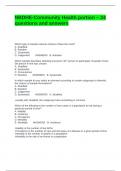
NBDHE-Community Health portion ~ 24
questions and answers
Which type of sample reduces chance of bias the most?
A. Stratified
B. Random
C. Systematic
D. Judgement ANSWERS B. Random
Which sample describes selecting everyone 'nth" person to participate. Example: Every
5th person in line was chosen
A. Stratified
B. Systematic
C. Convenience
D. Random ANSWERS B. Systematic
In which sample do you select an element according to certain subgroups to diminish
the chance of sample fluctuations?
A. Stratified
B. Random
C. Judgement
D. Systematic ANSWERS A. Stratified
-usually with stratified, the subgroups have something in common.
Which of the following is the number of new cases in a population at risk during a
particular period of time?
A. Natality
B. Incidence
C. Prevalence
D. Mortality
E. Morbidity ANSWERS B. Incidence
-Natality is the number of live births
-Prevalence is the number of new and old cases of a disease in a given period of time
-Mortality is the number of deaths in a population
-Morbidity is the rate of an illness in a population
, Which epidemiological study helps determine who is getting the disease, where the
disease is occurring, and when it occurs?
A. Descriptive study
B. Retrospective study
C. Prospective study
D. Longitudinal study ANSWERS A. Descriptive study
-A retrospective study seeks to compare those diagnosed with a disease with those who
do not have the disease
-A prospective study is a cohort study classified by exposure to one or more specific risk
factors and observed into the future to determine the rate at which the disease
develops.
-A longitudinal study is when a group is observed over a long period of time.
CAMBRA means? ANSWERS caries management by risk assessment
DMFT/DMFS is reversible. DMFT/DMFS is for permanent teeth.
A. Both true
B. Both false
C. First true, second false
D. First false, second true ANSWERS D. First false, second true
DMFT/DMFS is irreversible. It is for permanent teeth because its upper case.
dmft means? ANSWERS decayed, missing, filled teeth
-lower case for primary teeth, upper case for permanent teeth
T/F All caries indices are irreversible. ANSWERS True
Which of the following indices are irreversible?
A. GI
B. SBI
C. PDI
D. OHI-S ANSWERS C. PDI (periodontal disease index) is irreversible. Measures
the prevalence and severity of periodontal disease.
-GI (gingival index) is reversible. based on the severity of inflammation and location
-SBI (sulcular bleeding index) is reversible. designed to detect early symptoms of
gingivitis.
-OHI-S(simplified oral hygiene index) is reversible and is used to measure oral hygiene
status.
Which of the following indices determines the need for full-mouth periodontal
assessment?
A. PI
questions and answers
Which type of sample reduces chance of bias the most?
A. Stratified
B. Random
C. Systematic
D. Judgement ANSWERS B. Random
Which sample describes selecting everyone 'nth" person to participate. Example: Every
5th person in line was chosen
A. Stratified
B. Systematic
C. Convenience
D. Random ANSWERS B. Systematic
In which sample do you select an element according to certain subgroups to diminish
the chance of sample fluctuations?
A. Stratified
B. Random
C. Judgement
D. Systematic ANSWERS A. Stratified
-usually with stratified, the subgroups have something in common.
Which of the following is the number of new cases in a population at risk during a
particular period of time?
A. Natality
B. Incidence
C. Prevalence
D. Mortality
E. Morbidity ANSWERS B. Incidence
-Natality is the number of live births
-Prevalence is the number of new and old cases of a disease in a given period of time
-Mortality is the number of deaths in a population
-Morbidity is the rate of an illness in a population
, Which epidemiological study helps determine who is getting the disease, where the
disease is occurring, and when it occurs?
A. Descriptive study
B. Retrospective study
C. Prospective study
D. Longitudinal study ANSWERS A. Descriptive study
-A retrospective study seeks to compare those diagnosed with a disease with those who
do not have the disease
-A prospective study is a cohort study classified by exposure to one or more specific risk
factors and observed into the future to determine the rate at which the disease
develops.
-A longitudinal study is when a group is observed over a long period of time.
CAMBRA means? ANSWERS caries management by risk assessment
DMFT/DMFS is reversible. DMFT/DMFS is for permanent teeth.
A. Both true
B. Both false
C. First true, second false
D. First false, second true ANSWERS D. First false, second true
DMFT/DMFS is irreversible. It is for permanent teeth because its upper case.
dmft means? ANSWERS decayed, missing, filled teeth
-lower case for primary teeth, upper case for permanent teeth
T/F All caries indices are irreversible. ANSWERS True
Which of the following indices are irreversible?
A. GI
B. SBI
C. PDI
D. OHI-S ANSWERS C. PDI (periodontal disease index) is irreversible. Measures
the prevalence and severity of periodontal disease.
-GI (gingival index) is reversible. based on the severity of inflammation and location
-SBI (sulcular bleeding index) is reversible. designed to detect early symptoms of
gingivitis.
-OHI-S(simplified oral hygiene index) is reversible and is used to measure oral hygiene
status.
Which of the following indices determines the need for full-mouth periodontal
assessment?
A. PI