PHYSICS REVISION WORKSHEET
movement and position
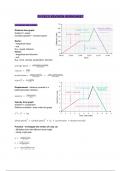
Distance time graph:
Gradient = speed
Constant gradient = constant speed
Scaler:
• magnitude (size)
• unit
E.g - speed, distance
Vector:
• magnitude and direction
• unit
E.g - force, velocity, acceleration, direction
𝑡𝑜𝑡𝑎𝑙 𝑑𝑖𝑠𝑡𝑎𝑛𝑐𝑒 𝑡𝑟𝑎𝑣𝑒𝑙𝑙𝑒𝑑
𝑎𝑣𝑒𝑟𝑎𝑔𝑒 𝑠𝑝𝑒𝑒𝑑 = 𝑡𝑖𝑚𝑒 𝑡𝑎𝑘𝑒𝑛
𝑠 (𝑚)
𝑣 (𝑚/𝑠) = 𝑡 (𝑠)
𝑐ℎ𝑎𝑛𝑔𝑒 𝑖𝑛 𝑣𝑒𝑙𝑜𝑐𝑖𝑡𝑦 𝑓𝑖𝑛𝑎𝑙 − 𝑖𝑛𝑖𝑡𝑖𝑎𝑙 𝑣𝑒𝑙𝑜𝑐𝑖𝑡𝑦
𝑎𝑐𝑐𝑒𝑙𝑒𝑟𝑎𝑡𝑖𝑜𝑛 = 𝑡𝑖𝑚𝑒 𝑡𝑎𝑘𝑒𝑛
= 𝑡𝑖𝑚𝑒 𝑡𝑎𝑘𝑒𝑛
2 𝑣 − 𝑢 (𝑚/𝑠)
𝑎 (𝑚/𝑠 ) = 𝑡 (𝑠)
Displacement - distance covered in a
particular/certain direction
𝑑𝑖𝑠𝑝𝑙𝑎𝑐𝑒𝑚𝑒𝑛𝑡
𝑣𝑒𝑙𝑜𝑐𝑖𝑡𝑦 = 𝑡𝑖𝑚𝑒
Velocity time graph:
Gradient = acceleration
Distance travelled = area under the graph
2 2
𝑣 = 𝑢 + 2𝑎𝑠
2 2
(𝑓𝑖𝑛𝑎𝑙 𝑠𝑝𝑒𝑒𝑑) = (𝑖𝑛𝑖𝑡𝑖𝑎𝑙 𝑠𝑝𝑒𝑒𝑑) + (2 × 𝑎𝑐𝑐𝑒𝑙𝑒𝑟𝑎𝑡𝑖𝑜𝑛 × 𝑑𝑖𝑠𝑡𝑎𝑛𝑐𝑒 𝑚𝑜𝑣𝑒𝑑)
Practical - investigate the motion of a toy car
• Multiples trials with different ramp height
• Using a light gate
𝑙𝑒𝑛𝑔𝑡ℎ 𝑜𝑓 𝑐𝑎𝑟𝑑
𝑢 = 𝑡2 − 𝑡1
𝑙𝑒𝑛𝑔𝑡ℎ 𝑜𝑓 𝑐𝑎𝑟𝑑
𝑣 = 𝑡4 − 𝑡3
𝑣−𝑢
𝑎 = (𝑡3 − 𝑡1) 𝑜𝑟 (𝑡4 − 𝑡2)
,forces and shape
• forces can change speed, direction and shape (it is a vector quantity)
• friction is always opposing the motion
○ Thrust - a force pushing an object forward (e.g car engine)
○ Air resistance/drag - the friction of the air particles on a moving object
○ Upthrust - the force of a fluid (e.g water) pushing an object upwards
○ Compression - forces that are squashing an object
○ Tension - forces that are stretching an object
○ Reaction force - a force due to contact between two objects
Resultant force:
- In same direction - add
- In opposing direction - subtract
- Balanced - stationary
- Unbalanced - moving
Newton’s 1st Law: Newton’s 2nd Law:
Balanced forces Unbalanced forces
Every object will remain at rest or in uniform The force (F) acting on a body is equal to the
motion in a straight line unless compelled to mass (m) of the body multiplied by the
change its state by the action of an external acceleration (a) of its centre of mass
force. 𝐹 (𝑁) = 𝑚 (𝑘𝑔) × 𝑎 (𝑚/𝑠 )
2
Hooke’s Law:
𝑓𝑜𝑟𝑐𝑒 𝑎𝑝𝑝𝑙𝑖𝑒𝑑 = 𝑠𝑝𝑟𝑖𝑛𝑔 𝑐𝑜𝑛𝑠𝑡𝑎𝑛𝑡 × 𝑒𝑥𝑡𝑒𝑛𝑠𝑖𝑜𝑛
𝐹 (𝑁) = 𝑘 (𝑁/𝑚) × 𝑒 (𝑚)
• The extension of a spring is directly
proportional to the force applied,
provided its limit of proportionality
(elastic limit) is not exceeded
• When a string is stretched far
enough, it reaches the elastic limit.
And when the weights are unloaded,
it no longer goes back to its original length
* Greater gradient → the spring is stiffer
Rubber bands:
• Don’t obey hooke’s law: the extension is not directly proportional to the force causing it
Experimental details:
○ Parallax error - viewing the ruler from the wrong angle, should measure at eye level
○ Zero error - not measuring from 0 and not subtracting the excess cm.
○ To make it more accurate - use set square rule
, forces and movement
𝐹𝑜𝑟𝑐𝑒 = 𝑚𝑎𝑠𝑠 𝑥 𝑎𝑐𝑐𝑒𝑙𝑒𝑟𝑎𝑡𝑖𝑜𝑛 • Acceleration is inversely proportional to mass
𝐹 (𝑁) = 𝑚 (𝑘𝑔) × 𝑎 (𝑚/𝑠 )
2 (force = constant)
• Force is directly proportional to acceleration
(mass = constant)
𝑠𝑡𝑜𝑝𝑝𝑖𝑛𝑔 𝑑𝑖𝑠𝑡𝑎𝑛𝑐𝑒 = 𝑡ℎ𝑖𝑛𝑘𝑖𝑛𝑔 𝑑𝑖𝑠𝑡𝑎𝑛𝑐𝑒 + 𝑏𝑟𝑎𝑘𝑖𝑛𝑔 𝑑𝑖𝑠𝑡𝑎𝑛𝑐𝑒
Thinking distance - the distance travelled in the time it takes the driver to react and apply the brakes
Braking distance - the distance travelled by the car whilst its braking and until it stops
Factors affecting thinking distance:
• intoxication (alcohol and drugs)
• distractions (mobile phone)
• tiredness
• age
• speed
• thinking distance is directly proportional to speed
• braking distance is square of speed
Terminal velocity and falling objects:
𝑤𝑒𝑖𝑔ℎ𝑡 = 𝑚𝑎𝑠𝑠 × 𝑔𝑟𝑎𝑣𝑖𝑡𝑎𝑡𝑖𝑜𝑛𝑎𝑙 𝑓𝑖𝑒𝑙𝑑 𝑠𝑡𝑟𝑒𝑛𝑔𝑡ℎ (mass and density of planet)
𝑊 (𝑁) = 𝑚 (𝑘𝑔) × 𝑔 (𝑁/𝑘𝑔)
➵ Size of air resistance (friction caused by air particles collapsing with an object moving through
air particles) depends on surface area and speed.
➵ Weight is always constant.
1) Just jumped
Weight - 800 N
Speed - 0 m/s → no air resistance
Unbalanced forces (Newton’s 2nd Law) - acceleration downwards (800 - 0 = 800N)
2) Acceleration
Weight - 800 N
Speed increases → air resistance increases - 200 N
Unbalanced forces (Newton’s 2nd Law) - decreasing acceleration downwards (800 -
200 = 600N)
movement and position
Distance time graph:
Gradient = speed
Constant gradient = constant speed
Scaler:
• magnitude (size)
• unit
E.g - speed, distance
Vector:
• magnitude and direction
• unit
E.g - force, velocity, acceleration, direction
𝑡𝑜𝑡𝑎𝑙 𝑑𝑖𝑠𝑡𝑎𝑛𝑐𝑒 𝑡𝑟𝑎𝑣𝑒𝑙𝑙𝑒𝑑
𝑎𝑣𝑒𝑟𝑎𝑔𝑒 𝑠𝑝𝑒𝑒𝑑 = 𝑡𝑖𝑚𝑒 𝑡𝑎𝑘𝑒𝑛
𝑠 (𝑚)
𝑣 (𝑚/𝑠) = 𝑡 (𝑠)
𝑐ℎ𝑎𝑛𝑔𝑒 𝑖𝑛 𝑣𝑒𝑙𝑜𝑐𝑖𝑡𝑦 𝑓𝑖𝑛𝑎𝑙 − 𝑖𝑛𝑖𝑡𝑖𝑎𝑙 𝑣𝑒𝑙𝑜𝑐𝑖𝑡𝑦
𝑎𝑐𝑐𝑒𝑙𝑒𝑟𝑎𝑡𝑖𝑜𝑛 = 𝑡𝑖𝑚𝑒 𝑡𝑎𝑘𝑒𝑛
= 𝑡𝑖𝑚𝑒 𝑡𝑎𝑘𝑒𝑛
2 𝑣 − 𝑢 (𝑚/𝑠)
𝑎 (𝑚/𝑠 ) = 𝑡 (𝑠)
Displacement - distance covered in a
particular/certain direction
𝑑𝑖𝑠𝑝𝑙𝑎𝑐𝑒𝑚𝑒𝑛𝑡
𝑣𝑒𝑙𝑜𝑐𝑖𝑡𝑦 = 𝑡𝑖𝑚𝑒
Velocity time graph:
Gradient = acceleration
Distance travelled = area under the graph
2 2
𝑣 = 𝑢 + 2𝑎𝑠
2 2
(𝑓𝑖𝑛𝑎𝑙 𝑠𝑝𝑒𝑒𝑑) = (𝑖𝑛𝑖𝑡𝑖𝑎𝑙 𝑠𝑝𝑒𝑒𝑑) + (2 × 𝑎𝑐𝑐𝑒𝑙𝑒𝑟𝑎𝑡𝑖𝑜𝑛 × 𝑑𝑖𝑠𝑡𝑎𝑛𝑐𝑒 𝑚𝑜𝑣𝑒𝑑)
Practical - investigate the motion of a toy car
• Multiples trials with different ramp height
• Using a light gate
𝑙𝑒𝑛𝑔𝑡ℎ 𝑜𝑓 𝑐𝑎𝑟𝑑
𝑢 = 𝑡2 − 𝑡1
𝑙𝑒𝑛𝑔𝑡ℎ 𝑜𝑓 𝑐𝑎𝑟𝑑
𝑣 = 𝑡4 − 𝑡3
𝑣−𝑢
𝑎 = (𝑡3 − 𝑡1) 𝑜𝑟 (𝑡4 − 𝑡2)
,forces and shape
• forces can change speed, direction and shape (it is a vector quantity)
• friction is always opposing the motion
○ Thrust - a force pushing an object forward (e.g car engine)
○ Air resistance/drag - the friction of the air particles on a moving object
○ Upthrust - the force of a fluid (e.g water) pushing an object upwards
○ Compression - forces that are squashing an object
○ Tension - forces that are stretching an object
○ Reaction force - a force due to contact between two objects
Resultant force:
- In same direction - add
- In opposing direction - subtract
- Balanced - stationary
- Unbalanced - moving
Newton’s 1st Law: Newton’s 2nd Law:
Balanced forces Unbalanced forces
Every object will remain at rest or in uniform The force (F) acting on a body is equal to the
motion in a straight line unless compelled to mass (m) of the body multiplied by the
change its state by the action of an external acceleration (a) of its centre of mass
force. 𝐹 (𝑁) = 𝑚 (𝑘𝑔) × 𝑎 (𝑚/𝑠 )
2
Hooke’s Law:
𝑓𝑜𝑟𝑐𝑒 𝑎𝑝𝑝𝑙𝑖𝑒𝑑 = 𝑠𝑝𝑟𝑖𝑛𝑔 𝑐𝑜𝑛𝑠𝑡𝑎𝑛𝑡 × 𝑒𝑥𝑡𝑒𝑛𝑠𝑖𝑜𝑛
𝐹 (𝑁) = 𝑘 (𝑁/𝑚) × 𝑒 (𝑚)
• The extension of a spring is directly
proportional to the force applied,
provided its limit of proportionality
(elastic limit) is not exceeded
• When a string is stretched far
enough, it reaches the elastic limit.
And when the weights are unloaded,
it no longer goes back to its original length
* Greater gradient → the spring is stiffer
Rubber bands:
• Don’t obey hooke’s law: the extension is not directly proportional to the force causing it
Experimental details:
○ Parallax error - viewing the ruler from the wrong angle, should measure at eye level
○ Zero error - not measuring from 0 and not subtracting the excess cm.
○ To make it more accurate - use set square rule
, forces and movement
𝐹𝑜𝑟𝑐𝑒 = 𝑚𝑎𝑠𝑠 𝑥 𝑎𝑐𝑐𝑒𝑙𝑒𝑟𝑎𝑡𝑖𝑜𝑛 • Acceleration is inversely proportional to mass
𝐹 (𝑁) = 𝑚 (𝑘𝑔) × 𝑎 (𝑚/𝑠 )
2 (force = constant)
• Force is directly proportional to acceleration
(mass = constant)
𝑠𝑡𝑜𝑝𝑝𝑖𝑛𝑔 𝑑𝑖𝑠𝑡𝑎𝑛𝑐𝑒 = 𝑡ℎ𝑖𝑛𝑘𝑖𝑛𝑔 𝑑𝑖𝑠𝑡𝑎𝑛𝑐𝑒 + 𝑏𝑟𝑎𝑘𝑖𝑛𝑔 𝑑𝑖𝑠𝑡𝑎𝑛𝑐𝑒
Thinking distance - the distance travelled in the time it takes the driver to react and apply the brakes
Braking distance - the distance travelled by the car whilst its braking and until it stops
Factors affecting thinking distance:
• intoxication (alcohol and drugs)
• distractions (mobile phone)
• tiredness
• age
• speed
• thinking distance is directly proportional to speed
• braking distance is square of speed
Terminal velocity and falling objects:
𝑤𝑒𝑖𝑔ℎ𝑡 = 𝑚𝑎𝑠𝑠 × 𝑔𝑟𝑎𝑣𝑖𝑡𝑎𝑡𝑖𝑜𝑛𝑎𝑙 𝑓𝑖𝑒𝑙𝑑 𝑠𝑡𝑟𝑒𝑛𝑔𝑡ℎ (mass and density of planet)
𝑊 (𝑁) = 𝑚 (𝑘𝑔) × 𝑔 (𝑁/𝑘𝑔)
➵ Size of air resistance (friction caused by air particles collapsing with an object moving through
air particles) depends on surface area and speed.
➵ Weight is always constant.
1) Just jumped
Weight - 800 N
Speed - 0 m/s → no air resistance
Unbalanced forces (Newton’s 2nd Law) - acceleration downwards (800 - 0 = 800N)
2) Acceleration
Weight - 800 N
Speed increases → air resistance increases - 200 N
Unbalanced forces (Newton’s 2nd Law) - decreasing acceleration downwards (800 -
200 = 600N)