Introduction lecture
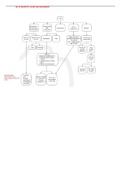
Figure, The nervous system:
Brain organization
Selection: All information will be processed (at a low level), but also selected for attention, further
processing and storage.
Attention filter:
• Protect us from information over-load
• Attention has a restricted capacity
• Unexpectant stimuli activate attention every difference between the prediction of the
environment and the actual environment sparks attention.
Processing and storage: relevant information will be processed simultaneously and stored in different
parts of the brain (= long term memory system). Relevant= something that is personally important.
Regulation: the brain regulates thoughts, emotions, behaviour (in collaboration with the somatic
nervous system), and internal body processes (in collaboration with the automatic nervous system)
• e.g. the prefrontal cortex is responsible for the inhibition of your impulses
• e.g. the brain receives of and sends information to the gut (brain-gut-axis)
• e.g. the hypothalamus regulates stress in close connection with the pituitary and the adrenal gland
(HPA-axis or biological stress system)
Integration: the brain integrates incoming information (sensory input) with already stored
information (memory/ experiences).
Prediction: The model of the predictive brain = the brain uses prior knowledge (Bayesian statistics).
The brain has some ideas based on earlier experiences on what to expect in situations.
, - There is no need to process all information, only what is not expected (= prediction error).
This makes the brain a very efficient processing device. If everything goes as expected you
don’t pay attention to it.
Lateralization: two hemispheres with partly different functions
- LH: understanding and producing language, semantic memory
- RH: processing social and emotional stimuli, visual-spatial orientation
- LH controls the right half of your body (including the limbs) and vice versa
Co-operation and competition: Some brain parts will co-operate and some parts will compete with
each other.
• Competition between top-down and bottom-up processes
• top-down (high > low) and bottom-up (low>high)
- High= cortical areas, such as the frontal cortex (conscious processes)
- Low= receives information directly from the senses. primary projection areas , the brainstem,
limbic system (habits, learned, automatized, unconscious processes).
Small worlds and large scale brain networks: the brain is organized, structurally as well as functionally,
into complex networks. It must be energy efficient, locations are close together for connected brain
functions and these locations are then also interconnected with other ‘brain-hubs’.
Figure, The nervous system:
Central Nervous System (CNS):
- Brain
• cranial nerves, extending directly from the brain to sense organs.
• brainstem
• forebrain
- Spinal cord
• Contains motor and sensory nerves
• Organization of reflexes
• Central pattern generators (rhythmic movements, such as walking and swimming)
Peripheral Nervous System (PNS):
- Somatic Nervous System (SNS)
- Autonomic Nervous System.
,The somatic nervous system is composed of:
- the sensory (afferent) neurons that carry messages from outside the body to the central
nervous system. specialized in transmitting messages from the eyes, ears, and other sensory
receptors to the brain/ spinal cord.
- the motor (efferent) neurons that carry messages from the central nervous system to the
skeletal muscles of the body. send messages from the brain and spinal cord to the muscles
that control voluntary movements.
- Every deliberate action a person makes involves neurons in the somatic nervous system
Autonomic nervous system:
- Regulates the internal environment of the body, such as respiration, circulation and digestion
- It senses the body’s internal functions, control the glands and the smooth (involuntary)
muscles of the heart, blood vessels, stomach etc.
- Also involved in aspects of motivation (for example: hungry or anger, bodily feelings),
emotional behavior (stressfeelings) and stress responses
Sympathetic nervous system: physical activation, organizes a flight-or-flight response. Reflexes
that you are not able to inhibit.
Parasympathetic nervous system: slows down body processes and maintains a state of
relaxation.
These two systems compete with each other. When one of the two is active the other is in-
active.
Difference between autonomic and somatic nervous system: is that the autonomic nervous system
receives information and controls the internal environment by motor and sensory neurons and the
somatic nervous system is responding to the external environment.
Hindbrain:
Brain stem: supports vital life functions:
- Medulla: heart rate and respiration
- Pons: sleep and arousal
Cerebellum: involved in complex rapidly changing movements that require precise timing, memory
and learning.
Midbrain:
(associated with vision, hearing, motor control, sleep and wakefulness, arousal (alertness), and
temperature regulation)
Tectum receives input from eyes and ears.
- Superior colliculus (input from optic nerve)
- Inferior colliculus (input auditory nerve)
* Both integrate information and give direct commands to the muscles.
Tegmentum: is the largest dopamine producing area in the brain, and is heavily involved in the neural
reward system.
- red nucleus (a role in motor co-ordination)
, - substantia nigra (produces dopamine, involved in motor-planning, learning, addiction, and
other functions)
- ventral tegmental area (contains a complex synaptic network of neurons, primarily involved
in homeostasis and reflex actions.)
The Forebrain:
- Hypothalamus
• Motivation and emotion: sexual behaviour, temperature regulation, sleeping, eating,
drinking, pleasure-displeasure, aggression and hormone regulation (direct contact with the
pituitary gland)
- Thalamus
• The brain’s switch board or relay station: receives information of all sensory organs and
distributes this information to other parts of the brain, especially the cerebral cortex
- Limbic system:
Hippocampus, cingulate cortex, and amygdala
- Basal ganglia:
caudate nucleus, putamen and globus pallidus
- Cerebral cortex
Limbic system:
Coordinates behaviors needed to satisfy motivational and emotional urges.
• Hippocampus: forming and retrieving memories
• Amygdala: responds quickly to salient stimuli, when it’s important to pay attention to it.
• Cingulate gyrus or cortex: conflict or error detection
Basal ganglia/striatum:
Role in learning movements and planning movements (so not automatic movements).
- Caudate nucleus
- Putamen/striatum
- Globus pallidus
Brain terms:
- 2 hemispheres that are connected by the corpus callosum.
- Subcortical and cortical
Directional terms:
- Dorsal= Top, back side
- Ventral= Down, front side
Figure, The nervous system:
Brain organization
Selection: All information will be processed (at a low level), but also selected for attention, further
processing and storage.
Attention filter:
• Protect us from information over-load
• Attention has a restricted capacity
• Unexpectant stimuli activate attention every difference between the prediction of the
environment and the actual environment sparks attention.
Processing and storage: relevant information will be processed simultaneously and stored in different
parts of the brain (= long term memory system). Relevant= something that is personally important.
Regulation: the brain regulates thoughts, emotions, behaviour (in collaboration with the somatic
nervous system), and internal body processes (in collaboration with the automatic nervous system)
• e.g. the prefrontal cortex is responsible for the inhibition of your impulses
• e.g. the brain receives of and sends information to the gut (brain-gut-axis)
• e.g. the hypothalamus regulates stress in close connection with the pituitary and the adrenal gland
(HPA-axis or biological stress system)
Integration: the brain integrates incoming information (sensory input) with already stored
information (memory/ experiences).
Prediction: The model of the predictive brain = the brain uses prior knowledge (Bayesian statistics).
The brain has some ideas based on earlier experiences on what to expect in situations.
, - There is no need to process all information, only what is not expected (= prediction error).
This makes the brain a very efficient processing device. If everything goes as expected you
don’t pay attention to it.
Lateralization: two hemispheres with partly different functions
- LH: understanding and producing language, semantic memory
- RH: processing social and emotional stimuli, visual-spatial orientation
- LH controls the right half of your body (including the limbs) and vice versa
Co-operation and competition: Some brain parts will co-operate and some parts will compete with
each other.
• Competition between top-down and bottom-up processes
• top-down (high > low) and bottom-up (low>high)
- High= cortical areas, such as the frontal cortex (conscious processes)
- Low= receives information directly from the senses. primary projection areas , the brainstem,
limbic system (habits, learned, automatized, unconscious processes).
Small worlds and large scale brain networks: the brain is organized, structurally as well as functionally,
into complex networks. It must be energy efficient, locations are close together for connected brain
functions and these locations are then also interconnected with other ‘brain-hubs’.
Figure, The nervous system:
Central Nervous System (CNS):
- Brain
• cranial nerves, extending directly from the brain to sense organs.
• brainstem
• forebrain
- Spinal cord
• Contains motor and sensory nerves
• Organization of reflexes
• Central pattern generators (rhythmic movements, such as walking and swimming)
Peripheral Nervous System (PNS):
- Somatic Nervous System (SNS)
- Autonomic Nervous System.
,The somatic nervous system is composed of:
- the sensory (afferent) neurons that carry messages from outside the body to the central
nervous system. specialized in transmitting messages from the eyes, ears, and other sensory
receptors to the brain/ spinal cord.
- the motor (efferent) neurons that carry messages from the central nervous system to the
skeletal muscles of the body. send messages from the brain and spinal cord to the muscles
that control voluntary movements.
- Every deliberate action a person makes involves neurons in the somatic nervous system
Autonomic nervous system:
- Regulates the internal environment of the body, such as respiration, circulation and digestion
- It senses the body’s internal functions, control the glands and the smooth (involuntary)
muscles of the heart, blood vessels, stomach etc.
- Also involved in aspects of motivation (for example: hungry or anger, bodily feelings),
emotional behavior (stressfeelings) and stress responses
Sympathetic nervous system: physical activation, organizes a flight-or-flight response. Reflexes
that you are not able to inhibit.
Parasympathetic nervous system: slows down body processes and maintains a state of
relaxation.
These two systems compete with each other. When one of the two is active the other is in-
active.
Difference between autonomic and somatic nervous system: is that the autonomic nervous system
receives information and controls the internal environment by motor and sensory neurons and the
somatic nervous system is responding to the external environment.
Hindbrain:
Brain stem: supports vital life functions:
- Medulla: heart rate and respiration
- Pons: sleep and arousal
Cerebellum: involved in complex rapidly changing movements that require precise timing, memory
and learning.
Midbrain:
(associated with vision, hearing, motor control, sleep and wakefulness, arousal (alertness), and
temperature regulation)
Tectum receives input from eyes and ears.
- Superior colliculus (input from optic nerve)
- Inferior colliculus (input auditory nerve)
* Both integrate information and give direct commands to the muscles.
Tegmentum: is the largest dopamine producing area in the brain, and is heavily involved in the neural
reward system.
- red nucleus (a role in motor co-ordination)
, - substantia nigra (produces dopamine, involved in motor-planning, learning, addiction, and
other functions)
- ventral tegmental area (contains a complex synaptic network of neurons, primarily involved
in homeostasis and reflex actions.)
The Forebrain:
- Hypothalamus
• Motivation and emotion: sexual behaviour, temperature regulation, sleeping, eating,
drinking, pleasure-displeasure, aggression and hormone regulation (direct contact with the
pituitary gland)
- Thalamus
• The brain’s switch board or relay station: receives information of all sensory organs and
distributes this information to other parts of the brain, especially the cerebral cortex
- Limbic system:
Hippocampus, cingulate cortex, and amygdala
- Basal ganglia:
caudate nucleus, putamen and globus pallidus
- Cerebral cortex
Limbic system:
Coordinates behaviors needed to satisfy motivational and emotional urges.
• Hippocampus: forming and retrieving memories
• Amygdala: responds quickly to salient stimuli, when it’s important to pay attention to it.
• Cingulate gyrus or cortex: conflict or error detection
Basal ganglia/striatum:
Role in learning movements and planning movements (so not automatic movements).
- Caudate nucleus
- Putamen/striatum
- Globus pallidus
Brain terms:
- 2 hemispheres that are connected by the corpus callosum.
- Subcortical and cortical
Directional terms:
- Dorsal= Top, back side
- Ventral= Down, front side