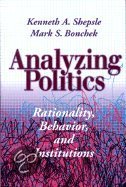
Chapter 1: It isn’t rocket science
A science of politics
● Post-war political science
○ detailed contemporary description and political history writing discussing
almost every asset of American political life
○ thick description (Geertz)
○ primarily descriptive and judgmental, less oriented towards explanation and
analysis
● 1960s
○ focus on questions of why
○ empirical regularities
○
models and theories
● models
○ stylizations meant to reflect grosso modo the real situation
○ stripped down versions of the real thing
● theory
○ model made concrete through specifying abstract model features in the
theory
politics
● politics as indistinguishable from group life generally
○ consists of individuals interacting, cooperating etc. to pursue what they wish
in group life
● benefits
○ helps demystify politics
○ politics extended into daily life
,Chapter 2: Rationality: The model of choice
introduction
● rational choice approach
○ rationality as wants and needs that affect a person's behaviour
preliminaries
● people have preferences preferences
○ wants related to survival
○ socially acquired wants
○ influences: material/economic, religious values, moral precepts, ideological
dispositions, altruistic impulses, and a sense of common destiny with some
form of community
● people are self-interested
○ people pursue the things they regard as important
○ this may include altruistic actions: an individual's conception of self is
reflected in his or her preferences and priorities
● preferences and priorities as interior world
● assumptions need to be made about preferences
● external environment
○ uncertainty about preferences of the other
○ random events we have no control over
○ uncertainty
■ people often do not know how an instrument or behaviour they
adopt might relate to outcomes they value
■ if there was no uncertainty you’d just chose the instruments that lead
to your desired outcome (an A and studying)
● people hold certain beliefs
○ the hunches people have concerning the efficacy of a given instrument or
behaviour obtaining an outcome
○ connect instruments to outcomes
○ instrumental rationality: acting in accord with beliefs and preferences
○ derives from experience (I study and get an A, might as well try it again)
● rational choice is a form of methodological individualism
○ takes as fundamental that individuals have beliefs and preferences
motivation
● economic perspective
○ consumer: spending to maximize utility
○ producer: combine inputs to achieve maximum profits
○ endowment of worker as time
○ investors as providers of capital
, ●
● can we explain variations and regularities in economic performance, outcomes, and
behaviour with a simple set of assumptions?
the simple logic of preference and choice
● building of the model
○ three objects x y z over which A has preferences
○ xPA y : X is prefered over Y by A
○ XIA y : A is indifferent between X and Y
○ the choice is rational if it is made in accord with preferences: it is rational if
no other available object is better according to the chooser’s preferences
● Property 1: comparability
○ alternatives are comparable in terms of preference
○ alternatives are comparable if one option is prefered over the other
● Property 2: Transitivity
○ transitive if x is preferred over all other options
● if preferences are comparable and transitive then there is preference ordening
● problem of comparability
○ situations in which comparison doesn’t make sense
○ choices must have meaning to the choosers if they are to be guided by
principled considerations such as those associated with rationality
the maximization paradigm
● ordering principle
○ ordering a set of objects, that reflects personal tastes and values
○ rationality is associated with capacity and aptitude to order
● maximizing behaviour
○ what is the person seeking to maximize (goal)
○ look back at economics: consumers seek to maximize utility, producers
profits.. etc.
environmental uncertainty and beliefs
● in many circumstances the actor does not choose outcomes, but instruments that
can affect outcomes.
○ we can not choose to be president, but we can choose to instrument of a
campaign that might lead to office
● belief as a probability statement relating to the effectiveness of a specific action or
instrument for achieving various outcomes
● uncertainty
, ○ choices involving an uncertainty of outcome are choices of risk
● utility number
○ assigning a numerical value to an outcome x y z → u(x) etc.
○ ranking these numbers based on preference (quantifying how much we
prefer something over the other)
● probability
○ PrA (x)= ½ , PrA (y)= 0 , PrA(z) = ½
○ A = (½ x, 0 y, ½ z)
○ making a decision under risk involves choosing the best lottery: principle of
expected utility
○ EU(A) = PrA(x) ⋅ u(x) ⋅ PrA(y) ⋅ u(y) ⋅ PrA(z) ⋅ u(z)
● It is hard to be rational under confusion, but ordering is possible for people have
some hunch about utility
A science of politics
● Post-war political science
○ detailed contemporary description and political history writing discussing
almost every asset of American political life
○ thick description (Geertz)
○ primarily descriptive and judgmental, less oriented towards explanation and
analysis
● 1960s
○ focus on questions of why
○ empirical regularities
○
models and theories
● models
○ stylizations meant to reflect grosso modo the real situation
○ stripped down versions of the real thing
● theory
○ model made concrete through specifying abstract model features in the
theory
politics
● politics as indistinguishable from group life generally
○ consists of individuals interacting, cooperating etc. to pursue what they wish
in group life
● benefits
○ helps demystify politics
○ politics extended into daily life
,Chapter 2: Rationality: The model of choice
introduction
● rational choice approach
○ rationality as wants and needs that affect a person's behaviour
preliminaries
● people have preferences preferences
○ wants related to survival
○ socially acquired wants
○ influences: material/economic, religious values, moral precepts, ideological
dispositions, altruistic impulses, and a sense of common destiny with some
form of community
● people are self-interested
○ people pursue the things they regard as important
○ this may include altruistic actions: an individual's conception of self is
reflected in his or her preferences and priorities
● preferences and priorities as interior world
● assumptions need to be made about preferences
● external environment
○ uncertainty about preferences of the other
○ random events we have no control over
○ uncertainty
■ people often do not know how an instrument or behaviour they
adopt might relate to outcomes they value
■ if there was no uncertainty you’d just chose the instruments that lead
to your desired outcome (an A and studying)
● people hold certain beliefs
○ the hunches people have concerning the efficacy of a given instrument or
behaviour obtaining an outcome
○ connect instruments to outcomes
○ instrumental rationality: acting in accord with beliefs and preferences
○ derives from experience (I study and get an A, might as well try it again)
● rational choice is a form of methodological individualism
○ takes as fundamental that individuals have beliefs and preferences
motivation
● economic perspective
○ consumer: spending to maximize utility
○ producer: combine inputs to achieve maximum profits
○ endowment of worker as time
○ investors as providers of capital
, ●
● can we explain variations and regularities in economic performance, outcomes, and
behaviour with a simple set of assumptions?
the simple logic of preference and choice
● building of the model
○ three objects x y z over which A has preferences
○ xPA y : X is prefered over Y by A
○ XIA y : A is indifferent between X and Y
○ the choice is rational if it is made in accord with preferences: it is rational if
no other available object is better according to the chooser’s preferences
● Property 1: comparability
○ alternatives are comparable in terms of preference
○ alternatives are comparable if one option is prefered over the other
● Property 2: Transitivity
○ transitive if x is preferred over all other options
● if preferences are comparable and transitive then there is preference ordening
● problem of comparability
○ situations in which comparison doesn’t make sense
○ choices must have meaning to the choosers if they are to be guided by
principled considerations such as those associated with rationality
the maximization paradigm
● ordering principle
○ ordering a set of objects, that reflects personal tastes and values
○ rationality is associated with capacity and aptitude to order
● maximizing behaviour
○ what is the person seeking to maximize (goal)
○ look back at economics: consumers seek to maximize utility, producers
profits.. etc.
environmental uncertainty and beliefs
● in many circumstances the actor does not choose outcomes, but instruments that
can affect outcomes.
○ we can not choose to be president, but we can choose to instrument of a
campaign that might lead to office
● belief as a probability statement relating to the effectiveness of a specific action or
instrument for achieving various outcomes
● uncertainty
, ○ choices involving an uncertainty of outcome are choices of risk
● utility number
○ assigning a numerical value to an outcome x y z → u(x) etc.
○ ranking these numbers based on preference (quantifying how much we
prefer something over the other)
● probability
○ PrA (x)= ½ , PrA (y)= 0 , PrA(z) = ½
○ A = (½ x, 0 y, ½ z)
○ making a decision under risk involves choosing the best lottery: principle of
expected utility
○ EU(A) = PrA(x) ⋅ u(x) ⋅ PrA(y) ⋅ u(y) ⋅ PrA(z) ⋅ u(z)
● It is hard to be rational under confusion, but ordering is possible for people have
some hunch about utility