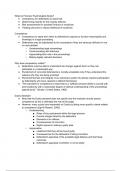
What do Forensic Psychologists Study?
● Competency for defendants to stand trial
● Determining insanity for the insanity defense
● Risk assessments for parolees?chance of recidivism
● Treating prisoners to reduce likelihood of recidivism
Competence
● Competence to stand trial: refers to defendant's capacity to function meaningfully and
knowingly in a legal proceeding
● Defendants may be adjudicated to be incompetent if they are seriously deficient in one
or more abilities
○ Understanding legal proceedings
○ Communicating with attorneys
○ Appreciating their role in the proceedings
○ Making legally relevant decisions
Why does competency matter?
● Defendants must be able to understand the charges against them so they can
participate in a meaningful way
● Punishment of convicted defendants is morally acceptable only if they understand the
reasons why they are being punished
● Perceived fairness and integrity of our adversary system of justices requires participation
by defendants who have capacity to defend themselves
● "The standard for competence to stand trial is a 'sufficient present ability to consult with
[one's] attorney with a reasonable degree of rational understanding of the proceedings
against [one]'." (Dusky v United States, 1960)
Dusky Standard
● Note that the Dusky standard does not specify how the evaluator should assess
competence as this is ultimately the role of the judge
● However, many courts have expanded on Dusky by listing more specific criteria related
to competence (Zapf & Roesch, 2009):
○ Understanding
■ Roles of key participants within the legal process
■ Current charges faced by the defendant
■ Elements of an offense
■ Consequences of conviction
■ Rights waived in making a guilty plea
○ Appreciation
■ Likelihood that they will be found guilty
■ Consequences for the defendant of being convicted
■ Defendant's appraisal of the available legal defense and their likely
outcomes
■ Defendant's appraisal of whether or not to testify
● Competency for defendants to stand trial
● Determining insanity for the insanity defense
● Risk assessments for parolees?chance of recidivism
● Treating prisoners to reduce likelihood of recidivism
Competence
● Competence to stand trial: refers to defendant's capacity to function meaningfully and
knowingly in a legal proceeding
● Defendants may be adjudicated to be incompetent if they are seriously deficient in one
or more abilities
○ Understanding legal proceedings
○ Communicating with attorneys
○ Appreciating their role in the proceedings
○ Making legally relevant decisions
Why does competency matter?
● Defendants must be able to understand the charges against them so they can
participate in a meaningful way
● Punishment of convicted defendants is morally acceptable only if they understand the
reasons why they are being punished
● Perceived fairness and integrity of our adversary system of justices requires participation
by defendants who have capacity to defend themselves
● "The standard for competence to stand trial is a 'sufficient present ability to consult with
[one's] attorney with a reasonable degree of rational understanding of the proceedings
against [one]'." (Dusky v United States, 1960)
Dusky Standard
● Note that the Dusky standard does not specify how the evaluator should assess
competence as this is ultimately the role of the judge
● However, many courts have expanded on Dusky by listing more specific criteria related
to competence (Zapf & Roesch, 2009):
○ Understanding
■ Roles of key participants within the legal process
■ Current charges faced by the defendant
■ Elements of an offense
■ Consequences of conviction
■ Rights waived in making a guilty plea
○ Appreciation
■ Likelihood that they will be found guilty
■ Consequences for the defendant of being convicted
■ Defendant's appraisal of the available legal defense and their likely
outcomes
■ Defendant's appraisal of whether or not to testify