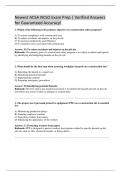
Newest ACSA NCSO Exam Prep | Verified Answers
for Guaranteed Accuracy!
1. Which of the following is the primary objective of a construction safety program?
A) To ensure compliance with construction laws
B) To reduce accidents and injuries on the job site
C) To increase productivity and efficiency
D) To minimize costs associated with construction
Answer: B) To reduce accidents and injuries on the job site
Rationale: The primary goal of a construction safety program is to reduce accidents and injuries
by identifying and mitigating hazards on the job site.
2. What should be the first step when assessing workplace hazards on a construction site?
A) Reporting the hazard to a supervisor
B) Identifying potential hazards
C) Implementing controls
D) Preparing emergency procedures
Answer: B) Identifying potential hazards
Rationale: The first step in any hazard assessment is to identify the hazards present on the job
site before any action is taken to mitigate or control them.
3. The proper use of personal protective equipment (PPE) on a construction site is essential
for:
A) Minimizing production delays
B) Ensuring employee comfort
C) Protecting workers from injury
D) Enhancing the appearance of the workers
Answer: C) Protecting workers from injury
Rationale: PPE is designed to protect workers from injuries related to specific hazards on the
job site, such as falls, electrical hazards, or flying debris.
, 4. Which of the following is an example of an engineering control for construction site
safety?
A) Providing workers with gloves
B) Installing guardrails around a raised platform
C) Using a safety checklist
D) Conducting a safety training session
Answer: B) Installing guardrails around a raised platform
Rationale: Engineering controls, such as guardrails, are physical modifications to the workplace
that reduce or eliminate hazards at their source.
5. A job safety analysis (JSA) is primarily used to:
A) Identify hazardous conditions and recommend corrective actions
B) Evaluate employee performance
C) Record employee attendance
D) Schedule training sessions
Answer: A) Identify hazardous conditions and recommend corrective actions
Rationale: A JSA is a tool used to identify hazards associated with specific tasks and suggest
ways to control or eliminate those risks.
6. The purpose of a fall protection plan is to:
A) Ensure that workers are trained in ladder use
B) Prevent workers from falling during elevated work activities
C) Ensure workers wear hard hats
D) Protect workers from hearing loss
Answer: B) Prevent workers from falling during elevated work activities
Rationale: Fall protection plans are required to prevent falls when workers are working at
heights, such as on scaffolds or roofs.
7. What is the best method to reduce the risk of electrical hazards on a construction site?
A) Conducting regular safety meetings
B) Properly grounding electrical equipment
C) Providing workers with insulated gloves
D) Installing fences around electrical equipment
for Guaranteed Accuracy!
1. Which of the following is the primary objective of a construction safety program?
A) To ensure compliance with construction laws
B) To reduce accidents and injuries on the job site
C) To increase productivity and efficiency
D) To minimize costs associated with construction
Answer: B) To reduce accidents and injuries on the job site
Rationale: The primary goal of a construction safety program is to reduce accidents and injuries
by identifying and mitigating hazards on the job site.
2. What should be the first step when assessing workplace hazards on a construction site?
A) Reporting the hazard to a supervisor
B) Identifying potential hazards
C) Implementing controls
D) Preparing emergency procedures
Answer: B) Identifying potential hazards
Rationale: The first step in any hazard assessment is to identify the hazards present on the job
site before any action is taken to mitigate or control them.
3. The proper use of personal protective equipment (PPE) on a construction site is essential
for:
A) Minimizing production delays
B) Ensuring employee comfort
C) Protecting workers from injury
D) Enhancing the appearance of the workers
Answer: C) Protecting workers from injury
Rationale: PPE is designed to protect workers from injuries related to specific hazards on the
job site, such as falls, electrical hazards, or flying debris.
, 4. Which of the following is an example of an engineering control for construction site
safety?
A) Providing workers with gloves
B) Installing guardrails around a raised platform
C) Using a safety checklist
D) Conducting a safety training session
Answer: B) Installing guardrails around a raised platform
Rationale: Engineering controls, such as guardrails, are physical modifications to the workplace
that reduce or eliminate hazards at their source.
5. A job safety analysis (JSA) is primarily used to:
A) Identify hazardous conditions and recommend corrective actions
B) Evaluate employee performance
C) Record employee attendance
D) Schedule training sessions
Answer: A) Identify hazardous conditions and recommend corrective actions
Rationale: A JSA is a tool used to identify hazards associated with specific tasks and suggest
ways to control or eliminate those risks.
6. The purpose of a fall protection plan is to:
A) Ensure that workers are trained in ladder use
B) Prevent workers from falling during elevated work activities
C) Ensure workers wear hard hats
D) Protect workers from hearing loss
Answer: B) Prevent workers from falling during elevated work activities
Rationale: Fall protection plans are required to prevent falls when workers are working at
heights, such as on scaffolds or roofs.
7. What is the best method to reduce the risk of electrical hazards on a construction site?
A) Conducting regular safety meetings
B) Properly grounding electrical equipment
C) Providing workers with insulated gloves
D) Installing fences around electrical equipment