A Quick Review of a few Topics from 3rd Semester Calculus
1. Vectors in 𝑅 3
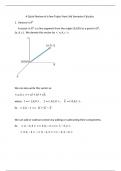
A vector in 𝑅 3 is a line segment from the origin (0,0,0) to a point in 𝑅 3,
(𝑎, 𝑏, 𝑐). We denote this vector by < 𝑎, 𝑏, 𝑐 >.
(𝑎, 𝑏, 𝑐)
(0,0,0)
We can also write this vector as:
< 𝑎, 𝑏, 𝑐 >= 𝑎𝑖⃗ + 𝑏𝑗⃗ + 𝑐𝑘⃗⃗;
where 𝑖⃗ =< 1,0,0 > , 𝑗⃗ =< 0,1,0 > , 𝑘⃗⃗ =< 0,0,1 >.
Ex. < 2,5, −1 >= 2𝑖⃗ + 5𝑗⃗ − 𝑘⃗⃗ .
We can add or subtract vectors by adding or subtracting their components.
Ex. < 2, −3, 4 > +< 5, 0, −2 >=< 7, −3, 2 >
< 3, 2, −4 > −< 5, −1, 2 > =< −2, 3, −6 >
, 2
< 2, −3,4 >
< 5,0, −2 >
< 7, −3,2 >
< 5,0, −2 >
We can also multiply a vector by a real number (called a scalar), by multiplying
each of the components.
Ex. (−6) < 3, −2, −3 > =< −18, 12, 18 >.
There are 2 ways to multiply vectors in 𝑅 3, through a "Dot" product (whose
answer is a number, not a vector), and through a "Cross" product (whose answer
is a vector not a number).
Let 𝑣⃗1 =< 𝑎1 , 𝑏1 , 𝑐1 > and 𝑣⃗2 =< 𝑎2 , 𝑏2 , 𝑐2 >.
Dot Product:
𝑣⃗1 ∙ 𝑣⃗2 = 𝑎1 𝑎2 + 𝑏1 𝑏2 + 𝑐1 𝑐2
Note: 𝑣⃗1 ∙ 𝑣⃗2 is a real number, NOT a vector.
Ex. < 2, −3,4 >∙< 5,0, −2 >= (2)(5) + (−3)(0) + (4)(−2) = 10 + 0 − 8 = 2.
, 3
Notice that: 𝑣⃗1 ∙ 𝑣⃗1 = 𝑎1 2 + 𝑏1 2 + 𝑐1 2 = ‖𝑣⃗1 ‖2
or ‖𝑣⃗1 ‖ = √𝑣⃗1 ∙ 𝑣⃗1 = √𝑎1 2 + 𝑏1 2 + 𝑐1 2
Properties of the Dot product:
1. 𝑣⃗1 ∙ 𝑣⃗2 = 𝑣⃗2 ∙ 𝑣⃗1
2. 𝑣⃗1 ∙ (𝑣⃗2 + 𝑣⃗3 ) = 𝑣⃗1 ∙ 𝑣⃗2 + 𝑣⃗1 ∙ 𝑣⃗3
If 𝑣⃗ = 𝑎𝑖⃗ + 𝑏𝑗⃗ + 𝑐𝑘⃗⃗ , 𝑣⃗ ≠ ⃗⃗
0, then a unit vector (a vector of length 1) in the
direction of 𝑣⃗ is given by:
⃗⃗
𝑣 𝑎 𝑏 𝑐
𝑢
⃗⃗ = ‖𝑣⃗⃗‖ = 𝑖⃗ + 𝑗⃗ + 𝑘⃗⃗
√𝑎2 +𝑏 2 +𝑐 2 √𝑎 2 +𝑏 2 +𝑐 2 √𝑎 2 +𝑏 2 +𝑐 2
Ex. Find a unit vector in the direction of 𝑣⃗ =< 2, −2,1 > = 2𝑖⃗ − 2𝑗⃗ + 𝑘⃗⃗
Here 𝑎 = 2, 𝑏 = −2, 𝑐 = 1, so 𝑎2 + 𝑏 2 + 𝑐 2 = 4 + 4 + 1 = 9.
𝑎 𝑏 𝑐
𝑢
⃗⃗ = 𝑖⃗ + 𝑗⃗ + ⃗⃗ = 2 𝑖⃗ − 2 𝑗⃗ + 1 𝑘⃗⃗
𝑘
√𝑎 2 +𝑏 2 +𝑐 2 √𝑎 2+𝑏 2 +𝑐 2 √𝑎 2 +𝑏 2 +𝑐 2 3 3 3
Theorem: Assume 𝑣⃗, 𝑤 ⃗⃗. Then 𝑣⃗ ∙ 𝑤
⃗⃗⃗ ≠ 0 ⃗⃗⃗ = 0 if and only if 𝑣⃗ and 𝑤
⃗⃗⃗ are
perpendicular.
1. Vectors in 𝑅 3
A vector in 𝑅 3 is a line segment from the origin (0,0,0) to a point in 𝑅 3,
(𝑎, 𝑏, 𝑐). We denote this vector by < 𝑎, 𝑏, 𝑐 >.
(𝑎, 𝑏, 𝑐)
(0,0,0)
We can also write this vector as:
< 𝑎, 𝑏, 𝑐 >= 𝑎𝑖⃗ + 𝑏𝑗⃗ + 𝑐𝑘⃗⃗;
where 𝑖⃗ =< 1,0,0 > , 𝑗⃗ =< 0,1,0 > , 𝑘⃗⃗ =< 0,0,1 >.
Ex. < 2,5, −1 >= 2𝑖⃗ + 5𝑗⃗ − 𝑘⃗⃗ .
We can add or subtract vectors by adding or subtracting their components.
Ex. < 2, −3, 4 > +< 5, 0, −2 >=< 7, −3, 2 >
< 3, 2, −4 > −< 5, −1, 2 > =< −2, 3, −6 >
, 2
< 2, −3,4 >
< 5,0, −2 >
< 7, −3,2 >
< 5,0, −2 >
We can also multiply a vector by a real number (called a scalar), by multiplying
each of the components.
Ex. (−6) < 3, −2, −3 > =< −18, 12, 18 >.
There are 2 ways to multiply vectors in 𝑅 3, through a "Dot" product (whose
answer is a number, not a vector), and through a "Cross" product (whose answer
is a vector not a number).
Let 𝑣⃗1 =< 𝑎1 , 𝑏1 , 𝑐1 > and 𝑣⃗2 =< 𝑎2 , 𝑏2 , 𝑐2 >.
Dot Product:
𝑣⃗1 ∙ 𝑣⃗2 = 𝑎1 𝑎2 + 𝑏1 𝑏2 + 𝑐1 𝑐2
Note: 𝑣⃗1 ∙ 𝑣⃗2 is a real number, NOT a vector.
Ex. < 2, −3,4 >∙< 5,0, −2 >= (2)(5) + (−3)(0) + (4)(−2) = 10 + 0 − 8 = 2.
, 3
Notice that: 𝑣⃗1 ∙ 𝑣⃗1 = 𝑎1 2 + 𝑏1 2 + 𝑐1 2 = ‖𝑣⃗1 ‖2
or ‖𝑣⃗1 ‖ = √𝑣⃗1 ∙ 𝑣⃗1 = √𝑎1 2 + 𝑏1 2 + 𝑐1 2
Properties of the Dot product:
1. 𝑣⃗1 ∙ 𝑣⃗2 = 𝑣⃗2 ∙ 𝑣⃗1
2. 𝑣⃗1 ∙ (𝑣⃗2 + 𝑣⃗3 ) = 𝑣⃗1 ∙ 𝑣⃗2 + 𝑣⃗1 ∙ 𝑣⃗3
If 𝑣⃗ = 𝑎𝑖⃗ + 𝑏𝑗⃗ + 𝑐𝑘⃗⃗ , 𝑣⃗ ≠ ⃗⃗
0, then a unit vector (a vector of length 1) in the
direction of 𝑣⃗ is given by:
⃗⃗
𝑣 𝑎 𝑏 𝑐
𝑢
⃗⃗ = ‖𝑣⃗⃗‖ = 𝑖⃗ + 𝑗⃗ + 𝑘⃗⃗
√𝑎2 +𝑏 2 +𝑐 2 √𝑎 2 +𝑏 2 +𝑐 2 √𝑎 2 +𝑏 2 +𝑐 2
Ex. Find a unit vector in the direction of 𝑣⃗ =< 2, −2,1 > = 2𝑖⃗ − 2𝑗⃗ + 𝑘⃗⃗
Here 𝑎 = 2, 𝑏 = −2, 𝑐 = 1, so 𝑎2 + 𝑏 2 + 𝑐 2 = 4 + 4 + 1 = 9.
𝑎 𝑏 𝑐
𝑢
⃗⃗ = 𝑖⃗ + 𝑗⃗ + ⃗⃗ = 2 𝑖⃗ − 2 𝑗⃗ + 1 𝑘⃗⃗
𝑘
√𝑎 2 +𝑏 2 +𝑐 2 √𝑎 2+𝑏 2 +𝑐 2 √𝑎 2 +𝑏 2 +𝑐 2 3 3 3
Theorem: Assume 𝑣⃗, 𝑤 ⃗⃗. Then 𝑣⃗ ∙ 𝑤
⃗⃗⃗ ≠ 0 ⃗⃗⃗ = 0 if and only if 𝑣⃗ and 𝑤
⃗⃗⃗ are
perpendicular.