1
The Natural Logarithmic Function
When studying algebra one often sees 𝑙𝑜𝑔 to the base 𝑏 (𝑏 > 0, 𝑏 ≠ 1)
defined by saying:
𝑦 = 𝑏 𝑥 if, and only if, 𝑥 = log b 𝑦
One problem with this approach is that it was not clear what was meant by 2√2 .
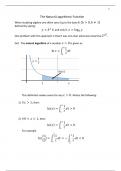
Def. The natural logarithm of a number 𝑥 > 0 is given as:
𝑥
1
ln 𝑥 = ∫ 𝑑𝑡
1 𝑡
1
𝑦=
𝑡
ln(𝑥)
1 𝑥
This definition makes sense for any 𝑥 > 0. Notice the following:
1) If 𝑥 > 1, then:
𝑥
1
ln(𝑥 ) = ∫ 𝑑𝑡 > 0
1 𝑡
2) If 0 < 𝑥 < 1, then:
𝑥
1
ln(𝑥 ) = ∫ 𝑑𝑡 < 0
1 𝑡
For example
1
1
1 21 1
ln ( ) = ∫ 𝑑𝑡 = − ∫ 𝑑𝑡 < 0
2 1 𝑡
1 𝑡
2
, 2
3) If 𝑥 = 1, then:
1
1
ln(1) = ∫ 𝑑𝑡 = 0
1 𝑡
4) By The Fundamental Theorem of Calculus:
𝑥
𝑑 𝑑 1 1
(ln(𝑥 )) = (∫ 𝑑𝑡 ) =
𝑑𝑥 𝑑𝑥 1 𝑡 𝑥
𝑑 1
5) Since (ln 𝑥) = exists for all 𝑥 > 0, then we can say 𝑦 = ln 𝑥 is
𝑑𝑥 𝑥
continuous for all 𝑥 > 0.
𝑑 1
6) Since (ln 𝑥) = > 0 for 𝑥 > 0, then we can say 𝑦 = ln 𝑥 is an
𝑑𝑥 𝑥
increasing function for 𝑥 > 0.
𝑑2 𝑑 1 1
7) (ln 𝑥 ) = ( ) =− < 0 for 𝑥 > 0 so the graph of 𝑦 = ln 𝑥 is
𝑑𝑥 2 𝑑𝑥 𝑥 𝑥2
concave down for 𝑥 > 0.
Logarithm laws for 𝑥, 𝑦 > 0 and 𝑟, a rational number:
1) ln(𝑥𝑦) = ln 𝑥 + ln 𝑦
𝑥
2) ln ( ) = ln 𝑥 − ln 𝑦
𝑦
3) ln(𝑥 𝑟 ) = 𝑟 ln 𝑥
The Natural Logarithmic Function
When studying algebra one often sees 𝑙𝑜𝑔 to the base 𝑏 (𝑏 > 0, 𝑏 ≠ 1)
defined by saying:
𝑦 = 𝑏 𝑥 if, and only if, 𝑥 = log b 𝑦
One problem with this approach is that it was not clear what was meant by 2√2 .
Def. The natural logarithm of a number 𝑥 > 0 is given as:
𝑥
1
ln 𝑥 = ∫ 𝑑𝑡
1 𝑡
1
𝑦=
𝑡
ln(𝑥)
1 𝑥
This definition makes sense for any 𝑥 > 0. Notice the following:
1) If 𝑥 > 1, then:
𝑥
1
ln(𝑥 ) = ∫ 𝑑𝑡 > 0
1 𝑡
2) If 0 < 𝑥 < 1, then:
𝑥
1
ln(𝑥 ) = ∫ 𝑑𝑡 < 0
1 𝑡
For example
1
1
1 21 1
ln ( ) = ∫ 𝑑𝑡 = − ∫ 𝑑𝑡 < 0
2 1 𝑡
1 𝑡
2
, 2
3) If 𝑥 = 1, then:
1
1
ln(1) = ∫ 𝑑𝑡 = 0
1 𝑡
4) By The Fundamental Theorem of Calculus:
𝑥
𝑑 𝑑 1 1
(ln(𝑥 )) = (∫ 𝑑𝑡 ) =
𝑑𝑥 𝑑𝑥 1 𝑡 𝑥
𝑑 1
5) Since (ln 𝑥) = exists for all 𝑥 > 0, then we can say 𝑦 = ln 𝑥 is
𝑑𝑥 𝑥
continuous for all 𝑥 > 0.
𝑑 1
6) Since (ln 𝑥) = > 0 for 𝑥 > 0, then we can say 𝑦 = ln 𝑥 is an
𝑑𝑥 𝑥
increasing function for 𝑥 > 0.
𝑑2 𝑑 1 1
7) (ln 𝑥 ) = ( ) =− < 0 for 𝑥 > 0 so the graph of 𝑦 = ln 𝑥 is
𝑑𝑥 2 𝑑𝑥 𝑥 𝑥2
concave down for 𝑥 > 0.
Logarithm laws for 𝑥, 𝑦 > 0 and 𝑟, a rational number:
1) ln(𝑥𝑦) = ln 𝑥 + ln 𝑦
𝑥
2) ln ( ) = ln 𝑥 − ln 𝑦
𝑦
3) ln(𝑥 𝑟 ) = 𝑟 ln 𝑥