1
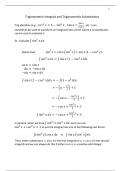
Trigonometric Integrals and Trigonometric Substitutions
sin 𝑥
Trig identities (e.g., cos 2 𝑥 = 1 − sin2 𝑥 , tan 𝑥 = , etc. ) can
cos 𝑥
sometimes be used to transform an integrand into a form where a 𝑢 -substitution
can be used to evaluate it.
Ex. Evaluate ∫ sin3 𝑥 𝑑𝑥.
Notice that: sin3 𝑥 = sin 𝑥 (sin2 𝑥) = sin 𝑥 (1 − cos2 𝑥).
∫ sin3 𝑥 𝑑𝑥 = ∫ sin 𝑥 (1 − cos2 𝑥 )𝑑𝑥
Let 𝑢 = cos 𝑥
𝑑𝑢 = −sin 𝑥 𝑑𝑥
−𝑑𝑢 = sin 𝑥 𝑑𝑥
∫ sin 𝑥 (1 − cos 2 𝑥 )𝑑𝑥 = − ∫(1 − 𝑢2 )𝑑𝑢
𝑢3
= − (𝑢 − )+𝐶
3
cos3 𝑥
= − (cos 𝑥 − )+𝐶
3
cos3 𝑥
= − cos 𝑥 + +𝐶
3
cos3 𝑥
∫ sin3 𝑥 𝑑𝑥 = − cos 𝑥 + 3
+ 𝐶.
In general, when we have ∫ sin𝑚 𝑥 cos 𝑛 𝑥 𝑑𝑥 we try to use
sin2 𝑥 + cos2 𝑥 = 1 to put the integral into one of the following two forms:
∫(sin𝑘 𝑥 ) cos 𝑥 𝑑𝑥 or ∫ sin 𝑥 (cos𝑗 𝑥)𝑑𝑥.
Then, either substitute 𝑢 = sin 𝑥 (in the first integral) or 𝑢 = cos 𝑥 (in the second
integral) and we can always do this if either 𝑚 or 𝑛 is a positive odd integer.
, 2
Ex. Evaluate ∫ sin4 𝑥 cos 3 𝑥 𝑑𝑥.
First, notice that:
sin4 𝑥 cos3 𝑥 = sin4 𝑥 (cos2 𝑥 ) cos 𝑥
= sin4 𝑥 (1 − sin2 𝑥 ) cos 𝑥
= (sin4 𝑥 − sin6 𝑥 ) cos 𝑥
∫ sin4 𝑥 cos3 𝑥 𝑑𝑥 = ∫(sin4 𝑥 − sin6 𝑥 ) cos 𝑥 𝑑𝑥
Let 𝑢 = sin 𝑥
𝑑𝑢 = cos 𝑥 𝑑𝑥
= ∫(𝑢4 − 𝑢6 ) 𝑑𝑢
𝑢5 𝑢7
= − +𝐶
5 7
4 3 sin5 𝑥 sin7 𝑥
∫ sin 𝑥 cos 𝑥 𝑑𝑥 = 5
− 7 + 𝐶.
If the integrand just has even powers of sin 𝑥 and even powers of cos 𝑥 we can
use:
1 1
sin2 𝑥 = − cos 2𝑥
2 2
1 1
cos2 𝑥 = + cos 2𝑥.
2 2
Trigonometric Integrals and Trigonometric Substitutions
sin 𝑥
Trig identities (e.g., cos 2 𝑥 = 1 − sin2 𝑥 , tan 𝑥 = , etc. ) can
cos 𝑥
sometimes be used to transform an integrand into a form where a 𝑢 -substitution
can be used to evaluate it.
Ex. Evaluate ∫ sin3 𝑥 𝑑𝑥.
Notice that: sin3 𝑥 = sin 𝑥 (sin2 𝑥) = sin 𝑥 (1 − cos2 𝑥).
∫ sin3 𝑥 𝑑𝑥 = ∫ sin 𝑥 (1 − cos2 𝑥 )𝑑𝑥
Let 𝑢 = cos 𝑥
𝑑𝑢 = −sin 𝑥 𝑑𝑥
−𝑑𝑢 = sin 𝑥 𝑑𝑥
∫ sin 𝑥 (1 − cos 2 𝑥 )𝑑𝑥 = − ∫(1 − 𝑢2 )𝑑𝑢
𝑢3
= − (𝑢 − )+𝐶
3
cos3 𝑥
= − (cos 𝑥 − )+𝐶
3
cos3 𝑥
= − cos 𝑥 + +𝐶
3
cos3 𝑥
∫ sin3 𝑥 𝑑𝑥 = − cos 𝑥 + 3
+ 𝐶.
In general, when we have ∫ sin𝑚 𝑥 cos 𝑛 𝑥 𝑑𝑥 we try to use
sin2 𝑥 + cos2 𝑥 = 1 to put the integral into one of the following two forms:
∫(sin𝑘 𝑥 ) cos 𝑥 𝑑𝑥 or ∫ sin 𝑥 (cos𝑗 𝑥)𝑑𝑥.
Then, either substitute 𝑢 = sin 𝑥 (in the first integral) or 𝑢 = cos 𝑥 (in the second
integral) and we can always do this if either 𝑚 or 𝑛 is a positive odd integer.
, 2
Ex. Evaluate ∫ sin4 𝑥 cos 3 𝑥 𝑑𝑥.
First, notice that:
sin4 𝑥 cos3 𝑥 = sin4 𝑥 (cos2 𝑥 ) cos 𝑥
= sin4 𝑥 (1 − sin2 𝑥 ) cos 𝑥
= (sin4 𝑥 − sin6 𝑥 ) cos 𝑥
∫ sin4 𝑥 cos3 𝑥 𝑑𝑥 = ∫(sin4 𝑥 − sin6 𝑥 ) cos 𝑥 𝑑𝑥
Let 𝑢 = sin 𝑥
𝑑𝑢 = cos 𝑥 𝑑𝑥
= ∫(𝑢4 − 𝑢6 ) 𝑑𝑢
𝑢5 𝑢7
= − +𝐶
5 7
4 3 sin5 𝑥 sin7 𝑥
∫ sin 𝑥 cos 𝑥 𝑑𝑥 = 5
− 7 + 𝐶.
If the integrand just has even powers of sin 𝑥 and even powers of cos 𝑥 we can
use:
1 1
sin2 𝑥 = − cos 2𝑥
2 2
1 1
cos2 𝑥 = + cos 2𝑥.
2 2