1
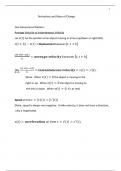
Derivatives and Rates of Change
One Dimensional Motion:
Average Velocity vs Instantaneous Velocity
Let 𝑠(𝑡) be the position of an object moving in a line (up/down or right/left).
𝑠(𝑡 + ℎ) − 𝑠(𝑡) =displacement between [𝑡, 𝑡 + ℎ]
𝑠(𝑡+ℎ)−𝑠(𝑡)
= 𝒂𝒗𝒆𝒓𝒂𝒈𝒆 𝒗𝒆𝒍𝒐𝒄𝒊𝒕𝒚 𝑏𝑒𝑡𝑤𝑒𝑒𝑛 [𝑡, 𝑡 + ℎ].
ℎ
𝑠(𝑡+ℎ)−𝑠(𝑡)
lim = 𝒊𝒏𝒔𝒕𝒂𝒏𝒕𝒂𝒏𝒆𝒐𝒖𝒔 𝒗𝒆𝒍𝒐𝒄𝒊𝒕𝒚 = 𝑣(𝑡) = 𝑠’(𝑡).
ℎ→0 ℎ
(Note: When 𝑣(𝑡) > 0 the object is moving to the
right or up. When 𝑣(𝑡) < 0 the object is moving to
the left or down. When 𝑣(𝑡) = 0, it’s at rest)
Speed at time 𝑡 = |𝑣 (𝑡)| = |𝑠 ′ (𝑡)|
(Note: speed is always non-negative. Unlike velocity, it does not have a direction,
only a magnitude)
𝑎(𝑡) = 𝒂𝒄𝒄𝒆𝒍𝒆𝒓𝒂𝒕𝒊𝒐𝒏 𝑎𝑡 𝑡𝑖𝑚𝑒 𝑡 = 𝑣’(𝑡) = 𝑠’’(𝑡).
, 2
Ex. A ball is thrown vertically into the air at 80 ft/sec from the edge of a cliff 96 ft
above the water below. The position of the ball (in feet above the water) at time
𝑡 𝑠𝑒𝑐 is given by
𝑠(𝑡) = −16𝑡 2 + 80𝑡 + 96.
a. Determine the velocity of the ball at time t.
b. When does the ball reach its highest point?
c. What is the ball’s highest point above the water?
d. When does the ball hit the water? 96𝑓𝑡
e. With what velocity does the ball hit the water?
f. What is the speed when the ball hits the water?
g. What is the acceleration when the ball hits the water?
a. 𝑣 (𝑡) = 𝑠’(𝑡) = −32𝑡 + 80 ft/sec .
b. Highest point when 𝑣(𝑡) = 𝑠’(𝑡) = 0.
−32𝑡 + 80 = 0
80 = 32𝑡
80 5
𝑡= = 𝑠𝑒𝑐.
32 2
5 5 5
c. 𝑠 ( ) = −16( )2 + 80( ) + 96
2 2 2
25
= −16( ) + 200 + 96
4
= −100 + 200 + 96 = 196𝑓𝑡.
Derivatives and Rates of Change
One Dimensional Motion:
Average Velocity vs Instantaneous Velocity
Let 𝑠(𝑡) be the position of an object moving in a line (up/down or right/left).
𝑠(𝑡 + ℎ) − 𝑠(𝑡) =displacement between [𝑡, 𝑡 + ℎ]
𝑠(𝑡+ℎ)−𝑠(𝑡)
= 𝒂𝒗𝒆𝒓𝒂𝒈𝒆 𝒗𝒆𝒍𝒐𝒄𝒊𝒕𝒚 𝑏𝑒𝑡𝑤𝑒𝑒𝑛 [𝑡, 𝑡 + ℎ].
ℎ
𝑠(𝑡+ℎ)−𝑠(𝑡)
lim = 𝒊𝒏𝒔𝒕𝒂𝒏𝒕𝒂𝒏𝒆𝒐𝒖𝒔 𝒗𝒆𝒍𝒐𝒄𝒊𝒕𝒚 = 𝑣(𝑡) = 𝑠’(𝑡).
ℎ→0 ℎ
(Note: When 𝑣(𝑡) > 0 the object is moving to the
right or up. When 𝑣(𝑡) < 0 the object is moving to
the left or down. When 𝑣(𝑡) = 0, it’s at rest)
Speed at time 𝑡 = |𝑣 (𝑡)| = |𝑠 ′ (𝑡)|
(Note: speed is always non-negative. Unlike velocity, it does not have a direction,
only a magnitude)
𝑎(𝑡) = 𝒂𝒄𝒄𝒆𝒍𝒆𝒓𝒂𝒕𝒊𝒐𝒏 𝑎𝑡 𝑡𝑖𝑚𝑒 𝑡 = 𝑣’(𝑡) = 𝑠’’(𝑡).
, 2
Ex. A ball is thrown vertically into the air at 80 ft/sec from the edge of a cliff 96 ft
above the water below. The position of the ball (in feet above the water) at time
𝑡 𝑠𝑒𝑐 is given by
𝑠(𝑡) = −16𝑡 2 + 80𝑡 + 96.
a. Determine the velocity of the ball at time t.
b. When does the ball reach its highest point?
c. What is the ball’s highest point above the water?
d. When does the ball hit the water? 96𝑓𝑡
e. With what velocity does the ball hit the water?
f. What is the speed when the ball hits the water?
g. What is the acceleration when the ball hits the water?
a. 𝑣 (𝑡) = 𝑠’(𝑡) = −32𝑡 + 80 ft/sec .
b. Highest point when 𝑣(𝑡) = 𝑠’(𝑡) = 0.
−32𝑡 + 80 = 0
80 = 32𝑡
80 5
𝑡= = 𝑠𝑒𝑐.
32 2
5 5 5
c. 𝑠 ( ) = −16( )2 + 80( ) + 96
2 2 2
25
= −16( ) + 200 + 96
4
= −100 + 200 + 96 = 196𝑓𝑡.