1
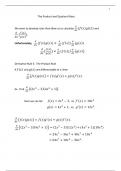
The Product and Quotient Rules
𝑑
We want to develop rules that allow us to calculate (𝑓(𝑥 )𝑔(𝑥 )) and
𝑑𝑥
𝑑 𝑓(𝑥)
( ).
𝑑𝑥 𝑔(𝑥)
𝑑 𝑑 𝑑
Unfortunately, (𝑓(𝑥 )𝑔(𝑥 )) ≠ (𝑓(𝑥 )) (𝑔(𝑥 ))
𝑑𝑥 𝑑𝑥 𝑑𝑥
𝑑 𝑓(𝑥) 𝑑 𝑑
( ) ≠ 𝑑𝑥 (𝑓(𝑥))⁄𝑑𝑥 (𝑔(𝑥)).
𝑑𝑥 𝑔(𝑥)
Derivative Rule 5: The Product Rule
If 𝑓 (𝑥 ) and 𝑔(𝑥) are differentiable at 𝑥 then
𝑑
(𝑓(𝑥 )𝑔(𝑥 )) = 𝑓(𝑥 )𝑔′ (𝑥 ) + 𝑔(𝑥 )𝑓 ′ (𝑥 ).
𝑑𝑥
𝑑
Ex. Find [(2𝑥 5 − 3)(4𝑥 3 + 1)].
𝑑𝑥
Here we can let: 𝑓(𝑥 ) = 2𝑥 5 − 3, so 𝑓 ′ (𝑥 ) = 10𝑥 4
𝑔(𝑥 ) = 4𝑥 3 + 1, so 𝑔′ (𝑥 ) = 12𝑥 2 .
𝑑
(𝑓(𝑥 )𝑔(𝑥 )) = 𝑓(𝑥 )𝑔′ (𝑥 ) + 𝑔(𝑥 )𝑓 ′ (𝑥 ).
𝑑𝑥
𝑑
((2𝑥 5 − 3)(4𝑥 3 + 1)) = (2𝑥 5 − 3)(12𝑥 2 ) + (4𝑥 3 + 1)(10𝑥 4 )
𝑑𝑥
= 24𝑥 7 − 36𝑥 2 + 40𝑥 7 + 10𝑥 4
= 64𝑥 7 + 10𝑥 4 − 36𝑥 2 .
, 2
𝑑
Ex. Find ((3𝑥 4 − 2𝑥 )(4𝑥 2 + 3))
𝑑𝑥
Let: 𝑓(𝑥 ) = 3𝑥 4 − 2𝑥, so 𝑓 ′ (𝑥 ) = 12𝑥 3 − 2
𝑔(𝑥 ) = 4𝑥 2 + 3, so 𝑔′ (𝑥 ) = 8𝑥.
𝑑
(𝑓(𝑥 )𝑔(𝑥 )) = 𝑓 (𝑥 )𝑔′ (𝑥 ) + 𝑔(𝑥 )𝑓 ′ (𝑥 ).
𝑑𝑥
𝑑
(3𝑥 4 − 2𝑥)(4𝑥 2 + 3)) = (3𝑥 4 − 2𝑥 )(8𝑥 ) + (4𝑥 2 + 3)(12𝑥 3 − 2)
𝑑𝑥
= (24𝑥 5 − 16𝑥 2 ) + (48𝑥 5 + 36𝑥 3 − 8𝑥 2 − 6)
= 72𝑥 5 + 36𝑥 3 − 24𝑥 2 − 6.
Derivative Rule 6: The Quotient Rule
If 𝑓 (𝑥 ) and 𝑔(𝑥) are differentiable at 𝑥 and 𝑔(𝑥) ≠ 0 then
𝑑 𝑓 (𝑥 ) 𝑔(𝑥)𝑓′ (𝑥)−𝑓(𝑥)𝑔′ (𝑥)
( ) = .
𝑑𝑥 𝑔(𝑥) (𝑔(𝑥))2
𝑑 2𝑥 5 −3
Ex. Find (
𝑑𝑥 4𝑥 3 +1
).
As in our first example, let: 𝑓 (𝑥 ) = 2𝑥 5 − 3, so 𝑓 ′ (𝑥 ) = 10𝑥 4
𝑔(𝑥 ) = 4𝑥 3 + 1, so 𝑔′ (𝑥 ) = 12𝑥 2 .
The Product and Quotient Rules
𝑑
We want to develop rules that allow us to calculate (𝑓(𝑥 )𝑔(𝑥 )) and
𝑑𝑥
𝑑 𝑓(𝑥)
( ).
𝑑𝑥 𝑔(𝑥)
𝑑 𝑑 𝑑
Unfortunately, (𝑓(𝑥 )𝑔(𝑥 )) ≠ (𝑓(𝑥 )) (𝑔(𝑥 ))
𝑑𝑥 𝑑𝑥 𝑑𝑥
𝑑 𝑓(𝑥) 𝑑 𝑑
( ) ≠ 𝑑𝑥 (𝑓(𝑥))⁄𝑑𝑥 (𝑔(𝑥)).
𝑑𝑥 𝑔(𝑥)
Derivative Rule 5: The Product Rule
If 𝑓 (𝑥 ) and 𝑔(𝑥) are differentiable at 𝑥 then
𝑑
(𝑓(𝑥 )𝑔(𝑥 )) = 𝑓(𝑥 )𝑔′ (𝑥 ) + 𝑔(𝑥 )𝑓 ′ (𝑥 ).
𝑑𝑥
𝑑
Ex. Find [(2𝑥 5 − 3)(4𝑥 3 + 1)].
𝑑𝑥
Here we can let: 𝑓(𝑥 ) = 2𝑥 5 − 3, so 𝑓 ′ (𝑥 ) = 10𝑥 4
𝑔(𝑥 ) = 4𝑥 3 + 1, so 𝑔′ (𝑥 ) = 12𝑥 2 .
𝑑
(𝑓(𝑥 )𝑔(𝑥 )) = 𝑓(𝑥 )𝑔′ (𝑥 ) + 𝑔(𝑥 )𝑓 ′ (𝑥 ).
𝑑𝑥
𝑑
((2𝑥 5 − 3)(4𝑥 3 + 1)) = (2𝑥 5 − 3)(12𝑥 2 ) + (4𝑥 3 + 1)(10𝑥 4 )
𝑑𝑥
= 24𝑥 7 − 36𝑥 2 + 40𝑥 7 + 10𝑥 4
= 64𝑥 7 + 10𝑥 4 − 36𝑥 2 .
, 2
𝑑
Ex. Find ((3𝑥 4 − 2𝑥 )(4𝑥 2 + 3))
𝑑𝑥
Let: 𝑓(𝑥 ) = 3𝑥 4 − 2𝑥, so 𝑓 ′ (𝑥 ) = 12𝑥 3 − 2
𝑔(𝑥 ) = 4𝑥 2 + 3, so 𝑔′ (𝑥 ) = 8𝑥.
𝑑
(𝑓(𝑥 )𝑔(𝑥 )) = 𝑓 (𝑥 )𝑔′ (𝑥 ) + 𝑔(𝑥 )𝑓 ′ (𝑥 ).
𝑑𝑥
𝑑
(3𝑥 4 − 2𝑥)(4𝑥 2 + 3)) = (3𝑥 4 − 2𝑥 )(8𝑥 ) + (4𝑥 2 + 3)(12𝑥 3 − 2)
𝑑𝑥
= (24𝑥 5 − 16𝑥 2 ) + (48𝑥 5 + 36𝑥 3 − 8𝑥 2 − 6)
= 72𝑥 5 + 36𝑥 3 − 24𝑥 2 − 6.
Derivative Rule 6: The Quotient Rule
If 𝑓 (𝑥 ) and 𝑔(𝑥) are differentiable at 𝑥 and 𝑔(𝑥) ≠ 0 then
𝑑 𝑓 (𝑥 ) 𝑔(𝑥)𝑓′ (𝑥)−𝑓(𝑥)𝑔′ (𝑥)
( ) = .
𝑑𝑥 𝑔(𝑥) (𝑔(𝑥))2
𝑑 2𝑥 5 −3
Ex. Find (
𝑑𝑥 4𝑥 3 +1
).
As in our first example, let: 𝑓 (𝑥 ) = 2𝑥 5 − 3, so 𝑓 ′ (𝑥 ) = 10𝑥 4
𝑔(𝑥 ) = 4𝑥 3 + 1, so 𝑔′ (𝑥 ) = 12𝑥 2 .