1
Continuity
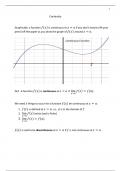
Graphically, a function 𝑓(𝑥) is continuous at 𝑥 = 𝑎 if you don’t need to lift your
pencil off the paper as you draw the graph of 𝑓(𝑥) around 𝑥 = 𝑎.
Continuous Function
𝑎
𝑎
Def. A function 𝑓(𝑥) is continuous at 𝑥 = 𝑎 if lim 𝑓 (𝑥 ) = 𝑓(𝑎).
𝑥→𝑎
We need 3 things to occur for a function 𝑓(𝑥) be continuous at 𝑥 = 𝑎:
1. 𝑓(𝑥) is defined at 𝑥 = 𝑎, i.e., 𝑎 is in the domain of 𝑓
2. lim 𝑓 (𝑥 ) exists (and is finite)
𝑥→𝑎
3. lim 𝑓(𝑥 ) = 𝑓(𝑎).
𝑥→𝑎
𝑓(𝑥) is said to be discontinuous at 𝑥 = 𝑎 if 𝑓 is not continuous at 𝑥 = 𝑎.
, 2
Ex. Points of discontinuity:
𝑥 2 −9
1. a. 𝑓 (𝑥 ) = ; 𝑥 ≠ 3; has a discontinuity at 𝑥 = 3 because 𝑓(𝑥)
𝑥−3
is not defined there.
𝑥 2 −9 (𝑥−3)(𝑥+3)
𝑓(𝑥 ) = = = 𝑥 + 3; 𝑥 ≠ 3.
𝑥−3 𝑥−3
6 𝑦 = 𝑓(𝑥)
4
2
−4 −3 −2 −1 0 1 2 3 4
1
b. 𝑓 (𝑥 ) = ; 𝑥 ≠ 0; has a discontinuity at 𝑥 = 0 because 𝑓(𝑥)
𝑥
is not defined there (and because the lim 𝑓 (𝑥 ) doesn’t exist).
𝑥→0
1
𝑓(𝑥) =
𝑥
Continuity
Graphically, a function 𝑓(𝑥) is continuous at 𝑥 = 𝑎 if you don’t need to lift your
pencil off the paper as you draw the graph of 𝑓(𝑥) around 𝑥 = 𝑎.
Continuous Function
𝑎
𝑎
Def. A function 𝑓(𝑥) is continuous at 𝑥 = 𝑎 if lim 𝑓 (𝑥 ) = 𝑓(𝑎).
𝑥→𝑎
We need 3 things to occur for a function 𝑓(𝑥) be continuous at 𝑥 = 𝑎:
1. 𝑓(𝑥) is defined at 𝑥 = 𝑎, i.e., 𝑎 is in the domain of 𝑓
2. lim 𝑓 (𝑥 ) exists (and is finite)
𝑥→𝑎
3. lim 𝑓(𝑥 ) = 𝑓(𝑎).
𝑥→𝑎
𝑓(𝑥) is said to be discontinuous at 𝑥 = 𝑎 if 𝑓 is not continuous at 𝑥 = 𝑎.
, 2
Ex. Points of discontinuity:
𝑥 2 −9
1. a. 𝑓 (𝑥 ) = ; 𝑥 ≠ 3; has a discontinuity at 𝑥 = 3 because 𝑓(𝑥)
𝑥−3
is not defined there.
𝑥 2 −9 (𝑥−3)(𝑥+3)
𝑓(𝑥 ) = = = 𝑥 + 3; 𝑥 ≠ 3.
𝑥−3 𝑥−3
6 𝑦 = 𝑓(𝑥)
4
2
−4 −3 −2 −1 0 1 2 3 4
1
b. 𝑓 (𝑥 ) = ; 𝑥 ≠ 0; has a discontinuity at 𝑥 = 0 because 𝑓(𝑥)
𝑥
is not defined there (and because the lim 𝑓 (𝑥 ) doesn’t exist).
𝑥→0
1
𝑓(𝑥) =
𝑥