1
Calculating Limits
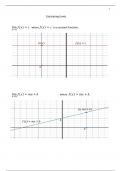
lim 𝑓(𝑥) = 𝑐 where 𝑓 (𝑥 ) = 𝑐 is a constant function.
𝑥→𝑎
(𝑎, 𝑐) 𝑓(𝑥) = 𝑐
𝑎
lim 𝑓(𝑥 ) = 𝑚𝑎 + 𝑏 where 𝑓 (𝑥 ) = 𝑚𝑥 + 𝑏.
𝑥→𝑎
(𝑎, 𝑚𝑎 + 𝑏)
𝑏
𝑓(𝑥) = 𝑚𝑥 + 𝑏
𝑎
, 2
Ex. Find lim 9, lim (−2𝑥 + 4).
𝑥→2 𝑥→−3
lim 9 = 9 since 𝑓 (𝑥 ) = 9 is a constant function.
𝑥→2
lim (−2𝑥 + 4) = −2(−3) + 4 = 10.
𝑥→−3
Limit Laws: Suppose lim 𝑓(𝑥) and lim 𝑔(𝑥) exist. Then the following
𝑥→𝑎 𝑥→𝑎
relationships hold, where 𝑐 is a real number, and 𝑚, 𝑛 are positive integers.
1. Sum: lim ( 𝑓(𝑥) + 𝑔(𝑥)) = lim 𝑓 (𝑥 ) + lim 𝑔(𝑥)
𝑥→𝑎 𝑥→𝑎 𝑥→𝑎
2. Difference: lim ( 𝑓(𝑥) − 𝑔(𝑥)) = lim 𝑓 (𝑥 ) − lim 𝑔(𝑥)
𝑥→𝑎 𝑥→𝑎 𝑥→𝑎
3. Constant Multiple: lim (𝑐 𝑓(𝑥)) = 𝑐 lim 𝑓(𝑥)
𝑥→𝑎 𝑥→𝑎
4. Product: lim (𝑓(𝑥)𝑔(𝑥)) = (lim 𝑓(𝑥))(lim 𝑔(𝑥))
𝑥→𝑎 𝑥→𝑎 𝑥→𝑎
𝑓(𝑥) lim 𝑓(𝑥)
𝑥→𝑎
5. Quotient: lim ( )= , as long as lim 𝑔(𝑥) ≠ 0
𝑥→𝑎 𝑔(𝑥) lim 𝑔(𝑥)
𝑥→𝑎
𝑥→𝑎
6. Power: lim (𝑓(𝑥))𝑛 = (lim 𝑓(𝑥))𝑛
𝑥→𝑎 𝑥→𝑎
𝑛 𝑛
7. Fractional Power: lim (𝑓(𝑥))𝑚 = (lim 𝑓(𝑥))𝑚 ; provided
𝑥→𝑎 𝑥→𝑎
𝑓 (𝑥 ) > 0, for 𝑥 near 𝑎, if 𝑚 is even and 𝑛/𝑚 is reduced to lowest form.
Calculating Limits
lim 𝑓(𝑥) = 𝑐 where 𝑓 (𝑥 ) = 𝑐 is a constant function.
𝑥→𝑎
(𝑎, 𝑐) 𝑓(𝑥) = 𝑐
𝑎
lim 𝑓(𝑥 ) = 𝑚𝑎 + 𝑏 where 𝑓 (𝑥 ) = 𝑚𝑥 + 𝑏.
𝑥→𝑎
(𝑎, 𝑚𝑎 + 𝑏)
𝑏
𝑓(𝑥) = 𝑚𝑥 + 𝑏
𝑎
, 2
Ex. Find lim 9, lim (−2𝑥 + 4).
𝑥→2 𝑥→−3
lim 9 = 9 since 𝑓 (𝑥 ) = 9 is a constant function.
𝑥→2
lim (−2𝑥 + 4) = −2(−3) + 4 = 10.
𝑥→−3
Limit Laws: Suppose lim 𝑓(𝑥) and lim 𝑔(𝑥) exist. Then the following
𝑥→𝑎 𝑥→𝑎
relationships hold, where 𝑐 is a real number, and 𝑚, 𝑛 are positive integers.
1. Sum: lim ( 𝑓(𝑥) + 𝑔(𝑥)) = lim 𝑓 (𝑥 ) + lim 𝑔(𝑥)
𝑥→𝑎 𝑥→𝑎 𝑥→𝑎
2. Difference: lim ( 𝑓(𝑥) − 𝑔(𝑥)) = lim 𝑓 (𝑥 ) − lim 𝑔(𝑥)
𝑥→𝑎 𝑥→𝑎 𝑥→𝑎
3. Constant Multiple: lim (𝑐 𝑓(𝑥)) = 𝑐 lim 𝑓(𝑥)
𝑥→𝑎 𝑥→𝑎
4. Product: lim (𝑓(𝑥)𝑔(𝑥)) = (lim 𝑓(𝑥))(lim 𝑔(𝑥))
𝑥→𝑎 𝑥→𝑎 𝑥→𝑎
𝑓(𝑥) lim 𝑓(𝑥)
𝑥→𝑎
5. Quotient: lim ( )= , as long as lim 𝑔(𝑥) ≠ 0
𝑥→𝑎 𝑔(𝑥) lim 𝑔(𝑥)
𝑥→𝑎
𝑥→𝑎
6. Power: lim (𝑓(𝑥))𝑛 = (lim 𝑓(𝑥))𝑛
𝑥→𝑎 𝑥→𝑎
𝑛 𝑛
7. Fractional Power: lim (𝑓(𝑥))𝑚 = (lim 𝑓(𝑥))𝑚 ; provided
𝑥→𝑎 𝑥→𝑎
𝑓 (𝑥 ) > 0, for 𝑥 near 𝑎, if 𝑚 is even and 𝑛/𝑚 is reduced to lowest form.