Law
Chapter one: General introduction
What is law?
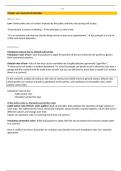
Law= Enforceable rules of conduct imposed by the public authority structuring civil society
“Entering into a contract is binding” the principle is a rule of law
“It is an unwritten rule that one should always arrive on time at an appointment” the principle is a rule of
civility and decent behaviour
Disti ncti on
Mandatory rules of law vs. Default rules of law
Mandatory rules of law= laws that purport to apply irrespective of the law chosen by the parties to govern
their contractual relations
Default rules of law= rules of law that can be overridden by a legally effective agreement (“gap filler”)
they can be set aside in a written agreement, it’s a law but people can decide to do it otherwise (you rent a
garage and the contract must be made every month, but you can still rent for more than a month if it’s written
down in a contract)
In the economic analysis of contracts, the rules of contract law divide into two general classes: default rules,
which parties can contract around by agreement of the parties, and mandatory or immutable rules, which
parties cannot alter.
Mandatory rules of law
- Public policy rules
- Mandatory protective laws
Public policy rules vs. Mandatory protective rules
public policy rules (French: ordre public)= Body of principles that underpin the operation of legal systems in
each state. This addresses the social, moral and economic values that tie a society together: values that vary in
different cultures and change over time.
(regels van openbare orde, f.e marrying more than one person)
Mandatory protective rules= Rules that purport to apply with the aim to protect the economic weaker party
to a contract.
Once a conflict has arisen, the parties to a contract may deviate from such mandatory rules by a separate
agreement
,Sources of law
Where can the rules of law be found
1. Legislation (wetgeving)
2. Jurisprudence (case law)
3. Legal doctrine (rechtsleer)
4. Customary law (gewoonterecht)
1. Legislation
Legislation “sensu stricto”: Act (of Parliament)
Legislation “sendu lato”: Treaties, Constitution, Acts, Presidential/Royal Decrees, Governemental decisions,
European regulations or directives …
2. Jurisprudence: rechtspraak
Interpretation and application of a general rule of law by a judge or a court of law on an individual situation
In Continental European Law:
no precedent or authority (<-> Common Law)
only binding for litigating parties
3. legal doctorine
The systematic, analytically evaluative exposition of the substance of private law, criminal law, public law, etc.
Legal doctrine picks up questions from legal practice and discusses them in a more general and profound
manner.
4. Customary law and legal priciples of law
What is customary law?: Customary law is, by definition, intrinsic to the life and custom of indigenous peoples
and local communities. Actual importance in modern legal systems is limited
What are (unwritten) legal principles of law?
They are mostly derived from existing elements of the legal system:
- with statutory support
E.g.: general principal of “good faith”
- without statutory support
E.g.: reasonableness principle
Legal systems
- Civil law systems
A body of law derived and evolved directly from Roman Law, the primary feature of which is that laws are
struck in writing, codified, and not determined, as in the Common Law, by the opinions
of judges.
- Common law systems
A body of law based on the opinions of judges and historic customs
- Religious law system
,Branches of law
Summa divisio: public <-> private law
Public law= The law which governs relationships between individuals and the government, and those
relationships between individuals
which are of direct concern to the society?
constitutional law
administrative law
tax law
criminal law
procedural law
Private Law= Private law governs the relationships between individual parties rather than between individuals
and the State:
Civil Law
o Civil Code (main source of civil law)
Commercial Law
o body of law that applies to the rights, relations, and conduct of persons and businesses engaged
in commerce, merchandising, trade, and sales (= business law)
, Chapter two: (Belgian) Constitutional law
Consti tuti onal law
The purpose of constitutional law (Public Law)
Three types of rules
1. Defining the state (boundaries, anthem, flag, …)
2. Recognition of rights of the citizens of that state
3. Attribution (and limitation) of power to state institutions
E.g. The Belgian Constitution: see hereafter
The struggle for power
- State power and freedom
o Question: to what extent is the interference of the authorities desirable?
o Idea of ‘social contract’: starting point for organising states in most European countries
Constitutional law: regulates the distribution amongst state institutions
Trias politica
The language of constitutional law: overview
The state structure
The government system
About the head of state
About the legislature
About the executive branch
About the judiciary
The state structure
- The way power is distributed amongst the entities of the state
- Unitary state vs. Federation
Federation
Unites federated areas that are self-governing within the boundaries set by the federation
=> certain level of autonomy in legislation & government
Provinces, regions, cities, states, …
Often: constitutional court
Chapter one: General introduction
What is law?
Law= Enforceable rules of conduct imposed by the public authority structuring civil society
“Entering into a contract is binding” the principle is a rule of law
“It is an unwritten rule that one should always arrive on time at an appointment” the principle is a rule of
civility and decent behaviour
Disti ncti on
Mandatory rules of law vs. Default rules of law
Mandatory rules of law= laws that purport to apply irrespective of the law chosen by the parties to govern
their contractual relations
Default rules of law= rules of law that can be overridden by a legally effective agreement (“gap filler”)
they can be set aside in a written agreement, it’s a law but people can decide to do it otherwise (you rent a
garage and the contract must be made every month, but you can still rent for more than a month if it’s written
down in a contract)
In the economic analysis of contracts, the rules of contract law divide into two general classes: default rules,
which parties can contract around by agreement of the parties, and mandatory or immutable rules, which
parties cannot alter.
Mandatory rules of law
- Public policy rules
- Mandatory protective laws
Public policy rules vs. Mandatory protective rules
public policy rules (French: ordre public)= Body of principles that underpin the operation of legal systems in
each state. This addresses the social, moral and economic values that tie a society together: values that vary in
different cultures and change over time.
(regels van openbare orde, f.e marrying more than one person)
Mandatory protective rules= Rules that purport to apply with the aim to protect the economic weaker party
to a contract.
Once a conflict has arisen, the parties to a contract may deviate from such mandatory rules by a separate
agreement
,Sources of law
Where can the rules of law be found
1. Legislation (wetgeving)
2. Jurisprudence (case law)
3. Legal doctrine (rechtsleer)
4. Customary law (gewoonterecht)
1. Legislation
Legislation “sensu stricto”: Act (of Parliament)
Legislation “sendu lato”: Treaties, Constitution, Acts, Presidential/Royal Decrees, Governemental decisions,
European regulations or directives …
2. Jurisprudence: rechtspraak
Interpretation and application of a general rule of law by a judge or a court of law on an individual situation
In Continental European Law:
no precedent or authority (<-> Common Law)
only binding for litigating parties
3. legal doctorine
The systematic, analytically evaluative exposition of the substance of private law, criminal law, public law, etc.
Legal doctrine picks up questions from legal practice and discusses them in a more general and profound
manner.
4. Customary law and legal priciples of law
What is customary law?: Customary law is, by definition, intrinsic to the life and custom of indigenous peoples
and local communities. Actual importance in modern legal systems is limited
What are (unwritten) legal principles of law?
They are mostly derived from existing elements of the legal system:
- with statutory support
E.g.: general principal of “good faith”
- without statutory support
E.g.: reasonableness principle
Legal systems
- Civil law systems
A body of law derived and evolved directly from Roman Law, the primary feature of which is that laws are
struck in writing, codified, and not determined, as in the Common Law, by the opinions
of judges.
- Common law systems
A body of law based on the opinions of judges and historic customs
- Religious law system
,Branches of law
Summa divisio: public <-> private law
Public law= The law which governs relationships between individuals and the government, and those
relationships between individuals
which are of direct concern to the society?
constitutional law
administrative law
tax law
criminal law
procedural law
Private Law= Private law governs the relationships between individual parties rather than between individuals
and the State:
Civil Law
o Civil Code (main source of civil law)
Commercial Law
o body of law that applies to the rights, relations, and conduct of persons and businesses engaged
in commerce, merchandising, trade, and sales (= business law)
, Chapter two: (Belgian) Constitutional law
Consti tuti onal law
The purpose of constitutional law (Public Law)
Three types of rules
1. Defining the state (boundaries, anthem, flag, …)
2. Recognition of rights of the citizens of that state
3. Attribution (and limitation) of power to state institutions
E.g. The Belgian Constitution: see hereafter
The struggle for power
- State power and freedom
o Question: to what extent is the interference of the authorities desirable?
o Idea of ‘social contract’: starting point for organising states in most European countries
Constitutional law: regulates the distribution amongst state institutions
Trias politica
The language of constitutional law: overview
The state structure
The government system
About the head of state
About the legislature
About the executive branch
About the judiciary
The state structure
- The way power is distributed amongst the entities of the state
- Unitary state vs. Federation
Federation
Unites federated areas that are self-governing within the boundaries set by the federation
=> certain level of autonomy in legislation & government
Provinces, regions, cities, states, …
Often: constitutional court