Hepatitis B virus (HBV)
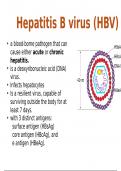
• a blood-borne pathogen that can
cause either acute or chronic
hepatitis.
• is a deoxyribonucleic acid (DNA)
virus.
• Infects hepatocytes
• Is a resilient virus, capable of
surviving outside the body for at
least 7 days.
• with 3 distinct antigens:
surface antigen (HBsAg)
core antigen (HBcAg), and
e antigen (HBeAg).
, It can be trans mitted in several ways:
(1)perinatally from mothers infected with HBV to their infants;
(2)percutaneously (e.g., IV drug use, accidental needle-stick
punctures); or
(3)via small cuts on mucosal surfaces and exposure to infectious
blood, blood products, or other body fluids (e.g., semen, vaginal
secretions, saliva)
Causes of HBV infection
1. High-Risk Behavior – unprotected sex, sharing of needles
2. Occupational – healthcare workers
3. Other risk factors – blood transfusion
• a blood-borne pathogen that can
cause either acute or chronic
hepatitis.
• is a deoxyribonucleic acid (DNA)
virus.
• Infects hepatocytes
• Is a resilient virus, capable of
surviving outside the body for at
least 7 days.
• with 3 distinct antigens:
surface antigen (HBsAg)
core antigen (HBcAg), and
e antigen (HBeAg).
, It can be trans mitted in several ways:
(1)perinatally from mothers infected with HBV to their infants;
(2)percutaneously (e.g., IV drug use, accidental needle-stick
punctures); or
(3)via small cuts on mucosal surfaces and exposure to infectious
blood, blood products, or other body fluids (e.g., semen, vaginal
secretions, saliva)
Causes of HBV infection
1. High-Risk Behavior – unprotected sex, sharing of needles
2. Occupational – healthcare workers
3. Other risk factors – blood transfusion