

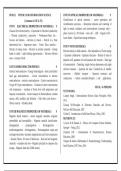
PH 8252 PHYSICS FOR INFORMATION SCIENCE UNIT IV OPTICAL PROPERTIES OF MATERIALS 9
(Common to CSE & IT) Classification of optical materials – carrier generation and
recombination processes – Absorption emission and scattering of
UNIT I ELECTRICAL PROPERTIES OF MATERIALS 9
light in metals, insulators and semiconductors (concepts only) –
Classical free electron theory – Expression for electrical conductivity
photo current in a P-N diode – solar cell – LED – Organic LED –
– Thermal conductivity, expression – Wiedemann-Franz law –
Laser diodes – Optical data storage techniques.
Success and failures – electrons in metals – Particle in a three
dimensional box – degenerate states – Fermi- Dirac statistics – UNIT V NANO MATERIALS 9
Density of energy states – Electron in periodic potential – Energy Electron density in bulk material – Size dependence of Fermi energy
bands in solids – tight binding approximation – Electron effective – Quantum confinement – Quantum structures – Density of states in
mass – concept of hole. quantum well, quantum wire and quantum dot structure – Band gap
of nanomaterials – Tunneling: single electron phenomena and single
UNIT II SEMICONDUCTOR PHYSICS 9
electron transistor – Quantum dot laser. Conductivity of metallic
Intrinsic Semiconductors – Energy band diagram – direct and indirect
nanowires – Ballistic transport – Quantum resistance and
band gap semiconductors – Carrier concentration in intrinsic
conductance – Carbon nanotubes:Properti s and applications.
semiconductors – extrinsic semiconductors – Carrier concentration in
N-type & P-type semiconductors – Variation of carrier concentration
TOTAL: 45 PERIODS
with temperature – variation of Fermi level with temperature and TEXT BOOKS:
impurity concentration – Carrier transport in Semiconductor: random 1.Jasprit Singh, - Semiconductor Devices: Basic Principles, Wiley
motion, drift, mobility and diffusion – Hall effect and devices – 2012.
Ohmic contacts – Schottky diode. 2.Kasap SO-Principles of Electronic Materials and Devices,
McGraw-Hill Education, 2007.
UNIT III MAGNETIC PROPERTIES OF MATERIALS 9
3.Kittel C - Introduction to Solid State Physics. Wiley, 2005.
Magnetic dipole moment – atomic magnetic moments- magnetic
REFERENCES:
permeability and susceptibility – Magnetic material classification:
1.Garcia N & Damask A - Physics for Computer Science Students,
diamagnetism – paramagnetism – ferromagnetism –
Springer - Verlag, 2012.
antiferromagnetism – ferrimagnetism – Ferromagnetism: origin and
2.Hanson GW - Fundamentals of Nanoelectronics, Pearson
exchange interaction- saturation magnetization and Curie temperature
Education, 2009.
– Domain Theory- M versus H behaviour – Hard and soft magnetic
3.Rogers B Adams J &Pennathur S -Nanotechnology: Understanding
materials – examples and uses-– Magnetic principle in computer data
Small Systems, CRC Press, 2014.
storage – Magnetic hard disc (GMR sensor).
, Unit –I Electrical Properties of Materials
The materials which conduct electricity, when an electric
potential difference is applied across them are called conducting
materials.
Electrical resistivity
The electrical resistivity is expressed in terms of electrical
resistance.
l ρl
R∝ , R=
A A
Electrical resistivity is defined as the resistance per unit
RA
length and unit area of cross section.( ρ ) = o h mm
l
Electrical conductivity (σ ¿ is defined as the reciprocal of the
electrical resistivity.
1 −1
σ= mhom
ρ
Electron theory of metals
Electrons have similar behaviour in conductors,
semiconductors, dielectrics, magnetic and superconducting materials.
There are three different theories which explain the behaviour of
electrons in metals.
(i) Classical free electron theory:
Department of Physics AnjalaiAmmal - Mahalingam Engineering College, Kovilvenni – 614 403
Page 1
, It is a macroscopic theory, proposed by Drude and Lorenz in 1900 5. In the presence of electric field, the free electrons acquire some
and it is based on the free electrons and it obeys the laws of classical amount of energy from the field and are directed to move towards
mechanics. higher potential.
(ii) Quantum free electron theory: 6. As a result, the free electrons acquire a constant velocity is
It is a microscopic theory, proposed by Somerfield in 1928. This known as drift velocity.
theory explains the concept of electrons moves in a constant potential Assumptions or Postulates of Classical free electron theory
and it obeys quantum laws. 1. A metal is composed of atoms and atoms have nucleus around
(iii) Brillouin zone theory or Band theory: which there are revolving electrons.
This theory was proposed by Bloch in 1928. It explains the concept 2. In a metal, the valance electrons of atoms are free to move about
that the electron moves in a periodic potential. This theory also the whole volume of the metal, like the molecules of perfect gas
explains the mechanism of semi conductivity, based on the bands and in a container.
hence called as band theory. 3. In the absence of an electric field the electron move in all
Electrical conduction in metals /Classical free electron Theory directions, therefore average velocity of the electron is zero and
1. The “classical free electron” theory is the first theory which hence the current is zero.
explains the electrical conduction in the conducting materials and 4. In the presence of electric field, the free electrons are moving
it was developed by Drude and Lorentz (1900). towards the positive potential or in the opposite direction of the
2. According to this theory, the free electrons are fully responsible applied electric field (E).
for electrical conduction in metal. 5. The free electrons can move freely everywhere in the metal
3. In the absence of electric field, the free electrons move in all without any mutual interaction between them and their
directions and collide with positive ions. movements obey the laws of the classical kinetic theory of gases.
4. Therefore the average velocity of the free electron is zero and 6. The electron velocities in a metal obey the classical Maxwell-
hence the current is zero. Boltzmann distribution of velocities.
Collision time(τ¿ ¿ c) ¿:
Department of Physics AnjalaiAmmal - Mahalingam Engineering College, Kovilvenni – 614 403
Page 2
(Common to CSE & IT) Classification of optical materials – carrier generation and
recombination processes – Absorption emission and scattering of
UNIT I ELECTRICAL PROPERTIES OF MATERIALS 9
light in metals, insulators and semiconductors (concepts only) –
Classical free electron theory – Expression for electrical conductivity
photo current in a P-N diode – solar cell – LED – Organic LED –
– Thermal conductivity, expression – Wiedemann-Franz law –
Laser diodes – Optical data storage techniques.
Success and failures – electrons in metals – Particle in a three
dimensional box – degenerate states – Fermi- Dirac statistics – UNIT V NANO MATERIALS 9
Density of energy states – Electron in periodic potential – Energy Electron density in bulk material – Size dependence of Fermi energy
bands in solids – tight binding approximation – Electron effective – Quantum confinement – Quantum structures – Density of states in
mass – concept of hole. quantum well, quantum wire and quantum dot structure – Band gap
of nanomaterials – Tunneling: single electron phenomena and single
UNIT II SEMICONDUCTOR PHYSICS 9
electron transistor – Quantum dot laser. Conductivity of metallic
Intrinsic Semiconductors – Energy band diagram – direct and indirect
nanowires – Ballistic transport – Quantum resistance and
band gap semiconductors – Carrier concentration in intrinsic
conductance – Carbon nanotubes:Properti s and applications.
semiconductors – extrinsic semiconductors – Carrier concentration in
N-type & P-type semiconductors – Variation of carrier concentration
TOTAL: 45 PERIODS
with temperature – variation of Fermi level with temperature and TEXT BOOKS:
impurity concentration – Carrier transport in Semiconductor: random 1.Jasprit Singh, - Semiconductor Devices: Basic Principles, Wiley
motion, drift, mobility and diffusion – Hall effect and devices – 2012.
Ohmic contacts – Schottky diode. 2.Kasap SO-Principles of Electronic Materials and Devices,
McGraw-Hill Education, 2007.
UNIT III MAGNETIC PROPERTIES OF MATERIALS 9
3.Kittel C - Introduction to Solid State Physics. Wiley, 2005.
Magnetic dipole moment – atomic magnetic moments- magnetic
REFERENCES:
permeability and susceptibility – Magnetic material classification:
1.Garcia N & Damask A - Physics for Computer Science Students,
diamagnetism – paramagnetism – ferromagnetism –
Springer - Verlag, 2012.
antiferromagnetism – ferrimagnetism – Ferromagnetism: origin and
2.Hanson GW - Fundamentals of Nanoelectronics, Pearson
exchange interaction- saturation magnetization and Curie temperature
Education, 2009.
– Domain Theory- M versus H behaviour – Hard and soft magnetic
3.Rogers B Adams J &Pennathur S -Nanotechnology: Understanding
materials – examples and uses-– Magnetic principle in computer data
Small Systems, CRC Press, 2014.
storage – Magnetic hard disc (GMR sensor).
, Unit –I Electrical Properties of Materials
The materials which conduct electricity, when an electric
potential difference is applied across them are called conducting
materials.
Electrical resistivity
The electrical resistivity is expressed in terms of electrical
resistance.
l ρl
R∝ , R=
A A
Electrical resistivity is defined as the resistance per unit
RA
length and unit area of cross section.( ρ ) = o h mm
l
Electrical conductivity (σ ¿ is defined as the reciprocal of the
electrical resistivity.
1 −1
σ= mhom
ρ
Electron theory of metals
Electrons have similar behaviour in conductors,
semiconductors, dielectrics, magnetic and superconducting materials.
There are three different theories which explain the behaviour of
electrons in metals.
(i) Classical free electron theory:
Department of Physics AnjalaiAmmal - Mahalingam Engineering College, Kovilvenni – 614 403
Page 1
, It is a macroscopic theory, proposed by Drude and Lorenz in 1900 5. In the presence of electric field, the free electrons acquire some
and it is based on the free electrons and it obeys the laws of classical amount of energy from the field and are directed to move towards
mechanics. higher potential.
(ii) Quantum free electron theory: 6. As a result, the free electrons acquire a constant velocity is
It is a microscopic theory, proposed by Somerfield in 1928. This known as drift velocity.
theory explains the concept of electrons moves in a constant potential Assumptions or Postulates of Classical free electron theory
and it obeys quantum laws. 1. A metal is composed of atoms and atoms have nucleus around
(iii) Brillouin zone theory or Band theory: which there are revolving electrons.
This theory was proposed by Bloch in 1928. It explains the concept 2. In a metal, the valance electrons of atoms are free to move about
that the electron moves in a periodic potential. This theory also the whole volume of the metal, like the molecules of perfect gas
explains the mechanism of semi conductivity, based on the bands and in a container.
hence called as band theory. 3. In the absence of an electric field the electron move in all
Electrical conduction in metals /Classical free electron Theory directions, therefore average velocity of the electron is zero and
1. The “classical free electron” theory is the first theory which hence the current is zero.
explains the electrical conduction in the conducting materials and 4. In the presence of electric field, the free electrons are moving
it was developed by Drude and Lorentz (1900). towards the positive potential or in the opposite direction of the
2. According to this theory, the free electrons are fully responsible applied electric field (E).
for electrical conduction in metal. 5. The free electrons can move freely everywhere in the metal
3. In the absence of electric field, the free electrons move in all without any mutual interaction between them and their
directions and collide with positive ions. movements obey the laws of the classical kinetic theory of gases.
4. Therefore the average velocity of the free electron is zero and 6. The electron velocities in a metal obey the classical Maxwell-
hence the current is zero. Boltzmann distribution of velocities.
Collision time(τ¿ ¿ c) ¿:
Department of Physics AnjalaiAmmal - Mahalingam Engineering College, Kovilvenni – 614 403
Page 2

