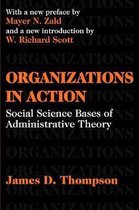
Thompson – Organizations in Action
Chapter 1:
Thompson is not interested in the relation b/n individual factors and organizational behavior,
but in the relation b/n organizational factors and organizational behavior
He looks at organisations from two perspectives:
1) Organisations as closed system (predictability), machine metaphor, deals with
certainty
2) Organisations as open systems (adaptability), living systems metaphor, deals with
uncertainty
Both perspectives have added value but are contradictory. This is why, Thompson perceives
organisations as open systems (that need to adapt) but also strive for predictability.
- Primary processes = technology
Differences in organizational action depend on inside (different characteristics of technology)
or outside (different characteristics of environments).
Q1: What are Thompson’s general thoughts on studying organizational behavior/action?
Chapter 2:
Different forms of rationality
1) Technical – When primary processes are given the knowledge about cause-effect
relations, they are organized to relies desired effects with optimal certainty (closed
system strategy), aimed at predictability of operations of technical core (primary
processes)
2) Organizational – When inputs and outputs (primary processes) are uncertain, activities
are aligned so that organisations can cope with uncertainty (open system strategy)
3) Instrumental – Assessment of technical and organizational rationality in terms of
effectiveness
4) Economic – Assessment of technical and organizational rationality in terms of
efficiency
Types of primary processes (technology):
1) Long-linked (mass production) – standardization of products
2) Mediating (bank, insurance, telecom) – standardization of products for many
customers
3) Intensive (hospital, military, construction) – success relies on custom combination of
activities of capacities, feedback from object worked on needed
- Organizational rationality – how to deal with environmental effects on acquiring
inputs and delivering outputs
Q2: Why technical rationality can’t explain organizational action by itself? – Because it is
focused on predictability of operations of the technical core (PP). It aims at creating
predictability and isolating PP from environmental influence. Since this is impossible, TR
can’t explain org. action by itself.
Ways of dealing with environmental influences on both inputs and outputs – Organisational
rationality methods:
1) Buffers (keep extra stock) - expensive
Chapter 1:
Thompson is not interested in the relation b/n individual factors and organizational behavior,
but in the relation b/n organizational factors and organizational behavior
He looks at organisations from two perspectives:
1) Organisations as closed system (predictability), machine metaphor, deals with
certainty
2) Organisations as open systems (adaptability), living systems metaphor, deals with
uncertainty
Both perspectives have added value but are contradictory. This is why, Thompson perceives
organisations as open systems (that need to adapt) but also strive for predictability.
- Primary processes = technology
Differences in organizational action depend on inside (different characteristics of technology)
or outside (different characteristics of environments).
Q1: What are Thompson’s general thoughts on studying organizational behavior/action?
Chapter 2:
Different forms of rationality
1) Technical – When primary processes are given the knowledge about cause-effect
relations, they are organized to relies desired effects with optimal certainty (closed
system strategy), aimed at predictability of operations of technical core (primary
processes)
2) Organizational – When inputs and outputs (primary processes) are uncertain, activities
are aligned so that organisations can cope with uncertainty (open system strategy)
3) Instrumental – Assessment of technical and organizational rationality in terms of
effectiveness
4) Economic – Assessment of technical and organizational rationality in terms of
efficiency
Types of primary processes (technology):
1) Long-linked (mass production) – standardization of products
2) Mediating (bank, insurance, telecom) – standardization of products for many
customers
3) Intensive (hospital, military, construction) – success relies on custom combination of
activities of capacities, feedback from object worked on needed
- Organizational rationality – how to deal with environmental effects on acquiring
inputs and delivering outputs
Q2: Why technical rationality can’t explain organizational action by itself? – Because it is
focused on predictability of operations of the technical core (PP). It aims at creating
predictability and isolating PP from environmental influence. Since this is impossible, TR
can’t explain org. action by itself.
Ways of dealing with environmental influences on both inputs and outputs – Organisational
rationality methods:
1) Buffers (keep extra stock) - expensive