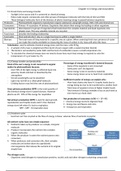
cor por ate com m u nicatie
hoor colleges
week 1 hoorcollege 1
★ corporate communicatie = ‘a management function that offers a framework
for the effective coordination of all internal and external communication with
the overall purpose of establishing and maintaining favorable reputations with
stakeholder groups upon which the organization is dependent’.
○ vertaling: ‘een management functie die een kader biedt voor de
effectieve coördinatie van alle interne en externe communicatie met het
algehele doel van het vestigen en onderhouden van gunstige/goede
reputaties met stakeholder groepen waar een organisatie afhankelijk
van is’.
★ stakeholder = alle groepen of individuen die invloed kunnen hebben op of
beïnvloed kunnen worden door het behalen van de doelen van de organisatie.
★ corporation = specifieke rechtsvorm van organisaties.
★ corpus = lichaam als metafoor voor organisaties als één entiteit.
○ organisaties worden in het nieuws naar voren gebracht alsof ze
personen zijn.
○ organisatie valt vaak uit meerdere groepen, maar treed naar buiten als
één.
★ focus op grote organisaties (dus ook non governmental organisations)
★ organisatie = georganiseerde groepen die strategisch communiceren met hun
stakeholders.
★ corporate communicatie: integratie van strategische communicatie functies
○ marketing communication
○ public relations
○ organizational communication
➢ doel: stakeholder communication & corporate reputation
★ belangrijke concepten:
○ mission = het doel wat de organisatie wilt bereiken.
○ vision = het toekomstbeeld wat een organisatie wilt bereiken.
○ corporate objectives = de algemene doelen die een organisatie in lijn
met zijn missie en visie wilt nastreven.
○ strategy = de manier waarop de organisatie zijn doelstellingen wilt
behalen.
, ○ corporate identity = profiel en de waarde die door een organisatie
worden uitgedragen.
○ corporate image = de onmiddellijke associatie van een individu als een
response van één of meerdere signalen of berichten van of over een
specifieke organisatie op een bepaald moment.
○ corporate reputation = een individu’s collectieve representatie van
voorgaande beelden van een organisatie (verworven door zowel
communicatie als voorgaande ervaringen) gevestigd door de tijd heen.
○ stakeholder = iedere groep of individu die invloed kan hebben op of
beïnvloed kan worden door het behalen van de doelen van de
organisatie.
○ market = een afgebakende groep mensen waaraan je een product wilt
verkopen.
○ communication = de tactieken en media die gebruikt worden om te
communiceren met interne en externe groepen.
○ integration = het handelen en integreren van alle communicatie zodat
de corporate identity effectief en consistent gecommuniceerd wordt
naar interne en externe groepen.
★ trends in corporate communication:
○ 1900s - 1970s: ‘linear model’ of communication, not strategically
integrated in the organization.
○ 1980s - 2000s: ‘linear model’ of communication strategically integrated
in the organization.
○ 2000s - present: communication as interaction and dialogue,
strategically integrated in the organization.
○ current dilemma: how to balance strategic ‘one-to-many’ vs. ‘many-to-
one’ and ‘many-to-many’ communication?
★ research perspectives:
○ micro level of analysis: the individual level (bijv. interemployees
communication, CEO communication, making sense of the
organization on a personal level).
○ meso level of analysis: the group level (bijv. organizations
communicating with other organizations, stakeholder groups, or units
with the organization communicating).
○ macro level of analysis: the societal level (bijv. public opinion on
organizations, issue communication which organizations and
individual organization are actors, and public communication about the
organization).
★ huidig media landschap: traditioneel & nieuw
, tr adition al / cur r en t n ew / cur r en t m edia
m edia
com m un ication broadcasting crowd-casting
appr oach
com m un ication m odel one-to-many many-to-one, many-to-
many
un der lyin g pr in ciple corporate positioning content generation
key m etaphor s medium, channels platforms, arenas
r ules of com m un ication fixed and controlled messy and emergent
costs of con ten t / expensive / high cheap / low
publishin g thr eshold
★ classificatie van verschillende types (sociale) media:
○ owned media: corporate website, corporate social media
○ paid media: advertenties, influencers
○ earned media: social media content gemaakt door stakeholders
★ aspecten classificatie media:
○ social presence: gaat erom dat als je met iemand aan het
communiceren bent, je je niet alleen voelt; dus communiceren met een
ander.
○ media richness: de capaciteit van een medium om signalen door te
geven; gaat ook over hoe de interactie mogelijkheden zijn.
○ self-presentation: laten zien wie we zijn; bepaald beeld tot stand
brengen; proces van het zelfbeeld communiceren via media.
○ self-disclosure: is de manier waarop dat beeld tot stand wordt gebracht.
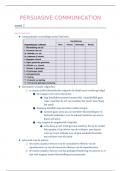
★ classificatie van verschillende types (sociale) media → tabel:
, extra begrippen uit het boek:
★ corporate communication = a management function that offers a framework
for the effective coordination of all internal and external communication with
the overall purpose of establishing and maintaining favorable reputations with
stakeholder groups upon which the organization is dependent.
★ mission = overriding purpose in line with the values and expectations of
stakeholders.
★ vision = desired future state: the aspiration of the organization.
★ corporate objectives = statement of overall aims in line with the overall
purpose.
★ strategy = the ways or means in which the corporate objectives are to be
achieved and put into effect.
★ corporate identity = the profile and values communicated by an organization.
★ corporate image = the immediate set of associations of an individual in
response to one or more signals or messages from or about a particular
organization at a single point in time.
★ corporate reputation = an individual’s collective representation of past images
of an organization (induced through either communication or past
experiences) established over time.
★ stakeholder = any group or individual who can affect or is affected by
achievement of the organization’s objectives.
★ market = a defined group for whom a product is or may be in demand (and for
whom an organization creates and maintains products and services).
★ communication = the tactics and media that are used to communicate with
internal and external groups.
hoor colleges
week 1 hoorcollege 1
★ corporate communicatie = ‘a management function that offers a framework
for the effective coordination of all internal and external communication with
the overall purpose of establishing and maintaining favorable reputations with
stakeholder groups upon which the organization is dependent’.
○ vertaling: ‘een management functie die een kader biedt voor de
effectieve coördinatie van alle interne en externe communicatie met het
algehele doel van het vestigen en onderhouden van gunstige/goede
reputaties met stakeholder groepen waar een organisatie afhankelijk
van is’.
★ stakeholder = alle groepen of individuen die invloed kunnen hebben op of
beïnvloed kunnen worden door het behalen van de doelen van de organisatie.
★ corporation = specifieke rechtsvorm van organisaties.
★ corpus = lichaam als metafoor voor organisaties als één entiteit.
○ organisaties worden in het nieuws naar voren gebracht alsof ze
personen zijn.
○ organisatie valt vaak uit meerdere groepen, maar treed naar buiten als
één.
★ focus op grote organisaties (dus ook non governmental organisations)
★ organisatie = georganiseerde groepen die strategisch communiceren met hun
stakeholders.
★ corporate communicatie: integratie van strategische communicatie functies
○ marketing communication
○ public relations
○ organizational communication
➢ doel: stakeholder communication & corporate reputation
★ belangrijke concepten:
○ mission = het doel wat de organisatie wilt bereiken.
○ vision = het toekomstbeeld wat een organisatie wilt bereiken.
○ corporate objectives = de algemene doelen die een organisatie in lijn
met zijn missie en visie wilt nastreven.
○ strategy = de manier waarop de organisatie zijn doelstellingen wilt
behalen.
, ○ corporate identity = profiel en de waarde die door een organisatie
worden uitgedragen.
○ corporate image = de onmiddellijke associatie van een individu als een
response van één of meerdere signalen of berichten van of over een
specifieke organisatie op een bepaald moment.
○ corporate reputation = een individu’s collectieve representatie van
voorgaande beelden van een organisatie (verworven door zowel
communicatie als voorgaande ervaringen) gevestigd door de tijd heen.
○ stakeholder = iedere groep of individu die invloed kan hebben op of
beïnvloed kan worden door het behalen van de doelen van de
organisatie.
○ market = een afgebakende groep mensen waaraan je een product wilt
verkopen.
○ communication = de tactieken en media die gebruikt worden om te
communiceren met interne en externe groepen.
○ integration = het handelen en integreren van alle communicatie zodat
de corporate identity effectief en consistent gecommuniceerd wordt
naar interne en externe groepen.
★ trends in corporate communication:
○ 1900s - 1970s: ‘linear model’ of communication, not strategically
integrated in the organization.
○ 1980s - 2000s: ‘linear model’ of communication strategically integrated
in the organization.
○ 2000s - present: communication as interaction and dialogue,
strategically integrated in the organization.
○ current dilemma: how to balance strategic ‘one-to-many’ vs. ‘many-to-
one’ and ‘many-to-many’ communication?
★ research perspectives:
○ micro level of analysis: the individual level (bijv. interemployees
communication, CEO communication, making sense of the
organization on a personal level).
○ meso level of analysis: the group level (bijv. organizations
communicating with other organizations, stakeholder groups, or units
with the organization communicating).
○ macro level of analysis: the societal level (bijv. public opinion on
organizations, issue communication which organizations and
individual organization are actors, and public communication about the
organization).
★ huidig media landschap: traditioneel & nieuw
, tr adition al / cur r en t n ew / cur r en t m edia
m edia
com m un ication broadcasting crowd-casting
appr oach
com m un ication m odel one-to-many many-to-one, many-to-
many
un der lyin g pr in ciple corporate positioning content generation
key m etaphor s medium, channels platforms, arenas
r ules of com m un ication fixed and controlled messy and emergent
costs of con ten t / expensive / high cheap / low
publishin g thr eshold
★ classificatie van verschillende types (sociale) media:
○ owned media: corporate website, corporate social media
○ paid media: advertenties, influencers
○ earned media: social media content gemaakt door stakeholders
★ aspecten classificatie media:
○ social presence: gaat erom dat als je met iemand aan het
communiceren bent, je je niet alleen voelt; dus communiceren met een
ander.
○ media richness: de capaciteit van een medium om signalen door te
geven; gaat ook over hoe de interactie mogelijkheden zijn.
○ self-presentation: laten zien wie we zijn; bepaald beeld tot stand
brengen; proces van het zelfbeeld communiceren via media.
○ self-disclosure: is de manier waarop dat beeld tot stand wordt gebracht.
★ classificatie van verschillende types (sociale) media → tabel:
, extra begrippen uit het boek:
★ corporate communication = a management function that offers a framework
for the effective coordination of all internal and external communication with
the overall purpose of establishing and maintaining favorable reputations with
stakeholder groups upon which the organization is dependent.
★ mission = overriding purpose in line with the values and expectations of
stakeholders.
★ vision = desired future state: the aspiration of the organization.
★ corporate objectives = statement of overall aims in line with the overall
purpose.
★ strategy = the ways or means in which the corporate objectives are to be
achieved and put into effect.
★ corporate identity = the profile and values communicated by an organization.
★ corporate image = the immediate set of associations of an individual in
response to one or more signals or messages from or about a particular
organization at a single point in time.
★ corporate reputation = an individual’s collective representation of past images
of an organization (induced through either communication or past
experiences) established over time.
★ stakeholder = any group or individual who can affect or is affected by
achievement of the organization’s objectives.
★ market = a defined group for whom a product is or may be in demand (and for
whom an organization creates and maintains products and services).
★ communication = the tactics and media that are used to communicate with
internal and external groups.