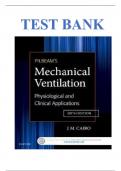
, TESTbBANKbFORbPILBEAM'SbMECHANICALbVENTILATION:bPHYSIOLOGICALb
ANDbCLINICALbAPPLICATIONSb6THbEDITIONbBYbJ.M.bCAIRO
Thisbevidence-
basedbtestbbankbwalksbreadersbthroughbthebmostbfundamentalbandbadvancedbconceptsbsurro
undingbmechanicalbventilationbandbguidesbthembinbproperlybapplyingbthesebprinciplesbtobpati
entbcare.bThisbeditionbfeaturesbabcompletelybrevisedbchapterbonbventilatorbgraphics,baddition
albcasebstudiesbandbclinicalbscenarios,bplusballbthebreader-
friendlybfeaturesbthatbpromotebcriticalbthinkingbandbclinicalbapplicationb—
blikebkeybpoints,bAARCbclinicalbpracticebguidelines,bandbcriticalbcarebconceptsb—
bthatbhavebhelpedbmakebthisbtestbbankbabhouseholdbnamebamongbrespiratorybcarebprofessiona
ls.
TABLEbOFbCONTENT
PartbI:bBasicbConceptsbandbCorebKnowledgebinbMechanicalbVentilation
1. OxygenationbandbAcid-BasebEvaluation
2. BasicbTermsbandbConceptsbofbMechanicalbVentilation
3. HowbVentilatorsbWork
4. HowbabBreathbIsbDelivered
PartbII:bInitiatingbVentilation
5. EstablishingbthebNeedbforbMechanicalbVentilation
6. SelectingbthebVentilatorbandbthebMode
7. InitialbVentilatorbSettings
8. FinalbConsiderationsbinbVentilatorbSetup
PartbIII:bMonitoringbinbMechanicalbVentilation
9. InitialbPatientbAssessment
10. VentilatorbGraphics
11. NoninvasivebMonitoringbofbMechanically-VentilatedbPatients
,12. HemodynamicbMonitoring
PartbIV:bTherapeuticbInterventionsb–bMakingbAppropriatebChanges
13. MethodsbtobImprovebVentilationbandbOtherbTechniquesbinbPatient-VentilatorbManagement
14. ImprovingbOxygenation,bReviewbofbARDS,bandbLungbRecruitmentbManeuvers
15. FrequentlybUsedbPharmacologicbAgentsbinbVentilatedbPatients:bSedatives,bAnalgesicsbandb
Paralytics
PartbV:bEffectsbandbComplicationsbofbMechanicalbVentilation
16. CardiovascularbandbOrganbSystembEffectsbandbComplicationsbofbMechanicalbVentilation
17. EffectsbofbPositivebPressurebVentilationbonbthebPulmonarybSystem
18. Problem-SolvingbandbTroubleshooting
PartbVI:bNoninvasivebPositivebPressurebVentilation
19. BasicbConceptsbofbNoninvasivebPositivebPressurebVentilation
PartbVII:bDiscontinuationbfrombVentilationbandbLong-TermbVentilation
20. WeaningbandbDiscontinuation
21. Long-TermbVentilation!
PartbVIII:bSpecialbApplicationsbofbMechanicalbVentilation
22. NeonatalbandbPediatricbVentilation
23. SpecialbTechniquesbinbVentilatorybSupport
, Chapter 1: Oxygenation
b b b
and Acid-
b
Base EvaluationTest Ban
b b b
k
MULTIPLEbCHOICE
1. Thebstructurebthatbisbresponsiblebforbreturningboxygenatedbbloodbtobthebheartbisbthe
a. Pulmonarybartery.
b. Pulmonarybvein.
c. Superiorbvenabcava.
d. Inferiorbvenabcava.
ANS:b B
Thebpulmonarybveinbcarriesboxygenatedbbloodbtobthebheart.bThebpulmonarybarterybcarriesbde
oxygenatedbbloodbfrombthebheartbtobtheblungs.bBothbvenaebcavaebreturnbbloodbtobthebrightbatri
umbofbthebheart.
DIF: Remember REF:b823-824
OBJ:bDescribebthebstructurebandbfunctionbofbthebcardiopulmonarybsystem.b
TOP:b Planning MSC:b PhysiologicalbIntegrity
2. Chemicalbreceptorsbthatbstimulatebinspirationbareblocatedbinbthe
a. Brain.
b. Lungs.
c. Aorta.
d. Heart.
ANS:b C
Chemicalbreceptorsbinbthebaortabsendbsignalsbtobbeginbthebinspirationbprocess.bThebbrain,blungs,ba
ndbheartballbarebaffectedbbybthisbchemicalbreaction.
DIF: Remember REF:b822
OBJ:bStatebthebprocessbofbthebneuralbandbchemicalbregulationbofbrespiration.b
TOP:b Planning MSC:b PhysiologicalbIntegrity
3. Thebnursebknowsbthatbthebprimarybfunctionbofbthebalveolibisbto
a. Carryboutbgasbexchange.
b. Storeboxygen.
c. Regulatebtidalbvolume.
d. Producebhemoglobin.
ANS:b A
Thebalveolusbisbabcapillarybmembranebthatballowsbgasbexchangebofboxygenbandbcarbonbdioxidebd
uringbrespiration.bThebalveolibdobnotbstoreboxygen,bregulatebtidalbvolume,borbproducebhemoglob
in.
DIF: Remember REF:b822
OBJ:bDescribebthebstructurebandbfunctionbofbthebcardiopulmonarybsystem.b
TOP:b Knowledge MSC:b PhysiologicalbIntegrity
4. Thebnursebknowsbthatbanemiabwillbresultbin
a. Hypoxemia.
ANDbCLINICALbAPPLICATIONSb6THbEDITIONbBYbJ.M.bCAIRO
Thisbevidence-
basedbtestbbankbwalksbreadersbthroughbthebmostbfundamentalbandbadvancedbconceptsbsurro
undingbmechanicalbventilationbandbguidesbthembinbproperlybapplyingbthesebprinciplesbtobpati
entbcare.bThisbeditionbfeaturesbabcompletelybrevisedbchapterbonbventilatorbgraphics,baddition
albcasebstudiesbandbclinicalbscenarios,bplusballbthebreader-
friendlybfeaturesbthatbpromotebcriticalbthinkingbandbclinicalbapplicationb—
blikebkeybpoints,bAARCbclinicalbpracticebguidelines,bandbcriticalbcarebconceptsb—
bthatbhavebhelpedbmakebthisbtestbbankbabhouseholdbnamebamongbrespiratorybcarebprofessiona
ls.
TABLEbOFbCONTENT
PartbI:bBasicbConceptsbandbCorebKnowledgebinbMechanicalbVentilation
1. OxygenationbandbAcid-BasebEvaluation
2. BasicbTermsbandbConceptsbofbMechanicalbVentilation
3. HowbVentilatorsbWork
4. HowbabBreathbIsbDelivered
PartbII:bInitiatingbVentilation
5. EstablishingbthebNeedbforbMechanicalbVentilation
6. SelectingbthebVentilatorbandbthebMode
7. InitialbVentilatorbSettings
8. FinalbConsiderationsbinbVentilatorbSetup
PartbIII:bMonitoringbinbMechanicalbVentilation
9. InitialbPatientbAssessment
10. VentilatorbGraphics
11. NoninvasivebMonitoringbofbMechanically-VentilatedbPatients
,12. HemodynamicbMonitoring
PartbIV:bTherapeuticbInterventionsb–bMakingbAppropriatebChanges
13. MethodsbtobImprovebVentilationbandbOtherbTechniquesbinbPatient-VentilatorbManagement
14. ImprovingbOxygenation,bReviewbofbARDS,bandbLungbRecruitmentbManeuvers
15. FrequentlybUsedbPharmacologicbAgentsbinbVentilatedbPatients:bSedatives,bAnalgesicsbandb
Paralytics
PartbV:bEffectsbandbComplicationsbofbMechanicalbVentilation
16. CardiovascularbandbOrganbSystembEffectsbandbComplicationsbofbMechanicalbVentilation
17. EffectsbofbPositivebPressurebVentilationbonbthebPulmonarybSystem
18. Problem-SolvingbandbTroubleshooting
PartbVI:bNoninvasivebPositivebPressurebVentilation
19. BasicbConceptsbofbNoninvasivebPositivebPressurebVentilation
PartbVII:bDiscontinuationbfrombVentilationbandbLong-TermbVentilation
20. WeaningbandbDiscontinuation
21. Long-TermbVentilation!
PartbVIII:bSpecialbApplicationsbofbMechanicalbVentilation
22. NeonatalbandbPediatricbVentilation
23. SpecialbTechniquesbinbVentilatorybSupport
, Chapter 1: Oxygenation
b b b
and Acid-
b
Base EvaluationTest Ban
b b b
k
MULTIPLEbCHOICE
1. Thebstructurebthatbisbresponsiblebforbreturningboxygenatedbbloodbtobthebheartbisbthe
a. Pulmonarybartery.
b. Pulmonarybvein.
c. Superiorbvenabcava.
d. Inferiorbvenabcava.
ANS:b B
Thebpulmonarybveinbcarriesboxygenatedbbloodbtobthebheart.bThebpulmonarybarterybcarriesbde
oxygenatedbbloodbfrombthebheartbtobtheblungs.bBothbvenaebcavaebreturnbbloodbtobthebrightbatri
umbofbthebheart.
DIF: Remember REF:b823-824
OBJ:bDescribebthebstructurebandbfunctionbofbthebcardiopulmonarybsystem.b
TOP:b Planning MSC:b PhysiologicalbIntegrity
2. Chemicalbreceptorsbthatbstimulatebinspirationbareblocatedbinbthe
a. Brain.
b. Lungs.
c. Aorta.
d. Heart.
ANS:b C
Chemicalbreceptorsbinbthebaortabsendbsignalsbtobbeginbthebinspirationbprocess.bThebbrain,blungs,ba
ndbheartballbarebaffectedbbybthisbchemicalbreaction.
DIF: Remember REF:b822
OBJ:bStatebthebprocessbofbthebneuralbandbchemicalbregulationbofbrespiration.b
TOP:b Planning MSC:b PhysiologicalbIntegrity
3. Thebnursebknowsbthatbthebprimarybfunctionbofbthebalveolibisbto
a. Carryboutbgasbexchange.
b. Storeboxygen.
c. Regulatebtidalbvolume.
d. Producebhemoglobin.
ANS:b A
Thebalveolusbisbabcapillarybmembranebthatballowsbgasbexchangebofboxygenbandbcarbonbdioxidebd
uringbrespiration.bThebalveolibdobnotbstoreboxygen,bregulatebtidalbvolume,borbproducebhemoglob
in.
DIF: Remember REF:b822
OBJ:bDescribebthebstructurebandbfunctionbofbthebcardiopulmonarybsystem.b
TOP:b Knowledge MSC:b PhysiologicalbIntegrity
4. Thebnursebknowsbthatbanemiabwillbresultbin
a. Hypoxemia.