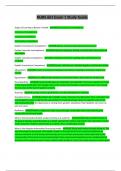
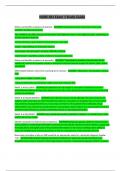
NURS 661 Exam 1 Study Guide
Stages of Learning in Benner's Model - ANSWER:Unconscious Incompetence
Conscious Incompetence
Conscious Competence
Unconscious competence
Explain Unconscious Incompetence - ANSWER:Novice, we don't know what we don't know
Explain Conscious Incompetence - ANSWER:Advanced beginner, feeling uncomfortable about what we
don't know
Explain Conscious Competence - ANSWER:Competent/proficient, getting skills and feeling more
confident
Explain Unconscious Competence - ANSWER:Expert, skills become blended together and become habits
Attunement - ANSWER:in tune to someone's feeling and emotions, reacting to someone's needs and
moods.
Egocentrism - ANSWER:can't differentiate between yourself and others, self-centered, all about me
Neuroplasticity - ANSWER:neuronal pathways are malleable and adaptable. The brain responds to things
in the environment and it can change, this is once reason why therapy is pushed because it can change
the structure of the brain if applied correctly.
Nuturing - ANSWER:caring, can be a good think or can be maladaptive or enabling.
Overdeterminism - ANSWER:problem has multiple causes. Someone has depression from a situation that
is prolonged for years, could be taht one problem or could be biologic where it's genetic, may not be
able to pinpoint wher the depression is coming from, genetic, situational. Psych patients very rare it is
just one cause.
Resilience - ANSWER:able to adapt very well, can go through a traumatic event and maintain good
coping skills and mental health.
What is the biomedical holistic model and what is it used for? - ANSWER:Biomedical model focuses on
the goal of healing, seeing the body as a whole, seeing both medical and holistic side. Biomedical model
treats symptoms, holistic model treats as a whole, this is combination of both.
What is the Adaptive Information Processing Model - ANSWER:Taking information through schemas. The
way information is processed. Information is taken in through senses and connected adaptively to
memory networks so that storing and learning can occur.If brain processing is interrupted due to the
massive influx of hormone and neurotransmitter, these unprocessed experiences are considered to be
the basis of the symptoms and of many mental health problems. Once information process is interrupted
, the memory of the event becomes fragmented and the experience may become disconnected (a women
raped 40 years ago triggered by having sex withe her partner, etc.)._
What is the Diathesis-Stress model? - ANSWER:Genetics and stress combined in diagnosis, so nurture vs
nature. Threshold of genetic/nature/diathesis and environment/stress/nurture. Modeled for
schizophrenia and bipolar.
What is the function of acetylcholine - ANSWER:memory and cognition, if depleted causes dementia
What is the function of cortisol - ANSWER:stress hormone
What is the function of dopamine - ANSWER:Reward, if too much hallucinations if too little
EPS/Parkinsonian symptoms
What is the function of GABA - ANSWER:Sedation, calm, feel good. Not enough causes anxiousness.
What is the function of Glutamate? - ANSWER:On switch, stimulation. Agitates neurons and is toxic to
them.
What is Acting Out - ANSWER:Avoiding emotions through impulsive acts (drinking vs. crying)
Denial - ANSWER:Avoiding or ignoring reality
Hypochondria - ANSWER:exaggerating illness, hyperinflated medical concerns, exacerbating symptoms
through emotions.
Introjection - ANSWER:internalizing qualities of another person to get control of them (injecting that
persons qualities into yourself). Example: someone who is being bullied starts bullying them back to get
control.
Isolation - ANSWER:Withdrawn
Regression - ANSWER:Going back to earlier stage in life (bedwetting for older child after emotional
trauma).
Repression - ANSWER:Pushing down emotions into unconscious.
What is a Close-ended question - ANSWER:Answers that are yes or no
What is an Empathetic Statement - ANSWER:Empathizing. I can understand your feelings, that must be
hard, etc.
Gentle Command - ANSWER:Can you tell me more about that?
Open-Ended Question - ANSWER:Not yes or no, must give longer explanation. How can I help you?
What, when, where, why and how
Qualitative Question - ANSWER:Subjective. How are you getting along?
Swing Question - ANSWER:having them elaborate more on what they have said. Can you tell me more
about...? They can answer yes, or no, or tell you more about it.
What is the interpersonal style of domineering - ANSWER:Trying to control, be in charge
Stages of Learning in Benner's Model - ANSWER:Unconscious Incompetence
Conscious Incompetence
Conscious Competence
Unconscious competence
Explain Unconscious Incompetence - ANSWER:Novice, we don't know what we don't know
Explain Conscious Incompetence - ANSWER:Advanced beginner, feeling uncomfortable about what we
don't know
Explain Conscious Competence - ANSWER:Competent/proficient, getting skills and feeling more
confident
Explain Unconscious Competence - ANSWER:Expert, skills become blended together and become habits
Attunement - ANSWER:in tune to someone's feeling and emotions, reacting to someone's needs and
moods.
Egocentrism - ANSWER:can't differentiate between yourself and others, self-centered, all about me
Neuroplasticity - ANSWER:neuronal pathways are malleable and adaptable. The brain responds to things
in the environment and it can change, this is once reason why therapy is pushed because it can change
the structure of the brain if applied correctly.
Nuturing - ANSWER:caring, can be a good think or can be maladaptive or enabling.
Overdeterminism - ANSWER:problem has multiple causes. Someone has depression from a situation that
is prolonged for years, could be taht one problem or could be biologic where it's genetic, may not be
able to pinpoint wher the depression is coming from, genetic, situational. Psych patients very rare it is
just one cause.
Resilience - ANSWER:able to adapt very well, can go through a traumatic event and maintain good
coping skills and mental health.
What is the biomedical holistic model and what is it used for? - ANSWER:Biomedical model focuses on
the goal of healing, seeing the body as a whole, seeing both medical and holistic side. Biomedical model
treats symptoms, holistic model treats as a whole, this is combination of both.
What is the Adaptive Information Processing Model - ANSWER:Taking information through schemas. The
way information is processed. Information is taken in through senses and connected adaptively to
memory networks so that storing and learning can occur.If brain processing is interrupted due to the
massive influx of hormone and neurotransmitter, these unprocessed experiences are considered to be
the basis of the symptoms and of many mental health problems. Once information process is interrupted
, the memory of the event becomes fragmented and the experience may become disconnected (a women
raped 40 years ago triggered by having sex withe her partner, etc.)._
What is the Diathesis-Stress model? - ANSWER:Genetics and stress combined in diagnosis, so nurture vs
nature. Threshold of genetic/nature/diathesis and environment/stress/nurture. Modeled for
schizophrenia and bipolar.
What is the function of acetylcholine - ANSWER:memory and cognition, if depleted causes dementia
What is the function of cortisol - ANSWER:stress hormone
What is the function of dopamine - ANSWER:Reward, if too much hallucinations if too little
EPS/Parkinsonian symptoms
What is the function of GABA - ANSWER:Sedation, calm, feel good. Not enough causes anxiousness.
What is the function of Glutamate? - ANSWER:On switch, stimulation. Agitates neurons and is toxic to
them.
What is Acting Out - ANSWER:Avoiding emotions through impulsive acts (drinking vs. crying)
Denial - ANSWER:Avoiding or ignoring reality
Hypochondria - ANSWER:exaggerating illness, hyperinflated medical concerns, exacerbating symptoms
through emotions.
Introjection - ANSWER:internalizing qualities of another person to get control of them (injecting that
persons qualities into yourself). Example: someone who is being bullied starts bullying them back to get
control.
Isolation - ANSWER:Withdrawn
Regression - ANSWER:Going back to earlier stage in life (bedwetting for older child after emotional
trauma).
Repression - ANSWER:Pushing down emotions into unconscious.
What is a Close-ended question - ANSWER:Answers that are yes or no
What is an Empathetic Statement - ANSWER:Empathizing. I can understand your feelings, that must be
hard, etc.
Gentle Command - ANSWER:Can you tell me more about that?
Open-Ended Question - ANSWER:Not yes or no, must give longer explanation. How can I help you?
What, when, where, why and how
Qualitative Question - ANSWER:Subjective. How are you getting along?
Swing Question - ANSWER:having them elaborate more on what they have said. Can you tell me more
about...? They can answer yes, or no, or tell you more about it.
What is the interpersonal style of domineering - ANSWER:Trying to control, be in charge