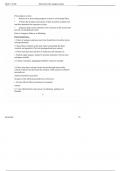
1. Describe the educational goals for freed slaves in Port Royal In other words use
documents to describe the goals teachers had for their students. What was the end
goal of educating the former slaves?
The main goals for freed slaves in Port Royal were to teach to feed slaves how to read,
write and learn basic education for the reconstruction of the United States being
completely freed ( although not at this time) . In document one the writer states, “Many
grown people are desirous of learning to read” However, in documents 2 and 3, the
writers discuss the reality of the outcomes they faced. In document 3, the writer states
that none of the freed slaves could not confidently read or write. Likewise, in document
2, the author wrote how their students wouldn't goup together and get ready to learn.
This shows how they didn’t have preface schooling beforehand.
2. Describe the different sources perspectives on the former slaves' ability to work? You
should see some racism here, but also some sources are nicer.
In document 4, Reynold talks about how when the freed slaves are properly supported
and profitably employed the work they do ( in the crop of cotton) seems to be secret and
still well done. However, in document 5, the writer tells a different story. He says that
the government should be enrolled and organize into working parties. Likewise, in
document 6, a plantation superintendent felt that the freed slaves were not doing
enough work and that they were being lazy. In document 7, the writer states that the
freed slaves only made about a third of last year's crop, however they are making the
most of it and not allowing any of the crop to go to waste. Some more open thinkers,
like the author of document 8, felt that they should allow each family to cultivate and
documents to describe the goals teachers had for their students. What was the end
goal of educating the former slaves?
The main goals for freed slaves in Port Royal were to teach to feed slaves how to read,
write and learn basic education for the reconstruction of the United States being
completely freed ( although not at this time) . In document one the writer states, “Many
grown people are desirous of learning to read” However, in documents 2 and 3, the
writers discuss the reality of the outcomes they faced. In document 3, the writer states
that none of the freed slaves could not confidently read or write. Likewise, in document
2, the author wrote how their students wouldn't goup together and get ready to learn.
This shows how they didn’t have preface schooling beforehand.
2. Describe the different sources perspectives on the former slaves' ability to work? You
should see some racism here, but also some sources are nicer.
In document 4, Reynold talks about how when the freed slaves are properly supported
and profitably employed the work they do ( in the crop of cotton) seems to be secret and
still well done. However, in document 5, the writer tells a different story. He says that
the government should be enrolled and organize into working parties. Likewise, in
document 6, a plantation superintendent felt that the freed slaves were not doing
enough work and that they were being lazy. In document 7, the writer states that the
freed slaves only made about a third of last year's crop, however they are making the
most of it and not allowing any of the crop to go to waste. Some more open thinkers,
like the author of document 8, felt that they should allow each family to cultivate and