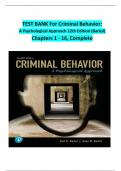
TEST BANK For Criminal Behavior:
A Psychological Approach 12th Edition (Bartol)
Chapters 1 - 16, Complete
110
,Table of contents
7 7
1. Introduction to Criminal Behavior il il il
2. Originsof Criminal Behavior: Developmental Risk and ProtectiveFactors
il il il il il il il il
3. Originsof Criminal Behavior: Biological/Neurological Factors
il il il il il
4. Originsof Criminal Behavior: Learning and Situational Factors
il il il il il il il
5. Human Aggression and Violence
il il il
6. JuvenileDelinquency il
7. Psychopathy
8. Crime and Mental Disorders
il il il
9. Homicide,Assault, and Intimate Partner and Family Violence
il il il il il il il
10. MultipleMurder, School, and Workplace Violence
il il il il il
11. Psychology ofModern Terrorism il il il
12. Sexual Assault
il
13. Sexual Assaultof Children and Youth
il il il il il
14. Burglary, Home Invasions, Thefts, and "White-Collar"Offenses
il il il il il il
15. Violent Economic Crime, Cybercrime, and Crimes of Intimidation
il il il il il il il
16. Substance Abuse andCrime il il il
111
,Criminal Behavior: A Psychological Approach, 12e (Bartol)
il il il il il il
Chapter 1 Introduction to Criminal Behavior
il i l il il il
1.1 Multiple-ChoiceQuestions il
1) Criminal behavior is best defined as il il il il il
A) antisocial behavior. il
B) deviant behavior. il
C) an intentional act in violation of a criminal code.
il il il il il il il il
D) a failure to impede the criminal process
il il il il il il
.7ANSWER: C ilil
Page Ref: 2 il il
Objective: Define criminal behavior and juvenile delinquencyLevel:
il il il il il il li il
Basic
2) The end result of a theory that is not verified is
il il il il il il il il il il
A) justification.
B) falsification.
C) clarification.
D) subjugation
.7ANSWER: B Pa il il
ge Ref: 6
il il
Objective: Identify the different perspectives of human nature that underlie the theoreticaldevelopm
il il il il il il il il il il il li
ent and research of criminal behavior
il il il il il
Level: Intermediate i l
3) Which piece of data would be included in the UCR?
il il il il il il il il il
A) A reported robbery with no arrest
il il il il il
B) A reported forgery with no arrest
il il il il il
C) A reported simple assault with no arrest
il il il il il il
D) A reported statutory rape with no arres
il il il il il il li
t7ANSWER:7 A ililil
112
, Page Ref: 36
il il
Objective: Introduce the reader to the various measurements of criminal and delinquent behaviorLev
il il il il il il il il il il il il li
el: Difficult
il
4) All of the following are consistent with the developmental approach to the study of crimeex
il il il il il il il il il il il il il il li
cept
A) examining factors that place a child at risk of engaging in serious delinquency.
il il il il il il il il il il il il
B) identifying the age of onset of antisocial behavior.
il il il il il il il
C) searching for protective factors in a child's life.
il il il il il il il
113
A Psychological Approach 12th Edition (Bartol)
Chapters 1 - 16, Complete
110
,Table of contents
7 7
1. Introduction to Criminal Behavior il il il
2. Originsof Criminal Behavior: Developmental Risk and ProtectiveFactors
il il il il il il il il
3. Originsof Criminal Behavior: Biological/Neurological Factors
il il il il il
4. Originsof Criminal Behavior: Learning and Situational Factors
il il il il il il il
5. Human Aggression and Violence
il il il
6. JuvenileDelinquency il
7. Psychopathy
8. Crime and Mental Disorders
il il il
9. Homicide,Assault, and Intimate Partner and Family Violence
il il il il il il il
10. MultipleMurder, School, and Workplace Violence
il il il il il
11. Psychology ofModern Terrorism il il il
12. Sexual Assault
il
13. Sexual Assaultof Children and Youth
il il il il il
14. Burglary, Home Invasions, Thefts, and "White-Collar"Offenses
il il il il il il
15. Violent Economic Crime, Cybercrime, and Crimes of Intimidation
il il il il il il il
16. Substance Abuse andCrime il il il
111
,Criminal Behavior: A Psychological Approach, 12e (Bartol)
il il il il il il
Chapter 1 Introduction to Criminal Behavior
il i l il il il
1.1 Multiple-ChoiceQuestions il
1) Criminal behavior is best defined as il il il il il
A) antisocial behavior. il
B) deviant behavior. il
C) an intentional act in violation of a criminal code.
il il il il il il il il
D) a failure to impede the criminal process
il il il il il il
.7ANSWER: C ilil
Page Ref: 2 il il
Objective: Define criminal behavior and juvenile delinquencyLevel:
il il il il il il li il
Basic
2) The end result of a theory that is not verified is
il il il il il il il il il il
A) justification.
B) falsification.
C) clarification.
D) subjugation
.7ANSWER: B Pa il il
ge Ref: 6
il il
Objective: Identify the different perspectives of human nature that underlie the theoreticaldevelopm
il il il il il il il il il il il li
ent and research of criminal behavior
il il il il il
Level: Intermediate i l
3) Which piece of data would be included in the UCR?
il il il il il il il il il
A) A reported robbery with no arrest
il il il il il
B) A reported forgery with no arrest
il il il il il
C) A reported simple assault with no arrest
il il il il il il
D) A reported statutory rape with no arres
il il il il il il li
t7ANSWER:7 A ililil
112
, Page Ref: 36
il il
Objective: Introduce the reader to the various measurements of criminal and delinquent behaviorLev
il il il il il il il il il il il il li
el: Difficult
il
4) All of the following are consistent with the developmental approach to the study of crimeex
il il il il il il il il il il il il il il li
cept
A) examining factors that place a child at risk of engaging in serious delinquency.
il il il il il il il il il il il il
B) identifying the age of onset of antisocial behavior.
il il il il il il il
C) searching for protective factors in a child's life.
il il il il il il il
113