©BRIGHTSTARS EXAM SOLUTIONS
11/16/2024 10:16 AM
NURS406 EXAM 2 Study Guide.
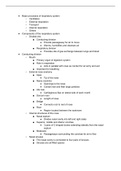
SCHIZOPHRENIA - answer✔• Usually diagnosed in late adolescence or early adulthood
• Peak incidence of onset is 15 to 25 years of age for men
and 25 to 35 years of age for women.
• Prevalence is estimated at about 1% of total population
• In the United States, nearly 3 million people are, have
been, or will be affected by the disease.
Two or more of the following (Delusions Herald
Schizophrenic's Bad News):
• Delusions
• Hallucinations
• Disorganized Speech
• Grossly disorganized or catatonic Behavior
• Negative symptoms
PHASE 3 OF SCHIZ - answer✔Residual phase
• The more intense symptoms, like
hallucinations, start to fade.
• Still have some strange beliefs.
• Likely to withdraw into oneself and talk less
• Trouble concentrating
• May become depressed* with increased
awareness
1|Page
, ©BRIGHTSTARS EXAM SOLUTIONS
11/16/2024 10:16 AM
PHASE 1 OF SCHIZ - answer✔Prodromal phase
• Lasts from a few weeks to a few years
• Deterioration in role functioning and social
withdrawal
• Sleep disturbance, anxiety, irritability
• Depressed mood, poor concentration, fatigue
• Can be focused on certain topics, such as religion, the
government, or a particular public figure.
PHASE 2 OF SCHIZ - answer✔Schizophrenia
• In the active phase of the disorder, psychotic
symptoms are prominent
• Delusions
• Hallucinations
• Impairment in work, social relations, and self-care
CLINICAL COURSE - answer✔• Onset: most with slow, gradual development of signs and
symptoms
• Diagnosis usually with more actively positive symptoms of
psychosis
• Immediate-term course: two patterns
• Ongoing psychosis, never fully recovering
• Episodes of psychotic symptoms alternating with
episodes of relatively complete recovery
• Long-term course: intensity of psychosis diminishes with
age; disease becomes less disruptive
• Clients may live independently later in life although many
2|Page
, ©BRIGHTSTARS EXAM SOLUTIONS
11/16/2024 10:16 AM
have difficulty functioning in the community.
ETIOLOGY - answer✔• Genetic factors*
• Neuroanatomic and neurochemical factors (less brain
tissue and cerebrospinal fluid; Dopamine excess
• Stress enhancement
• Alcohol & Drugs
POSITIVE VERSUS NEGATIVE SYMPTOMS - answer✔Positive Symptoms:
• Excessive or distorted thoughts &
perceptions within the individual but are not experienced
by others.
Negative Symptoms:
• Emotions and behaviors that should be present
but are diminished in persons with schizophrenia.
POSITIVE SYMPTOMS OF SCHIZOPHRENIA - answer✔• Target of antipsychotic medications
• Delusions
• Distortions
• Disorganized speech
• Disorganized, catatonic or agitated behavior
• Hallucinations
Delusions:
Fixed, false beliefs, despite evidence
• Persecutory
• Referential have reference to the individual i.e. news
• Grandiose
3|Page
, ©BRIGHTSTARS EXAM SOLUTIONS
11/16/2024 10:16 AM
• Somatic
• Guilt
• Religious
• Jealousy
• Control
• Thought insertion *One's thoughts are not one's own, but rather belong to someone else and
have been inserted into one's mind
• Thought broadcasting
• Content of thought
• Delusions: false personal beliefs
• Religiosity: excessive demonstration of
obsession with religious ideas and behavior
• Paranoia: extreme suspiciousness of others
• Magical thinking: ideas that one's thoughts
or behaviors have control over specific
situations
Form of thought:
• Associative looseness A thought-process
disorder characterized by a confusing
connection between ideas. "Loosely
connected"
• Neologisms: made-up words that have
meaning only to the person who invents them
• Concrete thinking: literal interpretations of
the environment
4|Page
11/16/2024 10:16 AM
NURS406 EXAM 2 Study Guide.
SCHIZOPHRENIA - answer✔• Usually diagnosed in late adolescence or early adulthood
• Peak incidence of onset is 15 to 25 years of age for men
and 25 to 35 years of age for women.
• Prevalence is estimated at about 1% of total population
• In the United States, nearly 3 million people are, have
been, or will be affected by the disease.
Two or more of the following (Delusions Herald
Schizophrenic's Bad News):
• Delusions
• Hallucinations
• Disorganized Speech
• Grossly disorganized or catatonic Behavior
• Negative symptoms
PHASE 3 OF SCHIZ - answer✔Residual phase
• The more intense symptoms, like
hallucinations, start to fade.
• Still have some strange beliefs.
• Likely to withdraw into oneself and talk less
• Trouble concentrating
• May become depressed* with increased
awareness
1|Page
, ©BRIGHTSTARS EXAM SOLUTIONS
11/16/2024 10:16 AM
PHASE 1 OF SCHIZ - answer✔Prodromal phase
• Lasts from a few weeks to a few years
• Deterioration in role functioning and social
withdrawal
• Sleep disturbance, anxiety, irritability
• Depressed mood, poor concentration, fatigue
• Can be focused on certain topics, such as religion, the
government, or a particular public figure.
PHASE 2 OF SCHIZ - answer✔Schizophrenia
• In the active phase of the disorder, psychotic
symptoms are prominent
• Delusions
• Hallucinations
• Impairment in work, social relations, and self-care
CLINICAL COURSE - answer✔• Onset: most with slow, gradual development of signs and
symptoms
• Diagnosis usually with more actively positive symptoms of
psychosis
• Immediate-term course: two patterns
• Ongoing psychosis, never fully recovering
• Episodes of psychotic symptoms alternating with
episodes of relatively complete recovery
• Long-term course: intensity of psychosis diminishes with
age; disease becomes less disruptive
• Clients may live independently later in life although many
2|Page
, ©BRIGHTSTARS EXAM SOLUTIONS
11/16/2024 10:16 AM
have difficulty functioning in the community.
ETIOLOGY - answer✔• Genetic factors*
• Neuroanatomic and neurochemical factors (less brain
tissue and cerebrospinal fluid; Dopamine excess
• Stress enhancement
• Alcohol & Drugs
POSITIVE VERSUS NEGATIVE SYMPTOMS - answer✔Positive Symptoms:
• Excessive or distorted thoughts &
perceptions within the individual but are not experienced
by others.
Negative Symptoms:
• Emotions and behaviors that should be present
but are diminished in persons with schizophrenia.
POSITIVE SYMPTOMS OF SCHIZOPHRENIA - answer✔• Target of antipsychotic medications
• Delusions
• Distortions
• Disorganized speech
• Disorganized, catatonic or agitated behavior
• Hallucinations
Delusions:
Fixed, false beliefs, despite evidence
• Persecutory
• Referential have reference to the individual i.e. news
• Grandiose
3|Page
, ©BRIGHTSTARS EXAM SOLUTIONS
11/16/2024 10:16 AM
• Somatic
• Guilt
• Religious
• Jealousy
• Control
• Thought insertion *One's thoughts are not one's own, but rather belong to someone else and
have been inserted into one's mind
• Thought broadcasting
• Content of thought
• Delusions: false personal beliefs
• Religiosity: excessive demonstration of
obsession with religious ideas and behavior
• Paranoia: extreme suspiciousness of others
• Magical thinking: ideas that one's thoughts
or behaviors have control over specific
situations
Form of thought:
• Associative looseness A thought-process
disorder characterized by a confusing
connection between ideas. "Loosely
connected"
• Neologisms: made-up words that have
meaning only to the person who invents them
• Concrete thinking: literal interpretations of
the environment
4|Page