RN Pediatric Nursing Online Practice 2023 B
6 6 6 6 6 6
Study6online6at6https://quizlet.com/_enloxu
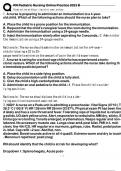
1. A nurse is preparing to administer an immunization to a 4-year-
6 6 6 6 6 6 6 6 6 6
old child. Which of the following actions should the nurse plan to take?
6 6 6 6 6 6 6 6 6 6 6 6
A. Place the child in a prone position for the immunization.
6 6 6 6 6 6 6 6 6
B. Request that the child's caregiver leave the room during the immunization.
6 6 6 6 6 6 6 6 6 6
C. Administer the immunization using a 24-gauge needle. 6 6 6 6 6 6
D. Inject the immunization slowly after aspirating for 3 seconds.: C. Administer
6 6 6 6 6 6 6 6 6 6 6
the immunization using a 24-gauge needle.
6 6 6 6 6
Rationale: The nurse should administer an immunization for a 4-year-
6 6 6 6 6 6 6 6 6
old child using a 22 to 25-
6 6 6 6 6 6
gauge needle to minimize the amount of pain the child experiences.
6 6 6 6 6 6 6 6 6 6
2. A nurse is caring for a school-age child who has experienced a tonic-
6 6 6 6 6 6 6 6 6 6 6 6
clonic seizure. Which of the following actions should the nurse take during th
6 6 6 6 6 6 6 6 6 6 6 6
e immediate postictal period?
6 6 6
A. Place the child in a side-lying position.
6 6 6 6 6 6
B. Delay documentation until the child is fully alert.
6 6 6 6 6 6 6
C. Give the child a high-carbohydrate snack.
6 6 6 6 6
D. Administer an oral sedative to the child.: A. Place the child in a side-
6 6 6 6 6 6 6 6 6 6 6 6 6
lying position. 6
Rationale: The nurse should place the child in a side-
6 6 6 6 6 6 6 6 6
lying position to prevent aspiration.
6 6 6 6
3. NGN* A nurse on a Peds unit is admitting a preschooler. Vital Signs (0715:) T
6 6 6 6 6 6 6 6 6 6 6 6 6 6
38.3° C (100.9° F) HR 126/min RR 26/min O2 97%. Physical exam Pt has been tire
6 6 6 6 6 6 6 6 6 6 6 6 6 6 6
d lately and has a sore throat and fever. Tolerating sips of liquids but is refusin
6 6 6 6 6 6 6 6 6 6 6 6 6 6 6
g solids. UO dark yellow urine. Alert, responsive to verbal stim. MM dry, sticky. S
6 6 6 6 6 6 6 6 6 6 6 6 6 6
kin turgor w/o tenting. Tonsils enlarged, erythematous. Resps regular and non-
6 6 6 6 6 6 6 6 6 6
labored. No accessory muscle use. Lungs clear ant& post bilat. PMI in L mid-
6 6 6 6 6 6 6 6 6 6 6 6 6
clavic line 4th ICS. HR regular w/o murmurs, gallops, rubs. Radial, pedal pulse
6 6 6 6 6 6 6 6 6 6 6 6 6
2+ bilat. Cap refill >2 sec. Abd flat, non-
6 6 6 6 6 6 6 6
distended. Bowel sounds active in all 4 quadS. Extrems warm and dry to touch
6 6 6 6 6 6 6 6 6 6 6 6 6
. Mononucl rapid test: posit (neg)
6 6 6 6 6
RN should identify that the child is at risk for developing what?
6 6 6 6 6 6 6 6 6 6 6
Dropdown 1: Splenomegaly, Acute post- 6 6 6 6
16/653
, RN Pediatric Nursing Online Practice 2023 B
6 6 6 6 6 6
Study6online6at6https://quizlet.com/_enloxu
streptococcal glomerulonephritis (APSGN), Dysrhythmias
6 6 6
26/653
, RN Pediatric Nursing Online Practice 2023 B
6 6 6 6 6 6
Study6online6at6https://quizlet.com/_enloxu
Dropdown 2: + mono rapid test, UO, Cardio assessment: 1. Splenomegaly Ratio
6 6 6 6 6 6 6 6 6 6 6
nale: The child's positive mononucleosis rapid test result indicates the pres-
6 6 6 6 6 6 6 6 6 6
ence of infectious mono, a condition caused by the Epstein-
6 6 6 6 6 6 6 6 6 6
Barr virus.Therefore, the nurse should identify that the child is at risk for deve
6 6 6 6 6 6 6 6 6 6 6 6 6 6
loping splenomegaly, a common complication of infectious mono.
6 6 6 6 6 6 6
2. Positive mono rapid test 6 6 6
Rationale: The child's positive mononucleosis rapid test result indicates the p
6 6 6 6 6 6 6 6 6 6
res- ence of infectious mono, a condition caused by the Epstein-
6 6 6 6 6 6 6 6 6 6
Barr virus.Therefore, the nurse should identify that the child is at risk for deve
6 6 6 6 6 6 6 6 6 6 6 6 6 6
loping splenomegaly, a common complication of infectious mono.
6 6 6 6 6 6 6
4. ***A nurse is assessing an infant who has a ventricular septal defect. Which o
6 6 6 6 6 6 6 6 6 6 6 6 6
f the following findings should the nurse expect?
6 6 6 6 6 6 6
A. Loud, harsh murmur 6 6
B. Dysrhythmias
C. Weak femoral pulses 6 6
D. High blood pressure: A. Loud, harsh murmur
6 6 6 6 6 6
Rationale: The nurse should expect to hear a loud, harsh murmur with a ventricula
6 6 6 6 6 6 6 6 6 6 6 6 6
r septal defect due to the left-to-
6 6 6 6 6 6
right shunting of blood, which contributes to hyper-
6 6 6 6 6 6 6
trophy of the infant's heart muscle.
6 6 6 6 6 6
Ventricular septal defect does not affect the electrical conduction of the hear
6 6 6 6 6 6 6 6 6 6 6
t. Therefore, the nurse should not expect to hear dysrhythmias when assessing th
6 6 6 6 6 6 6 6 6 6 6 6
is infant. The nurse should expect weak femoral pulses when assessing an infant wh
6 6 6 6 6 6 6 6 6 6 6 6 6
o has coarctation of the aorta. The nurse should expect an elevated blood pressur
6 6 6 6 6 6 6 6 6 6 6 6 6
e when assessing an infant who has coarctation of the aorta.
6 6 6 6 6 6 6 6 6 6
5. A nurse is providing discharge teaching the guardians of a toddler with a lo
6 6 6 6 6 6 6 6 6 6 6 6 6
wer leg cast applied 24 hours ago. The nurse should instruct the guardians to r
6 6 6 6 6 6 6 6 6 6 6 6 6 6
eport which of the following findings to the provider?
6 6 6 6 6 6 6 6
A. Capillary refill time < 2 seconds. 6 6 6 6 6
B. Restricted ability to move the toes. 6 6 6 6 6
C. Swelling of the casted foot when the leg is dependent. 6 6 6 6 6 6 6 6 6
D. Pedal pulse +3 bilateral.: B. Restricted ability to move the toes.
6 6 6 6 6 6 6 6 6 6
36/653
, RN Pediatric Nursing Online Practice 2023 B
6 6 6 6 6 6
Study6online6at6https://quizlet.com/_enloxu
Rationale:The nurse should inform the guardians that the restricted ability of th
6 6 6 6 6 6 6 6 6 6 6 6
e tod- 6
dler to move their toes is an indication of neuromuscular compromise and require
6 6 6 6 6 6 6 6 6 6 6 6 6
s
46/653
6 6 6 6 6 6
Study6online6at6https://quizlet.com/_enloxu
1. A nurse is preparing to administer an immunization to a 4-year-
6 6 6 6 6 6 6 6 6 6
old child. Which of the following actions should the nurse plan to take?
6 6 6 6 6 6 6 6 6 6 6 6
A. Place the child in a prone position for the immunization.
6 6 6 6 6 6 6 6 6
B. Request that the child's caregiver leave the room during the immunization.
6 6 6 6 6 6 6 6 6 6
C. Administer the immunization using a 24-gauge needle. 6 6 6 6 6 6
D. Inject the immunization slowly after aspirating for 3 seconds.: C. Administer
6 6 6 6 6 6 6 6 6 6 6
the immunization using a 24-gauge needle.
6 6 6 6 6
Rationale: The nurse should administer an immunization for a 4-year-
6 6 6 6 6 6 6 6 6
old child using a 22 to 25-
6 6 6 6 6 6
gauge needle to minimize the amount of pain the child experiences.
6 6 6 6 6 6 6 6 6 6
2. A nurse is caring for a school-age child who has experienced a tonic-
6 6 6 6 6 6 6 6 6 6 6 6
clonic seizure. Which of the following actions should the nurse take during th
6 6 6 6 6 6 6 6 6 6 6 6
e immediate postictal period?
6 6 6
A. Place the child in a side-lying position.
6 6 6 6 6 6
B. Delay documentation until the child is fully alert.
6 6 6 6 6 6 6
C. Give the child a high-carbohydrate snack.
6 6 6 6 6
D. Administer an oral sedative to the child.: A. Place the child in a side-
6 6 6 6 6 6 6 6 6 6 6 6 6
lying position. 6
Rationale: The nurse should place the child in a side-
6 6 6 6 6 6 6 6 6
lying position to prevent aspiration.
6 6 6 6
3. NGN* A nurse on a Peds unit is admitting a preschooler. Vital Signs (0715:) T
6 6 6 6 6 6 6 6 6 6 6 6 6 6
38.3° C (100.9° F) HR 126/min RR 26/min O2 97%. Physical exam Pt has been tire
6 6 6 6 6 6 6 6 6 6 6 6 6 6 6
d lately and has a sore throat and fever. Tolerating sips of liquids but is refusin
6 6 6 6 6 6 6 6 6 6 6 6 6 6 6
g solids. UO dark yellow urine. Alert, responsive to verbal stim. MM dry, sticky. S
6 6 6 6 6 6 6 6 6 6 6 6 6 6
kin turgor w/o tenting. Tonsils enlarged, erythematous. Resps regular and non-
6 6 6 6 6 6 6 6 6 6
labored. No accessory muscle use. Lungs clear ant& post bilat. PMI in L mid-
6 6 6 6 6 6 6 6 6 6 6 6 6
clavic line 4th ICS. HR regular w/o murmurs, gallops, rubs. Radial, pedal pulse
6 6 6 6 6 6 6 6 6 6 6 6 6
2+ bilat. Cap refill >2 sec. Abd flat, non-
6 6 6 6 6 6 6 6
distended. Bowel sounds active in all 4 quadS. Extrems warm and dry to touch
6 6 6 6 6 6 6 6 6 6 6 6 6
. Mononucl rapid test: posit (neg)
6 6 6 6 6
RN should identify that the child is at risk for developing what?
6 6 6 6 6 6 6 6 6 6 6
Dropdown 1: Splenomegaly, Acute post- 6 6 6 6
16/653
, RN Pediatric Nursing Online Practice 2023 B
6 6 6 6 6 6
Study6online6at6https://quizlet.com/_enloxu
streptococcal glomerulonephritis (APSGN), Dysrhythmias
6 6 6
26/653
, RN Pediatric Nursing Online Practice 2023 B
6 6 6 6 6 6
Study6online6at6https://quizlet.com/_enloxu
Dropdown 2: + mono rapid test, UO, Cardio assessment: 1. Splenomegaly Ratio
6 6 6 6 6 6 6 6 6 6 6
nale: The child's positive mononucleosis rapid test result indicates the pres-
6 6 6 6 6 6 6 6 6 6
ence of infectious mono, a condition caused by the Epstein-
6 6 6 6 6 6 6 6 6 6
Barr virus.Therefore, the nurse should identify that the child is at risk for deve
6 6 6 6 6 6 6 6 6 6 6 6 6 6
loping splenomegaly, a common complication of infectious mono.
6 6 6 6 6 6 6
2. Positive mono rapid test 6 6 6
Rationale: The child's positive mononucleosis rapid test result indicates the p
6 6 6 6 6 6 6 6 6 6
res- ence of infectious mono, a condition caused by the Epstein-
6 6 6 6 6 6 6 6 6 6
Barr virus.Therefore, the nurse should identify that the child is at risk for deve
6 6 6 6 6 6 6 6 6 6 6 6 6 6
loping splenomegaly, a common complication of infectious mono.
6 6 6 6 6 6 6
4. ***A nurse is assessing an infant who has a ventricular septal defect. Which o
6 6 6 6 6 6 6 6 6 6 6 6 6
f the following findings should the nurse expect?
6 6 6 6 6 6 6
A. Loud, harsh murmur 6 6
B. Dysrhythmias
C. Weak femoral pulses 6 6
D. High blood pressure: A. Loud, harsh murmur
6 6 6 6 6 6
Rationale: The nurse should expect to hear a loud, harsh murmur with a ventricula
6 6 6 6 6 6 6 6 6 6 6 6 6
r septal defect due to the left-to-
6 6 6 6 6 6
right shunting of blood, which contributes to hyper-
6 6 6 6 6 6 6
trophy of the infant's heart muscle.
6 6 6 6 6 6
Ventricular septal defect does not affect the electrical conduction of the hear
6 6 6 6 6 6 6 6 6 6 6
t. Therefore, the nurse should not expect to hear dysrhythmias when assessing th
6 6 6 6 6 6 6 6 6 6 6 6
is infant. The nurse should expect weak femoral pulses when assessing an infant wh
6 6 6 6 6 6 6 6 6 6 6 6 6
o has coarctation of the aorta. The nurse should expect an elevated blood pressur
6 6 6 6 6 6 6 6 6 6 6 6 6
e when assessing an infant who has coarctation of the aorta.
6 6 6 6 6 6 6 6 6 6
5. A nurse is providing discharge teaching the guardians of a toddler with a lo
6 6 6 6 6 6 6 6 6 6 6 6 6
wer leg cast applied 24 hours ago. The nurse should instruct the guardians to r
6 6 6 6 6 6 6 6 6 6 6 6 6 6
eport which of the following findings to the provider?
6 6 6 6 6 6 6 6
A. Capillary refill time < 2 seconds. 6 6 6 6 6
B. Restricted ability to move the toes. 6 6 6 6 6
C. Swelling of the casted foot when the leg is dependent. 6 6 6 6 6 6 6 6 6
D. Pedal pulse +3 bilateral.: B. Restricted ability to move the toes.
6 6 6 6 6 6 6 6 6 6
36/653
, RN Pediatric Nursing Online Practice 2023 B
6 6 6 6 6 6
Study6online6at6https://quizlet.com/_enloxu
Rationale:The nurse should inform the guardians that the restricted ability of th
6 6 6 6 6 6 6 6 6 6 6 6
e tod- 6
dler to move their toes is an indication of neuromuscular compromise and require
6 6 6 6 6 6 6 6 6 6 6 6 6
s
46/653