100% de satisfacción garantizada Inmediatamente disponible después del pago Tanto en línea como en PDF No estas atado a nada 4,6 TrustPilot
logo-home
Examen

Jane Eyre Themes

Puntuación
-
Vendido
-
Páginas
4
Grado
A+
Subido en
16-11-2024
Escrito en
2024/2025

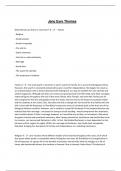
Jane Eyre Themes What themes are there in 'Jane Eyre'? ️️- Family - Religion - Social position - Gender inequality - Fire and ice - Gothic elements - Internal vs. external beauty - Marriage - Social class - The search for identity - The treatment of children Family ️️The main quest in Jane Eyre is Jane's search for family, for a sense of belonging and love. However, this search is constantly tempered by Jane's need for independence. She begins the novel as an unloved orphan who is almost obsessed with finding love as a way to establish her own identity and achieve happiness. Although she does not receive any parental love from Mrs Reed, Jane finds surrogate maternal figures throughout the rest of the novel. Bessie, Miss Temple, and even Mrs Fairfax care for Jane and give her the love and guidance that she needs, and she returns the favour by caring for Adele and the students at her school. Still, Jane does not feel as though she has found her true family until she falls in love with Mr Rochester at Thornfield; he becomes more of a kindred spirit to her than any of her biological relatives could be. However, she is unable to accept Mr Rochester's first proposal because she realised that their marriage - one based on unequal social standing - would compromise her autonomy. Jane similarly denies St John's marriage proposal, as it would be one of duty, not of passion. Only when she gains financial and emotional autonomy, after having received her inheritance and familial love from her cousins, can Jane accept Rochester's offer. In fact, the blinded Rochester is more dependent on her (at least until he regains his sight). Within her marriage to Rochester, Jane finally feels completely liberated, bringing her dual quests for family and independence to a satisfying conclusion. Religion ️️Jane receives three different models of Christianity throughout the novel, all of which she rejects either partly or completely before finding her own way. Mr Brocklehurst's Evangelicalism is full of hypocrisy: he spouts off on the benefits of privation and humility while he indulges in a life of luxury and emotionally abuses the students at Lowood. Also at Lowood, Helen Burns' Christianity of absolute forgiveness and tolerance is too meek for Jane's tastes; Helen constantly suffers her punishments silently and eventually dies. St John, on the other hand, practises a Christianity of utter piousness, righteousness, and principle to the exclusion of any passion. Jane rejects his marriage proposal as much for his detached brand of spirituality as for its certain intrusion on her independence. However, Jane frequently looks to God in her own way throughout the book, particularly after she learns of Rochester's previous marriage and before St John takes her into Moor House. She also learns to adapt to Helen's doctrine of forgiveness without becoming completely passive and returns to Rochester when she feels that she is ready to accept him again. The culmination of the book is Jane's mystical experience with Rochester that brings them together through a spirituality of profound love. Jane is deeply religious, but she has her own approach to spirituality, which does not doggedly adhere to the Bible in the style of Helen or St John, or even Mr Brocklehurst. Social position ️️Brontë uses the novel to express her critique of Victorian class differences. Jane is consistently a poor individual within a wealthy environment with the Reeds and at Thornfield. Her poverty creates numerous obstacles for her and her pursuit of happiness, including personal insecurity and the denial of opportunities. Blanche Ingram's higher social standing, for instance, makes her Jane's main competitor for Rochester's love, even though Jane is far more superior in terms of intellect and character. Moreover, Jane's refusal to marry Rochester because of their difference in social stations demonstrates her morality and belief in the importance of personal independence, especially in comparison to Blanche's gold-digging inclinations. Although Jane asserts that her poverty does not make her an inferior person, her eventual ascent out of poverty does help her overcome her personal obstacles. Not only does she generously divide her inheritance with her cousins, but her financial independence solves her difficulty with low self-esteem and allows her to fulfil her desire to be Rochester's wife. Gender inequality ️️Alongside Brontë's critique of Victorian class hierarchy is a subtler condemnation of the gender inequalities during the time period. The novel begins with Jane's imprisonment in the "red-room" at Gateshead, and later in the book Bertha's imprisonment in the attic at Thornfield is revealed. The connection implies that Jane's imprisonment is symbolic of her lower social class, while Bertha's containment is symbolic of a Victorian marriage: all women, if they marry under unequal circumstances as Bertha did, will eventually be confined and oppressed by their husbands in some manner. Significantly, Jane is consciously aware of the problems associated with unequal marriages. Thus, even though she loves Rochester, she refuses to marry him until she has her own fortune and can enter into the marriage contract as his equal. While it is difficult to separate Jane's economic and gender obstacles, it is clear that her position as a woman also prevents her from venturing out into the world as many of the male characters do - for instance: Rochester, her uncle John, and St John. Her desire for worldly experience makes her last name ironic, as "Eyre" derives from an Old French word meaning "to travel". If Jan

Mostrar más Leer menos
Institución
Jane Eyre Themes
Grado
Jane Eyre Themes


Ups! No podemos cargar tu documento ahora. Inténtalo de nuevo o contacta con soporte.

Escuela, estudio y materia

Institución
Jane Eyre Themes
Grado
Jane Eyre Themes

Información del documento

Subido en
16 de noviembre de 2024
Número de páginas
4
Escrito en
2024/2025
Tipo
Examen
Contiene
Preguntas y respuestas

Temas

Vista previa del contenido

Jane Eyre Themes

What themes are there in 'Jane Eyre'? ✔️✔️- Family

- Religion

- Social position

- Gender inequality

- Fire and ice

- Gothic elements

- Internal vs. external beauty

- Marriage

- Social class

- The search for identity

- The treatment of children


Family ✔️✔️The main quest in Jane Eyre is Jane's search for family, for a sense of belonging and love.
However, this search is constantly tempered by Jane's need for independence. She begins the novel as
an unloved orphan who is almost obsessed with finding love as a way to establish her own identity and
achieve happiness. Although she does not receive any parental love from Mrs Reed, Jane finds surrogate
maternal figures throughout the rest of the novel. Bessie, Miss Temple, and even Mrs Fairfax care for
Jane and give her the love and guidance that she needs, and she returns the favour by caring for Adele
and the students at her school. Still, Jane does not feel as though she has found her true family until she
falls in love with Mr Rochester at Thornfield; he becomes more of a kindred spirit to her than any of her
biological relatives could be. However, she is unable to accept Mr Rochester's first proposal because she
realised that their marriage - one based on unequal social standing - would compromise her autonomy.
Jane similarly denies St John's marriage proposal, as it would be one of duty, not of passion. Only when
she gains financial and emotional autonomy, after having received her inheritance and familial love from
her cousins, can Jane accept Rochester's offer. In fact, the blinded Rochester is more dependent on her
(at least until he regains his sight). Within her marriage to Rochester, Jane finally feels completely
liberated, bringing her dual quests for family and independence to a satisfying conclusion.


Religion ✔️✔️Jane receives three different models of Christianity throughout the novel, all of which
she rejects either partly or completely before finding her own way. Mr Brocklehurst's Evangelicalism is
full of hypocrisy: he spouts off on the benefits of privation and humility while he indulges in a life of
luxury and emotionally abuses the students at Lowood. Also at Lowood, Helen Burns' Christianity of

$10.99
Accede al documento completo:

100% de satisfacción garantizada
Inmediatamente disponible después del pago
Tanto en línea como en PDF
No estas atado a nada


Documento también disponible en un lote

Conoce al vendedor

Seller avatar
Los indicadores de reputación están sujetos a la cantidad de artículos vendidos por una tarifa y las reseñas que ha recibido por esos documentos. Hay tres niveles: Bronce, Plata y Oro. Cuanto mayor reputación, más podrás confiar en la calidad del trabajo del vendedor.
CertifiedGrades Chamberlain College Of Nursing
Seguir Necesitas iniciar sesión para seguir a otros usuarios o asignaturas
Vendido
141
Miembro desde
2 año
Número de seguidores
61
Documentos
8748
Última venta
1 mes hace
High Scores

Hi there! Welcome to my online tutoring store, your ultimate destination for A+ rated educational resources! My meticulously curated collection of documents is designed to support your learning journey. Each resource has been carefully revised and verified to ensure top-notch quality, empowering you to excel academically. Feel free to reach out to consult with me on any subject matter—I'm here to help you thrive!

3.9

38 reseñas

5
21
4
6
3
2
2
3
1
6

Recientemente visto por ti

Por qué los estudiantes eligen Stuvia

Creado por compañeros estudiantes, verificado por reseñas

Calidad en la que puedes confiar: escrito por estudiantes que aprobaron y evaluado por otros que han usado estos resúmenes.

¿No estás satisfecho? Elige otro documento

¡No te preocupes! Puedes elegir directamente otro documento que se ajuste mejor a lo que buscas.

Paga como quieras, empieza a estudiar al instante

Sin suscripción, sin compromisos. Paga como estés acostumbrado con tarjeta de crédito y descarga tu documento PDF inmediatamente.

Student with book image

“Comprado, descargado y aprobado. Así de fácil puede ser.”

Alisha Student

Preguntas frecuentes