Chapter 4: Psychosis, Schizophrenia, and the Neurotransmitter Networks Dopamine, Serotonin
and Glutamate
Symptoms of Psychosis
Delusions: fixed held beliefs that are often bizarre
o Positive symptom
o No rational basis and no amount of accurate information can sway the belief
Hallucinations: perceptual experiences from any sensory modality
o Vivid and clear like normal perceptions
o NOT under voluntary control
o Positive symptom
Negative Symptoms
o Diminished emotional expression and decreased motivation
Types of Psychosis
o Perceptual Distortions
Feeling that familiar people have changed or become different
Being distressed by hallucinatory distortions
Hearing voices blame and accuse
Seeing visions, olfactory, tactile or gustatory hallucinations
o Motor Disturbances
Peculiar movements or postures
Overt signs of tension
Odd giggles and grins
Repetitive gestures, muttering to oneself
o Paranoid Psychosis
Paranoid Projections
Preoccupation with delusional belief that people are talking about them
Feeling that one is being persecuted or conspired against
Parkinson’s Psychosis
o Believing that one’s spouse is being unfaithful
o Believing one’s spouse is stealing money from them
Hostile Belligerence
Verbal expressions of feelings of hostility
Expressing an attitude of disdain
Manifesting a hostile, sullen or irritable attitude
Blaming others for problems, experiencing feelings of resentment
Expressing suspicion of people
o Especially seen in schizophrenia or drug induced psychosis
Grandiose Expansiveness
Exhibiting attitude of superiority
Hearing voices that are praise or extol
Believing that one has unusual powers or is a well-known personality
Belief that one has a divine mission
o Commonly seen in schizophrenia and manic psychosis
o Disorganized/Excited Psychosis
Conceptual Disorganization
Giving answers that are irrelevant or incoherent
Using neologisms (made up words)
Repeating certain words or phrases
Disorientation
, Not knowing where one is, what season it is, what year it is
o Common with dementia and drug induced states
Excitement
Expressing feelings without restraint
Pressured speech, loud and boisterous
Dramatizing symptoms
Elevated mood, attitude of superiority
o Especially characteristic of mania or schizophrenia
o Depressive Psychosis
Psychomotor retardation and apathy
Slowed speech, slowed facial expressions
Deficiencies in recent memory
Thought blocking
Apathy towards oneself and one’s problems
Anxious self-punishment and blame
Tendency to blame or condemn oneself
Apprehension regarding future events
Worrying over many things
Expressing feelings of guilt and remorse
Preoccupation with suicidal thoughts, unwanted ideas and specific
fears
Feeling wrong or sinful
o Often seen in psychotic depression
The Three Major Hypotheses of Psychosis and their
Neurotransmitter Networks
, The Classic Dopamine Hypothesis of Psychosis and Schizophrenia
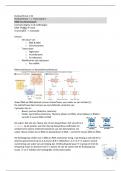
The Dopamine Neurotransmitter Network
o DA is synthesized in dopaminergic nerve
terminals from the amino acid tyrosine
Tyrosine pump takes tyrosine from
extracellular space into the neuron to
synthesize DA
First rate limiting enzyme is
tyrosine hydroxylase (TOH)
Second enzyme is DOPA
decarboxylase (DDC)
DA is then taken up into synaptic
vesicles by VMAT2
Excess DA that isn’t stored is
inactivated by MAO-A and MOA-B
o Presynaptic transporter (reuptake pump) DAT
Takes it out of the synapse and re-stores
it back into the presynaptic nerve
terminal
DATs in the striatum
Secondary inactivation:
Extracellularly
Catechol-O-methyltransferase (COMT)
o Pre-frontal cortex
DATs are sparse
Mainly inactivated by COMT
and Glutamate
Symptoms of Psychosis
Delusions: fixed held beliefs that are often bizarre
o Positive symptom
o No rational basis and no amount of accurate information can sway the belief
Hallucinations: perceptual experiences from any sensory modality
o Vivid and clear like normal perceptions
o NOT under voluntary control
o Positive symptom
Negative Symptoms
o Diminished emotional expression and decreased motivation
Types of Psychosis
o Perceptual Distortions
Feeling that familiar people have changed or become different
Being distressed by hallucinatory distortions
Hearing voices blame and accuse
Seeing visions, olfactory, tactile or gustatory hallucinations
o Motor Disturbances
Peculiar movements or postures
Overt signs of tension
Odd giggles and grins
Repetitive gestures, muttering to oneself
o Paranoid Psychosis
Paranoid Projections
Preoccupation with delusional belief that people are talking about them
Feeling that one is being persecuted or conspired against
Parkinson’s Psychosis
o Believing that one’s spouse is being unfaithful
o Believing one’s spouse is stealing money from them
Hostile Belligerence
Verbal expressions of feelings of hostility
Expressing an attitude of disdain
Manifesting a hostile, sullen or irritable attitude
Blaming others for problems, experiencing feelings of resentment
Expressing suspicion of people
o Especially seen in schizophrenia or drug induced psychosis
Grandiose Expansiveness
Exhibiting attitude of superiority
Hearing voices that are praise or extol
Believing that one has unusual powers or is a well-known personality
Belief that one has a divine mission
o Commonly seen in schizophrenia and manic psychosis
o Disorganized/Excited Psychosis
Conceptual Disorganization
Giving answers that are irrelevant or incoherent
Using neologisms (made up words)
Repeating certain words or phrases
Disorientation
, Not knowing where one is, what season it is, what year it is
o Common with dementia and drug induced states
Excitement
Expressing feelings without restraint
Pressured speech, loud and boisterous
Dramatizing symptoms
Elevated mood, attitude of superiority
o Especially characteristic of mania or schizophrenia
o Depressive Psychosis
Psychomotor retardation and apathy
Slowed speech, slowed facial expressions
Deficiencies in recent memory
Thought blocking
Apathy towards oneself and one’s problems
Anxious self-punishment and blame
Tendency to blame or condemn oneself
Apprehension regarding future events
Worrying over many things
Expressing feelings of guilt and remorse
Preoccupation with suicidal thoughts, unwanted ideas and specific
fears
Feeling wrong or sinful
o Often seen in psychotic depression
The Three Major Hypotheses of Psychosis and their
Neurotransmitter Networks
, The Classic Dopamine Hypothesis of Psychosis and Schizophrenia
The Dopamine Neurotransmitter Network
o DA is synthesized in dopaminergic nerve
terminals from the amino acid tyrosine
Tyrosine pump takes tyrosine from
extracellular space into the neuron to
synthesize DA
First rate limiting enzyme is
tyrosine hydroxylase (TOH)
Second enzyme is DOPA
decarboxylase (DDC)
DA is then taken up into synaptic
vesicles by VMAT2
Excess DA that isn’t stored is
inactivated by MAO-A and MOA-B
o Presynaptic transporter (reuptake pump) DAT
Takes it out of the synapse and re-stores
it back into the presynaptic nerve
terminal
DATs in the striatum
Secondary inactivation:
Extracellularly
Catechol-O-methyltransferase (COMT)
o Pre-frontal cortex
DATs are sparse
Mainly inactivated by COMT