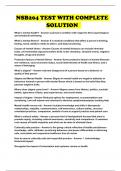
NSB204 TEST WITH COMPLETE
SOLUTION
What is mental health? - Answer a person's condition with regard to their psychological
and emotional well-being.
What is mental illness? - Answer It is medical conditions that affect a person's thinking,
feeling, mood, ability to relate to others, and daily functioning.
Causes of mental illness - Answer Causes of mental illnesses can include inherited
traits, environmental exposures before birth, brain chemistry, stressful events, negative
thoughts, drugs and alcohol
Protective factors of mental illness - Answer Some protective factors of mental illnesses
are resilience, socio-economic status, social determinants of health and illness, and a
sense of belonging
What is stigma? - Answer extreme disapproval of a person based on a behavior or
quality of that person
Stigma and Mental Health - Answer Stigma in mental health are negative attitudes or
behaviors towards a person with mental illness which is based on the belief that they
possess negative traits.
Where does stigma come from? - Answer Stigma comes from History, politics, societal
beliefs, ignorance of facts, past experiences, and social media.
Impact of stigma - Answer Reduced options for employment, accommodation and
socialising. Low self esteem and reluctant to disclose symptoms/postpone seeking help
Mental health nurses role - Answer Includes knowledge and skills in therapeutic
relationships, empathy, communication, self-awareness, cultural safety, recovery
orientated practices, compassion, models of care to support practice and patient care
What is cultural safety - Answer a process that is family/patient focused that aims to
promote equity; including cultural awareness, sensitivity and competence. it examines
root causes of health inequities and what can be done to eliminate them.
Culturally safe practice - Answer Is the going critical reflection of health practitioners
knowledge, skills, attitudes, practicing behaviour and power differentials in delivering
safe, accessible and responsive healthcare free of racism
How to ensure culturally safe and respectful practice - Answer 1. Acknowledge
Historical Impact:
Recognize the impact of colonization and systemic racism on health.
,2. Address Personal Bias:
Confront personal biases and provide unbiased, holistic care.
3. Prioritize Self-Determination:
Support individual, family, and community-driven healthcare decisions.
4. Create a Safe Environment:
Foster a safe, respectful workplace for all, including Indigenous communities and
colleagues.
Person centred care - Answer focuses on the individual's personal needs, wants,
desires and goals so that they become central to the care and nursing process
Person centred care model - Answer Working with patients beliefs and value.
Engaging authentically.
Sharing decision making.
Being sympathetically present.
Providing holistic care.
What is recovery? - Answer a process of change through which individuals improve
their health and wellness, live a self-directed life, and strive to reach their full potential
Why personal recovery is important - Answer Identifies the individual goals of treatment
and recovery, tailors treatment and support to unique needs and empowers individuals
and their families
What is Recovery orientated care - Answer Embraces recovery and wellbeing.
Promotes self-determination and self-management.
Encourages personal responsibility.
Empowers goal-setting.
Aids family understanding.
Nurses role in Mental Health - Answer Provide 1;1 time m, establish rapport and trust,
collobarate towards preferred patient goals, to hold the hope for recovery and traumas
informed care principles
Trauma informed cared principles - Answer Safety, choice, empowerment,
trustworthiness and collaboration
Recovery orientated language - Answer Words should be respectful, non judgemental,
clear, jargon free, and consistent with our body language
, Recovery orientated practice aligns to - Answer Person centred care, cultural safety
and trauma informed care
trauma informed care - Answer Care that treats a whole person who has been through
trauma. Care providers look at how a person copes when trying to understand their
behaviors and treat the person.
Trauma informed care aims to - Answer Improve consumer experiences of care and
recognise the impact of trauma on staff. Also examines the way in which care is
delivered
What is Trauma informed care framework - Answer A framework that uses 5 principles
and 4 Rs
The 5 principles of trauma informed care framework - Answer Safety, choice,
collaboration, trust, and empowerment
The 4 R's of trauma informed care framework - Answer Realise: the widespread impact
of trauma and how it can effect people and groups
Recognise: the signs and symptoms of trauma in an individual
Respond: appropriately through integrating knowledge into practices
Resists re-traumatisation: by recognising that some practices may be re-traumatising
and acknowledging their impact on recovery
(Realising) What is trauma? - Answer a deeply distressing or disturbing experience
(Realise) 3 E's of trauma - Answer Event, experience and effect
(Realise) Types of Trauma - Answer Relational attachment and interpersonal
Developmental
Cultural and racial
Abuse and maltreatment
Single event
War, refugee and political
Peer, sibling and bullying trauma
(Realise) Intergenerational trauma - Answer Trauma that is passed down between
generations from first generation of survivors. This can be passed through epigenetic,
unconscious parenting practices, behavioural, mental health and substance use issues
(Recognising) Adverse Childhood Experiences (ACEs) - Answer Stressful or traumatic
experiences, including abuse, neglect, and a range of household dysfunction, such as
SOLUTION
What is mental health? - Answer a person's condition with regard to their psychological
and emotional well-being.
What is mental illness? - Answer It is medical conditions that affect a person's thinking,
feeling, mood, ability to relate to others, and daily functioning.
Causes of mental illness - Answer Causes of mental illnesses can include inherited
traits, environmental exposures before birth, brain chemistry, stressful events, negative
thoughts, drugs and alcohol
Protective factors of mental illness - Answer Some protective factors of mental illnesses
are resilience, socio-economic status, social determinants of health and illness, and a
sense of belonging
What is stigma? - Answer extreme disapproval of a person based on a behavior or
quality of that person
Stigma and Mental Health - Answer Stigma in mental health are negative attitudes or
behaviors towards a person with mental illness which is based on the belief that they
possess negative traits.
Where does stigma come from? - Answer Stigma comes from History, politics, societal
beliefs, ignorance of facts, past experiences, and social media.
Impact of stigma - Answer Reduced options for employment, accommodation and
socialising. Low self esteem and reluctant to disclose symptoms/postpone seeking help
Mental health nurses role - Answer Includes knowledge and skills in therapeutic
relationships, empathy, communication, self-awareness, cultural safety, recovery
orientated practices, compassion, models of care to support practice and patient care
What is cultural safety - Answer a process that is family/patient focused that aims to
promote equity; including cultural awareness, sensitivity and competence. it examines
root causes of health inequities and what can be done to eliminate them.
Culturally safe practice - Answer Is the going critical reflection of health practitioners
knowledge, skills, attitudes, practicing behaviour and power differentials in delivering
safe, accessible and responsive healthcare free of racism
How to ensure culturally safe and respectful practice - Answer 1. Acknowledge
Historical Impact:
Recognize the impact of colonization and systemic racism on health.
,2. Address Personal Bias:
Confront personal biases and provide unbiased, holistic care.
3. Prioritize Self-Determination:
Support individual, family, and community-driven healthcare decisions.
4. Create a Safe Environment:
Foster a safe, respectful workplace for all, including Indigenous communities and
colleagues.
Person centred care - Answer focuses on the individual's personal needs, wants,
desires and goals so that they become central to the care and nursing process
Person centred care model - Answer Working with patients beliefs and value.
Engaging authentically.
Sharing decision making.
Being sympathetically present.
Providing holistic care.
What is recovery? - Answer a process of change through which individuals improve
their health and wellness, live a self-directed life, and strive to reach their full potential
Why personal recovery is important - Answer Identifies the individual goals of treatment
and recovery, tailors treatment and support to unique needs and empowers individuals
and their families
What is Recovery orientated care - Answer Embraces recovery and wellbeing.
Promotes self-determination and self-management.
Encourages personal responsibility.
Empowers goal-setting.
Aids family understanding.
Nurses role in Mental Health - Answer Provide 1;1 time m, establish rapport and trust,
collobarate towards preferred patient goals, to hold the hope for recovery and traumas
informed care principles
Trauma informed cared principles - Answer Safety, choice, empowerment,
trustworthiness and collaboration
Recovery orientated language - Answer Words should be respectful, non judgemental,
clear, jargon free, and consistent with our body language
, Recovery orientated practice aligns to - Answer Person centred care, cultural safety
and trauma informed care
trauma informed care - Answer Care that treats a whole person who has been through
trauma. Care providers look at how a person copes when trying to understand their
behaviors and treat the person.
Trauma informed care aims to - Answer Improve consumer experiences of care and
recognise the impact of trauma on staff. Also examines the way in which care is
delivered
What is Trauma informed care framework - Answer A framework that uses 5 principles
and 4 Rs
The 5 principles of trauma informed care framework - Answer Safety, choice,
collaboration, trust, and empowerment
The 4 R's of trauma informed care framework - Answer Realise: the widespread impact
of trauma and how it can effect people and groups
Recognise: the signs and symptoms of trauma in an individual
Respond: appropriately through integrating knowledge into practices
Resists re-traumatisation: by recognising that some practices may be re-traumatising
and acknowledging their impact on recovery
(Realising) What is trauma? - Answer a deeply distressing or disturbing experience
(Realise) 3 E's of trauma - Answer Event, experience and effect
(Realise) Types of Trauma - Answer Relational attachment and interpersonal
Developmental
Cultural and racial
Abuse and maltreatment
Single event
War, refugee and political
Peer, sibling and bullying trauma
(Realise) Intergenerational trauma - Answer Trauma that is passed down between
generations from first generation of survivors. This can be passed through epigenetic,
unconscious parenting practices, behavioural, mental health and substance use issues
(Recognising) Adverse Childhood Experiences (ACEs) - Answer Stressful or traumatic
experiences, including abuse, neglect, and a range of household dysfunction, such as