

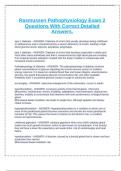
Rasmussen Pathophysiology Exam 2
Questions With Correct Detailed
Answers.
type 1 diabetes - ANSWER- Diabetes of a form that usually develops during childhood
or adolescence and is characterized by a severe deficiency of insulin, leading to high
blood glucose levels. polyuria, polydipsia, polyphagia.
type 2 diabetes - ANSWER- Diabetes of a form that develops especially in adults and
most often obese individuals and that is characterized by high blood glucose resulting
from impaired insulin utilization coupled with the body's inability to compensate with
increased insulin production.
Pathophysiology of diabetes - ANSWER- The pathophysiology of diabetes involves
plasm concentrations of glucose signaling the central nervous system to mobilize
energy reserves. It is based on cerebral blood flow and tissue integrity, arterial plasma
glucose, the speed that plasma glucose concentrations fall, and other available
metabolic fuels. Low plasma glucose causes a surge in autonomic activity.
acromegaly - ANSWER- abnormal enlargement of the extremities. occurs in adults
hyperthyroidism - ANSWER- excessive activity of the thyroid gland- >thyroxine
ØInsomnia, restlessness, tremor, irritability, palpitations, heat intolerance, diaphoresis,
diarrhea, inability to concentrate that interferes with work performance; enlarged thyroid
gland
ØIncreased basal metabolic rate leads to weight loss, although appetite and dietary
intake increase.
hyperperathyroidism - ANSWER- Hyperparathyroidism is a condition in which one or
more of the parathyroid glands become overactive and secrete too much parathyroid
hormone (PTH). This causes the levels of calcium in the blood to rise, a condition
known as hypercalcemia.
childhood gigantism - ANSWER- pituitary gigantism when your child's pituitary gland
makes too much growth hormone, which is also known as somatotropin. if not treated
they will have a lower life expectancy and weak limbs. risk of cardiomegaly and heart
failure
hypothyroidism - ANSWER- A disorder caused by a thyroid gland that is slower and less
productive than normal
ØDecreased basal metabolic rate
, ØWeakness, lethargy, cold intolerance, decreased appetite
ØBradycardia, narrowed pulse pressure, and mild/moderate weight gain
ØElevated serum cholesterol and triglycerides
ØEnlarged thyroid, dry skin, constipation
ØDepression, difficulties with concentration/memory
ØLoss of eyebrow
Menstrual irregularity
primary hypothyroidism - ANSWER- Hashimoto's disease (causes your immune system
to mistakenly attack your thyroid) fatigue, lethargy, sensitivity to cold, depression,
muscle weakness.
secondary hypothyroidism - ANSWER- low TSH low levels of T3 and T4
myxedema - ANSWER- occurs in severe or prolonged hypothyroidism.
ØGeneralized, non-pitting edema
ØDecreased level of consciousness, hypotension, hypothermia, history of precipitating
event (trauma, sepsis, certain drugs)
ØMay progress to myxedema coma, a life-threatening condition if treatment not
received
graves disease - ANSWER- primary hyperthyroidism
removal of thyroid
Amenorrhea - ANSWER- absence of menstruation
In primary amenorrhea, menstrual periods have never begun (by age 16), whereas
secondary amenorrhea is defined as the absence of menstrual periods for three
consecutive cycles or a time period of more than six months in a woman who was
previously menstruating.
Addison's disease - ANSWER- occurs when the adrenal glands do not produce enough
of the hormones cortisol or aldosterone
adrenal gland failure
cardiogenic shock - ANSWER- A state in which not enough oxygen is delivered to the
tissues of the body, caused by low output of blood from the heart. It can be a severe
complication of a large acute myocardial infarction, as well as other conditions. -
tachycardia, loss of consciousness, low BP
end-stage renal disease - ANSWER- The final stage of kidney failure (as that resulting
from diabetes, chronic hypertension, or glomerulonephritis) is marked by the complete
or nearly complete irreversible loss of renal function. Nausea.
Vomiting.
Loss of appetite.
Fatigue and weakness.
Sleep problems.
Questions With Correct Detailed
Answers.
type 1 diabetes - ANSWER- Diabetes of a form that usually develops during childhood
or adolescence and is characterized by a severe deficiency of insulin, leading to high
blood glucose levels. polyuria, polydipsia, polyphagia.
type 2 diabetes - ANSWER- Diabetes of a form that develops especially in adults and
most often obese individuals and that is characterized by high blood glucose resulting
from impaired insulin utilization coupled with the body's inability to compensate with
increased insulin production.
Pathophysiology of diabetes - ANSWER- The pathophysiology of diabetes involves
plasm concentrations of glucose signaling the central nervous system to mobilize
energy reserves. It is based on cerebral blood flow and tissue integrity, arterial plasma
glucose, the speed that plasma glucose concentrations fall, and other available
metabolic fuels. Low plasma glucose causes a surge in autonomic activity.
acromegaly - ANSWER- abnormal enlargement of the extremities. occurs in adults
hyperthyroidism - ANSWER- excessive activity of the thyroid gland- >thyroxine
ØInsomnia, restlessness, tremor, irritability, palpitations, heat intolerance, diaphoresis,
diarrhea, inability to concentrate that interferes with work performance; enlarged thyroid
gland
ØIncreased basal metabolic rate leads to weight loss, although appetite and dietary
intake increase.
hyperperathyroidism - ANSWER- Hyperparathyroidism is a condition in which one or
more of the parathyroid glands become overactive and secrete too much parathyroid
hormone (PTH). This causes the levels of calcium in the blood to rise, a condition
known as hypercalcemia.
childhood gigantism - ANSWER- pituitary gigantism when your child's pituitary gland
makes too much growth hormone, which is also known as somatotropin. if not treated
they will have a lower life expectancy and weak limbs. risk of cardiomegaly and heart
failure
hypothyroidism - ANSWER- A disorder caused by a thyroid gland that is slower and less
productive than normal
ØDecreased basal metabolic rate
, ØWeakness, lethargy, cold intolerance, decreased appetite
ØBradycardia, narrowed pulse pressure, and mild/moderate weight gain
ØElevated serum cholesterol and triglycerides
ØEnlarged thyroid, dry skin, constipation
ØDepression, difficulties with concentration/memory
ØLoss of eyebrow
Menstrual irregularity
primary hypothyroidism - ANSWER- Hashimoto's disease (causes your immune system
to mistakenly attack your thyroid) fatigue, lethargy, sensitivity to cold, depression,
muscle weakness.
secondary hypothyroidism - ANSWER- low TSH low levels of T3 and T4
myxedema - ANSWER- occurs in severe or prolonged hypothyroidism.
ØGeneralized, non-pitting edema
ØDecreased level of consciousness, hypotension, hypothermia, history of precipitating
event (trauma, sepsis, certain drugs)
ØMay progress to myxedema coma, a life-threatening condition if treatment not
received
graves disease - ANSWER- primary hyperthyroidism
removal of thyroid
Amenorrhea - ANSWER- absence of menstruation
In primary amenorrhea, menstrual periods have never begun (by age 16), whereas
secondary amenorrhea is defined as the absence of menstrual periods for three
consecutive cycles or a time period of more than six months in a woman who was
previously menstruating.
Addison's disease - ANSWER- occurs when the adrenal glands do not produce enough
of the hormones cortisol or aldosterone
adrenal gland failure
cardiogenic shock - ANSWER- A state in which not enough oxygen is delivered to the
tissues of the body, caused by low output of blood from the heart. It can be a severe
complication of a large acute myocardial infarction, as well as other conditions. -
tachycardia, loss of consciousness, low BP
end-stage renal disease - ANSWER- The final stage of kidney failure (as that resulting
from diabetes, chronic hypertension, or glomerulonephritis) is marked by the complete
or nearly complete irreversible loss of renal function. Nausea.
Vomiting.
Loss of appetite.
Fatigue and weakness.
Sleep problems.

